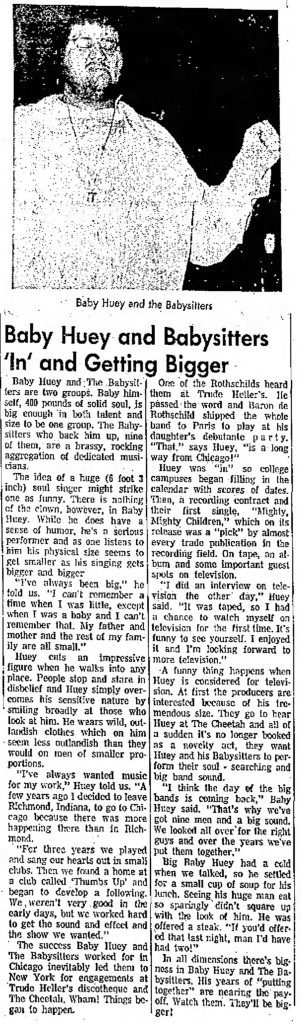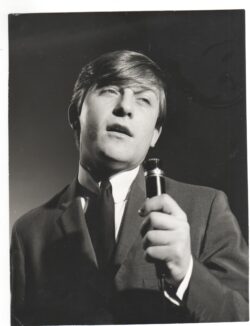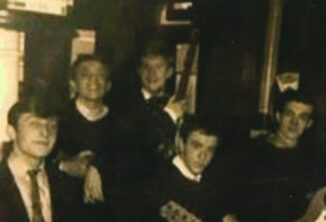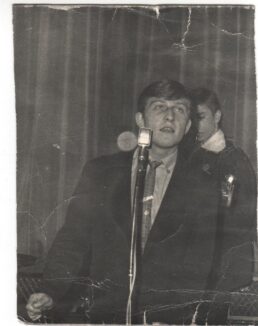
In 2005 I wrote a discussion of the early singles by Baby Huey and the Baby Sitters before Huey signed to Curtom and recorded the songs issued on his great posthumous LP. In subsequent years I added some photos, news clips and gig notices, then in 2026 completely reworked the article, below.
Baby Huey and the Baby Sitters are a famous Chicago band, but their roots are in Richmond, Indiana, where they formed in high school as Baby Huey and the Vets in 1962. The members attended Richmond High School, most of them graduating in 1964.
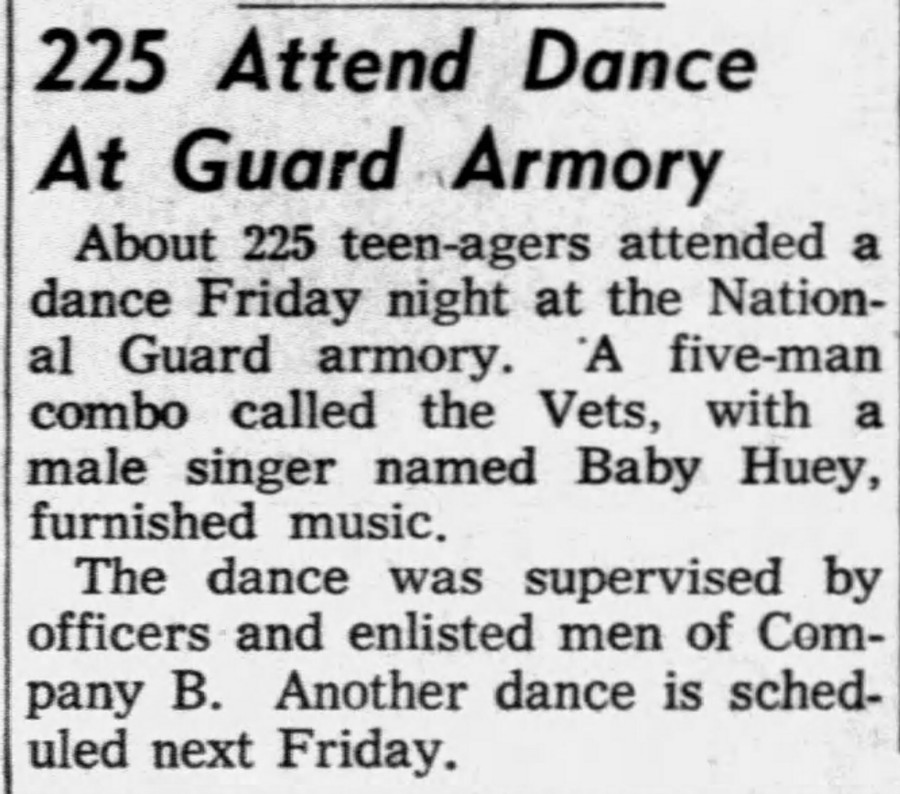
November 23 – National Guard Armory, Richmond
December 8 – Richmond High School “Mistletoe Mash” at Civic Hall
December 29 – teen holiday dance at the Conservation Park lodge
December 31 – American Legion hall, 400 North Eighth St.
1963
May 17 – Hagerstown, IN prom, followed by “appearances on the Northwestern university campus at Chicago, Ill., immediately after playing for the prom at Hagerstown.”
June 13 – Senior’s all-night party at the YWCA: “Beginning at 4 a.m. Baby Huey and the Vets, a high school instrumental combo, provided music for dancing in the TAC club.”
August 4 – Clear Creek Park
September 1 – Clear Creek park Musician Local 388 union concert
December 27 – Leland Hotel, Richmond. Noon concert for Kiwanis
December 27 – Forest Hills Country Club
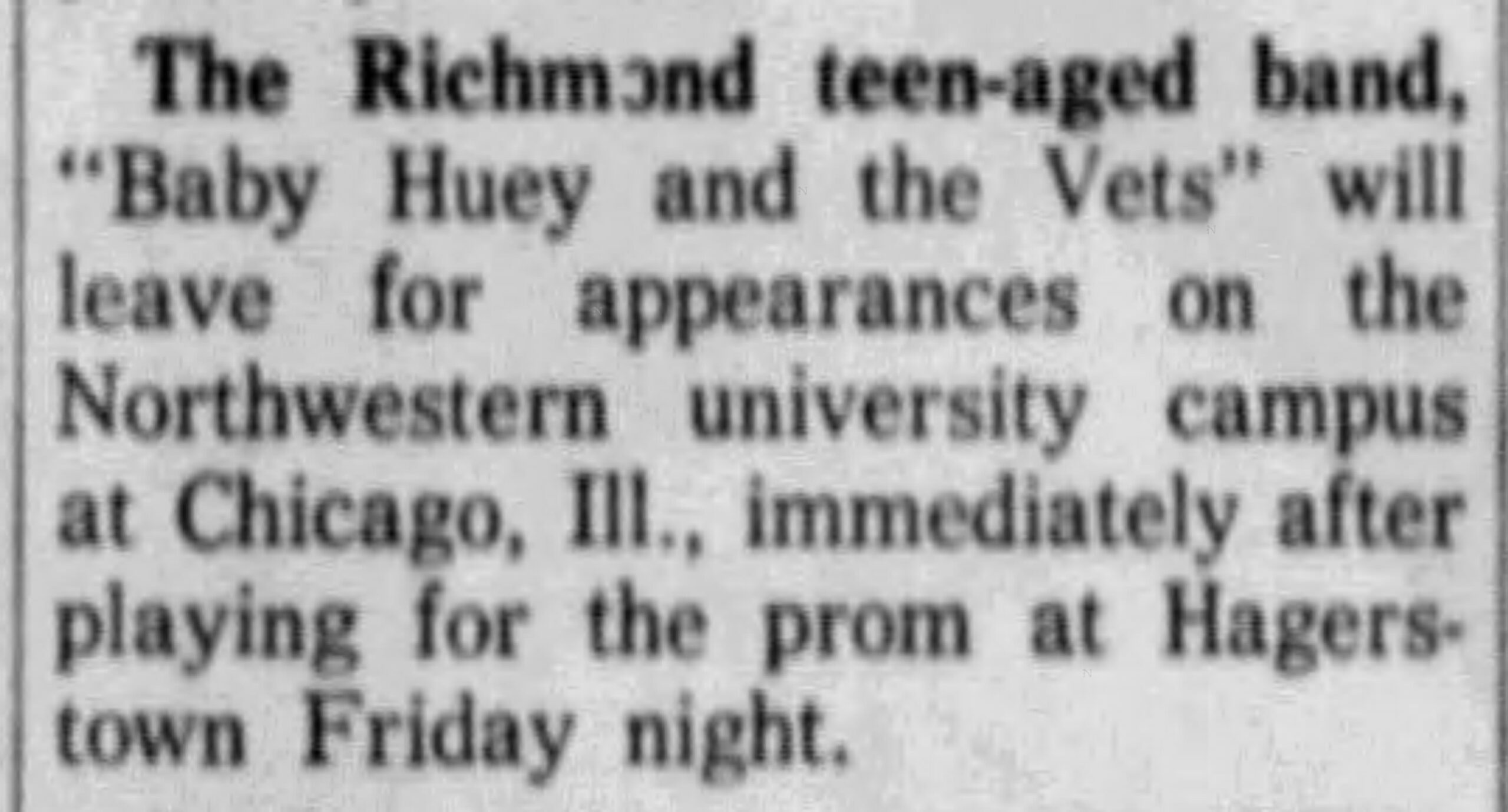
A notice in the Richmond Palladium-Item & Sun-Telegram for a concert August 4, 1963 lists the first lineup of the group I can find:
Members of the group are Melvyn Jones, electric piano; Dale Harper, drums; Pete Poster [sic – should be Pete Foster], alto saxophone, Butch Whited, guitar, and J.T. Ramey, bongos and vocal.
Melvyn Jones is brother of jazz drummer Harold Jones.
1964
March 12 – YWCA for Women’s Federated club
March 24 – Melody Skateland
Dale Harper, Curtis (Pete) Foster, and Harry Whited left the band to join the military. Curtis Foster left the group for the Marines in February 1964. He died on June 6, 1965, when two helicopters collided off the ship, the Iwo Jima.
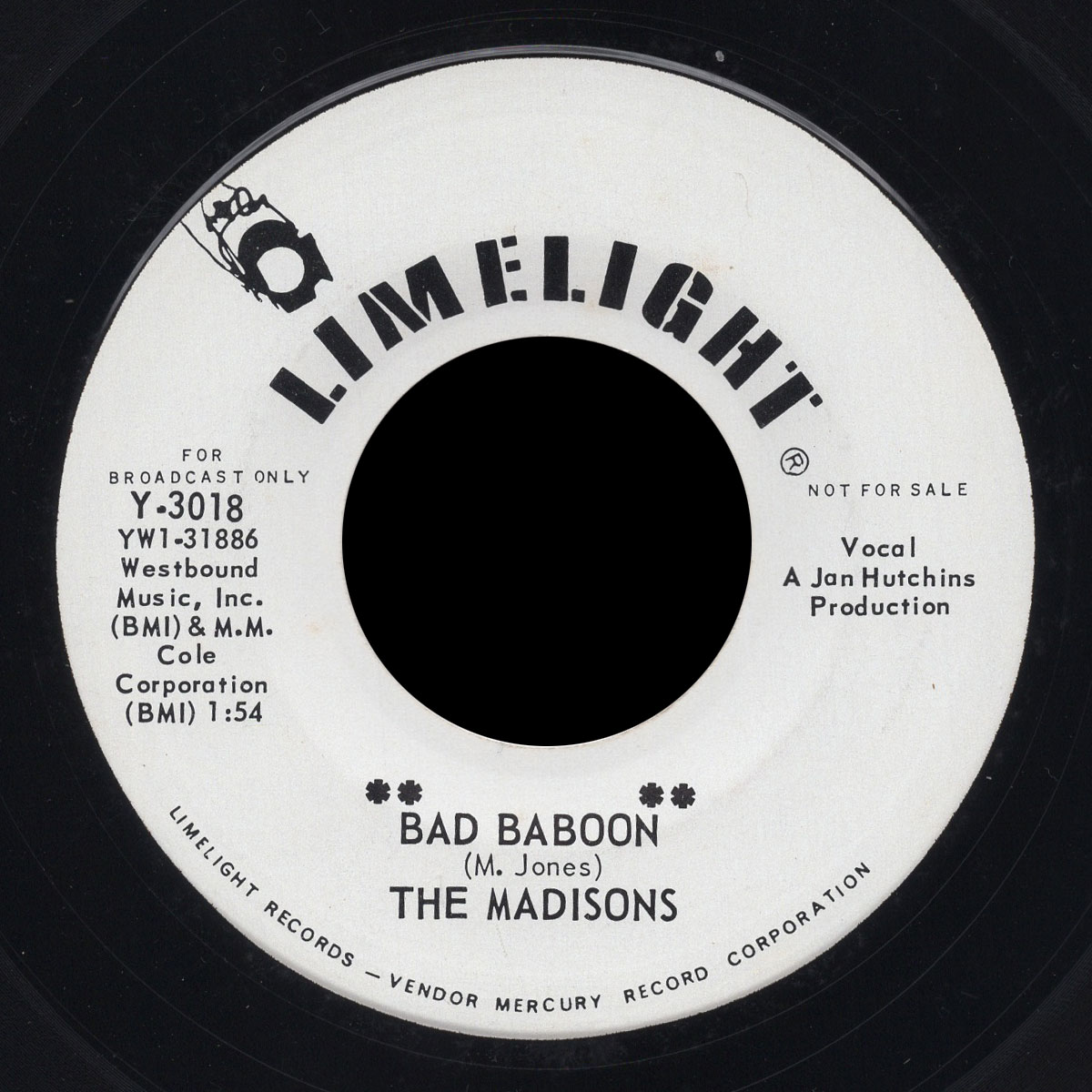
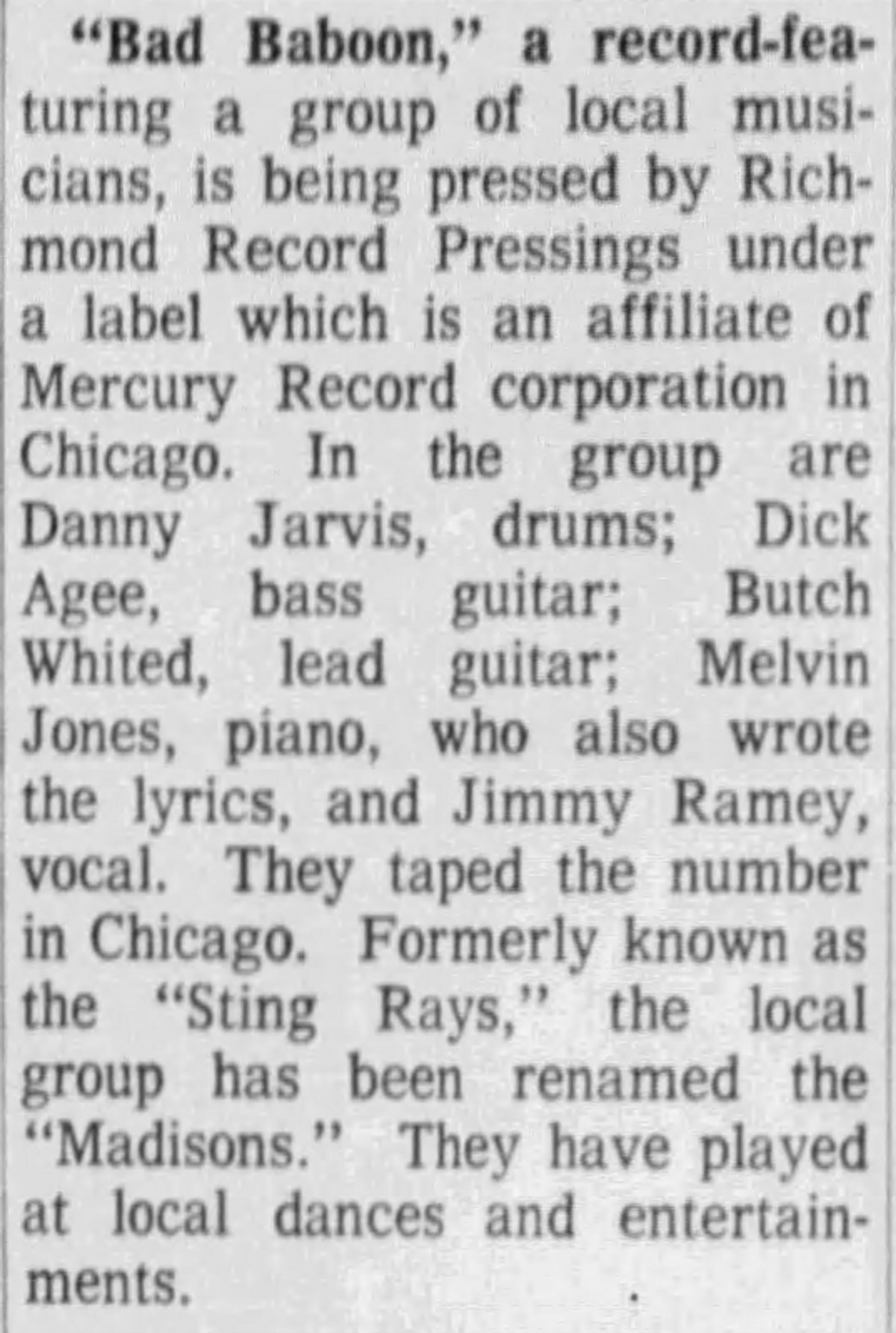
“Bad Baboon,” a record featuring a group of local musicians, is being pressed by Richmond Record Pressings under a label which is an affiliate of Mercury Record corporation in Chicago. In the group are Danny Jarvis, drums; Dick Agee, bass guitar; Butch Whited, lead guitar; Melvin Jones, piano, who also wrote the lyrics, and Jimmy Ramey, vocal. They taped the number in Chicago. Formerly known as the “Sting Rays,” the local group has been renamed the “Madisons.” They have played at local dances and entertainments.
A short notice the next day adds “The “Madisons” … includes members of two earlier combos known as “Baby Huey and the Vets” and the “Sting Rays.”
Released on Limelight Y-3018, “Bad Baboon” / “Because I Got You” apparently is the first recording featuring Baby Huey and Melvyn Jones. Melvin Jones wrote “Bad Baboon”. A takeoff on “The Gorilla” by the Ideals with a new set of lyrics, it would also become the inspiration for Baby Huey and the Babysitters 1965 single “Monkey Man” though again with new lyrics and a more aggressive feel. Cash Box reviewed the single favorably on June 18, and copyright was registered on April 27. It was likely recorded at the Indianapolis studio of producer Jan Hutchins. Jan Hutchens (correct spelling) had co-produced Chicago vocalist Ral Donner’s “You Don’t Know What You’ve Got (Until You Lose It)” for Gone Records in 1961.
Did B.J. stand for Baby Jimmy, or Baby James? There is a notice for B.J. and the Sting Rays at the Springwood Pavilion in Conservation Park on June 15, 1963, but Baby Huey and the Vets were also active at that time. The news described them in February, 1964:
The Catholic Youth center will sponsor a dance at the Knights of Columbus hall Sunday, Feb. 9. Members of B.J. and the Sting Rays combo will provide the music. They are Dick Agee, Melvin Jones, Danny Jarvis, Butch White [sic: Butch Whited] and Jim Ramey.
However, Baby Huey and the Vets did shows through March, 1964. The Madisons name took over for that recording, but I can find no gig listings under that name, nor any listings for Baby Huey between April 1964 and early March 1965.
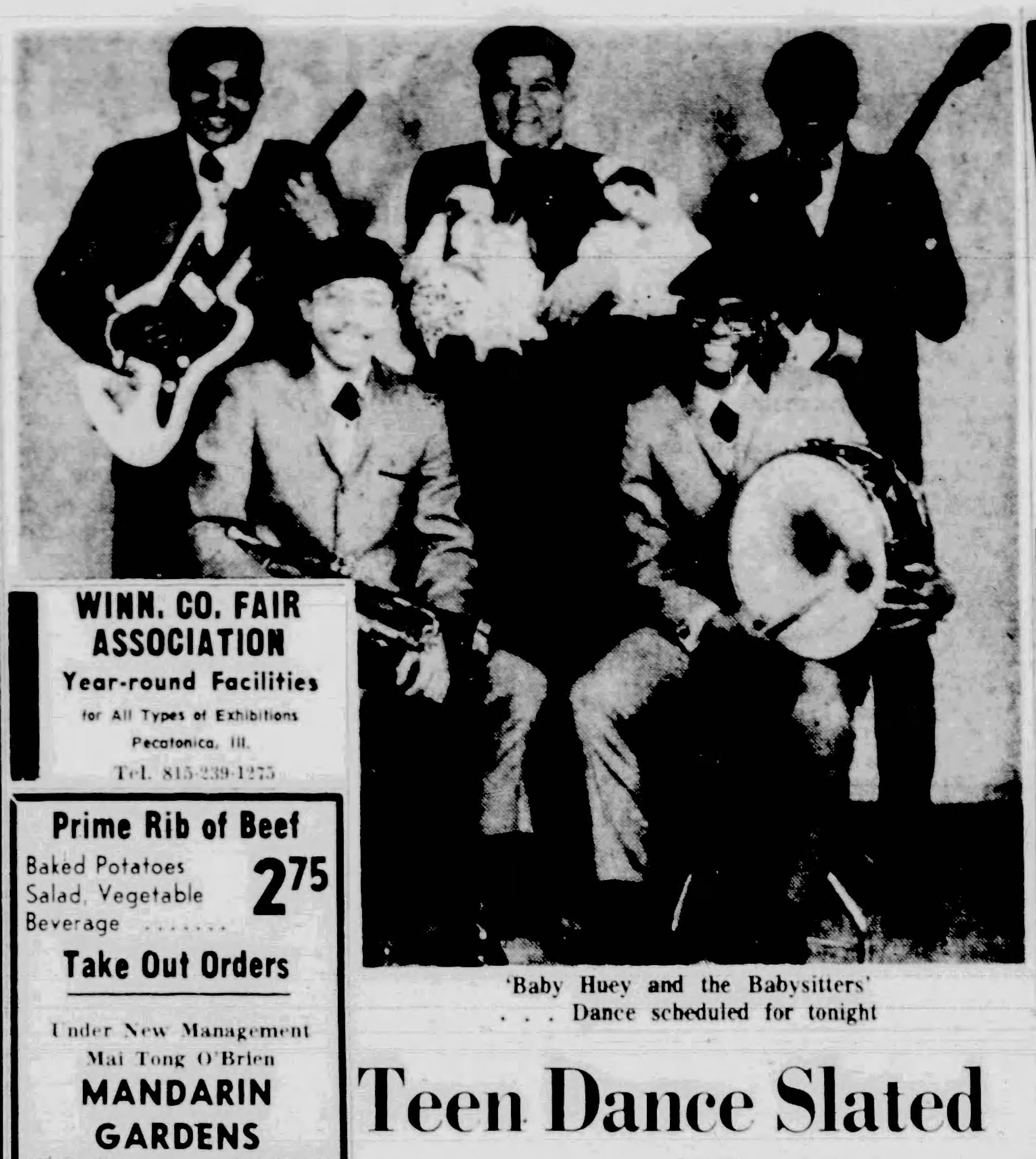
Certainly by February 1965 if not earlier, Jim Ramey and Melvyn Jones had relocated to Chicago where they added new members, found management in university student James Kargman, and started recording as Baby Huey and the Baby Sitters.
1965
 At some point in 1964 or 1965, Johnny Ross, also from Richmond, IN, joined on guitar. They were joined by Chicago musicians Dennis Moore on drums and Larry Sales on bass.
The history of Baby Huey’s 1965 recordings is confusing because they contain four songs released across five singles.
I believe the first two cut were “Just Being Careful” and “Messin’ with the Kid” as John Ross had copyright registered on “Just Being Careful” on February 12, 1965. Both sides feature horns, and a female chorus on “Just Being Careful”. “Messin’ with the Kid” is a great version of the Mel London song done originally by Junior Wells.
Shann 73924 – “Just Being Careful” / “Messin’ With the Kid” (February 1965)
USA 801 – “Just Being Careful” / “Messin’ With the Kid” (April ’65)

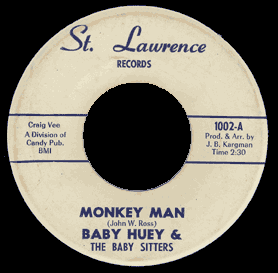 The next two recordings are the influential “Monkey Man”, credited to John R. Ross, though it must have evolved from the Madisons “Bad Baboon”. James Kargman took arranging credit on “Monkey Man”. Copyright was registered on April 23, 1965.
Their version of “Beg Me”, originally recorded by Chuck Jackson, may be the weakest number on these early 45s but is a prized soul record today. Starting slow, it picks up steam. John Ross’s guitar work is outstanding on all of these. For some reason the label St. Lawrence substituted the earlier “Messin’ with the Kid” for “Beg Me” on some copies, and again when it was reissued on Satellite in ’66 or ’67.
 St. Lawrence 1002 – Monkey Man / Beg Me (1965, issued on both blue and white labels)
St. Lawrence 1002 – Monkey Man / Messin’ With the Kid (1965, white label only)
Satellite 2013 – Monkey Man / Messin’ With the Kid (1967)
Jim Kargman produced all of their singles in 1965, along with those of Dalek/Ingam and the Blackstones. Thumbs Up in Chicago was the group’s base and some of their early bookings such as Rockford College were made through the club. An item in the Chicago Suburbanite Economist on February 23, 1966 noted “Tony Caithamer, one of the owners of the Thumbs Up club at 2848 N. Broadway, is donating the services of [Baby Huey & the Baby Sitters].”
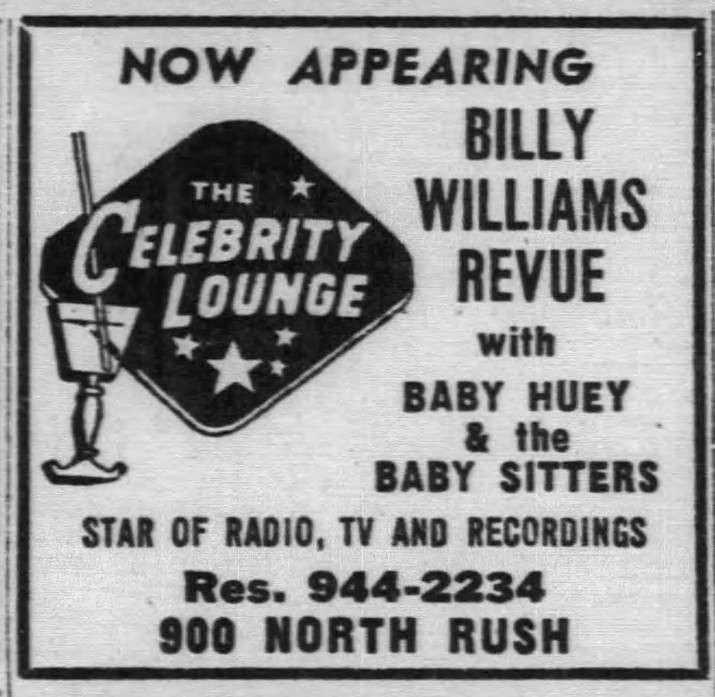
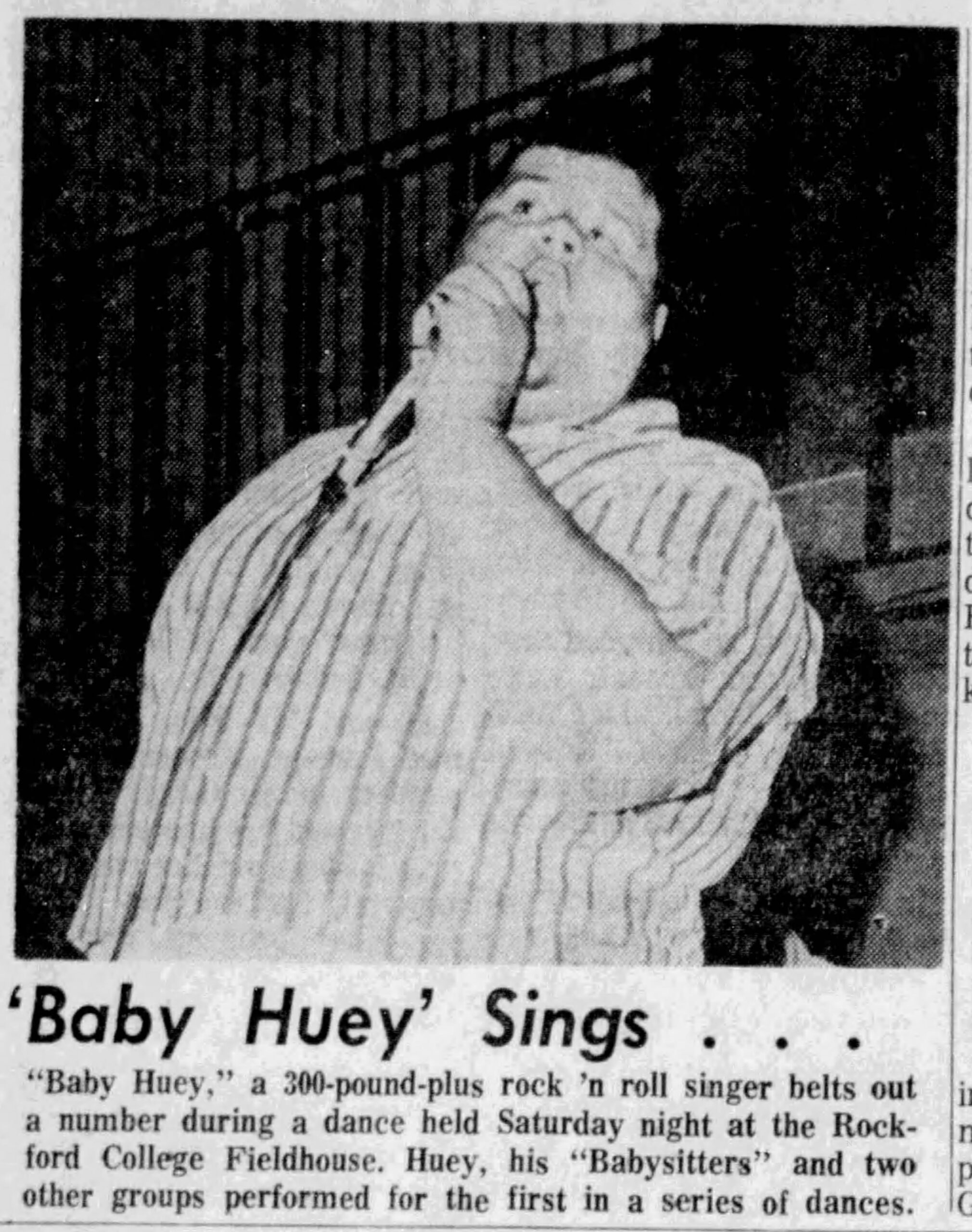
March 3-6: at the Celebrity Lounge, 900 North Rush with the Billy Williams Revue
June 19 – Thumbs Up presents the Beau Brummels, Baby Huey and the Babysitters and the Blackstones at Rockford College Fieldhouse
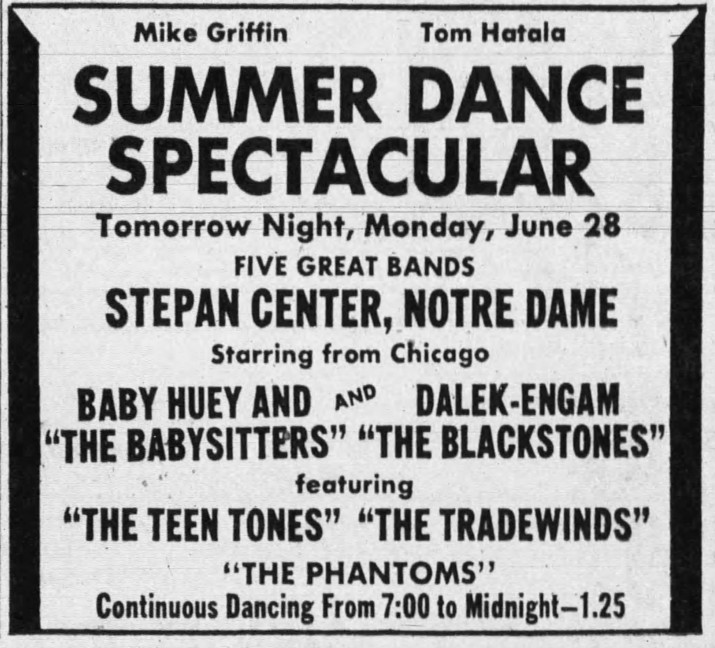
June 28 – Stepan Center, Notre Dame, South Bend – WJVA show with Dalek-Engam and the Blackstones, the Teen Tones, the Tradewinds and the Phantoms
November – Spain, Italy, Greece, Africa ?!
On December 1, the Toronto Globe and Mail reported Baby Huey and the Baby Sitters played in Paris for the debut party of Nelly de Rothschiild, along with UK group Band of Angels.
late December – WVON Chicago Christmas Benefit with Little Stevie Wonder, Dee Clark, Jackie Ross, the Madlads, the Impressions, G.L. Crockett and Red Saunders
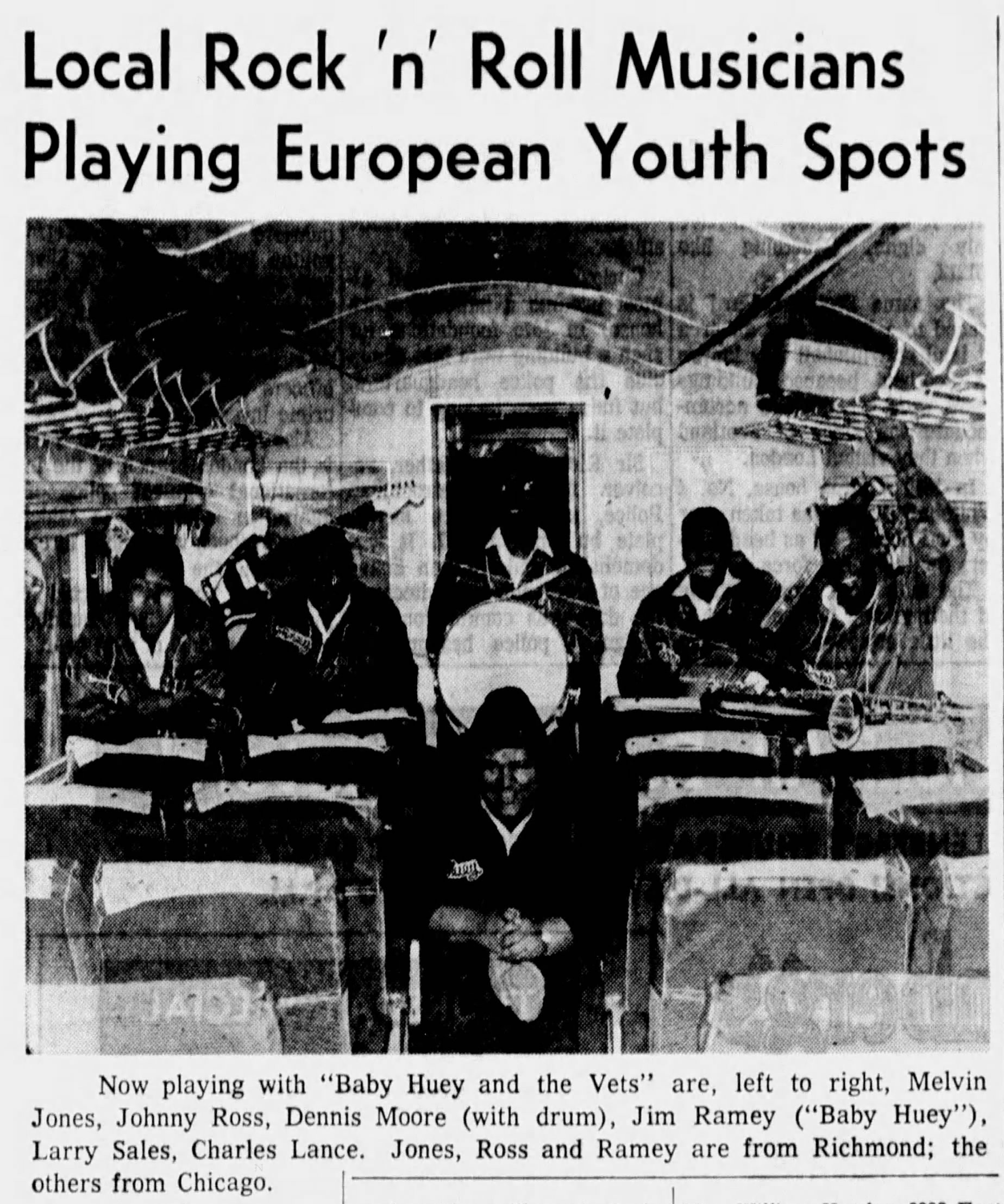
An article from the Richmond Palladium on November 10, 1965 listed the lineup that was flying to play in Europe and Africa, but refers to them by their old name, Baby Huey and the Vets:
Melvin Jones – trumpet and organ
Johnny Ross – guitar
Dennis Moore – drums
Jim Ramey (Baby Huey) – vocals
Larry Sales – bass
Charles Lance – sax?
1966
January 29 – Rockford College with the Castaways and the Fabulous Intruders from Rockford, IL
February 25 – Orr High School benefit
February 25 – Harmony Hall, Chicago
March 18 – U. of Illinois Urbana, George Huff Gymnasium
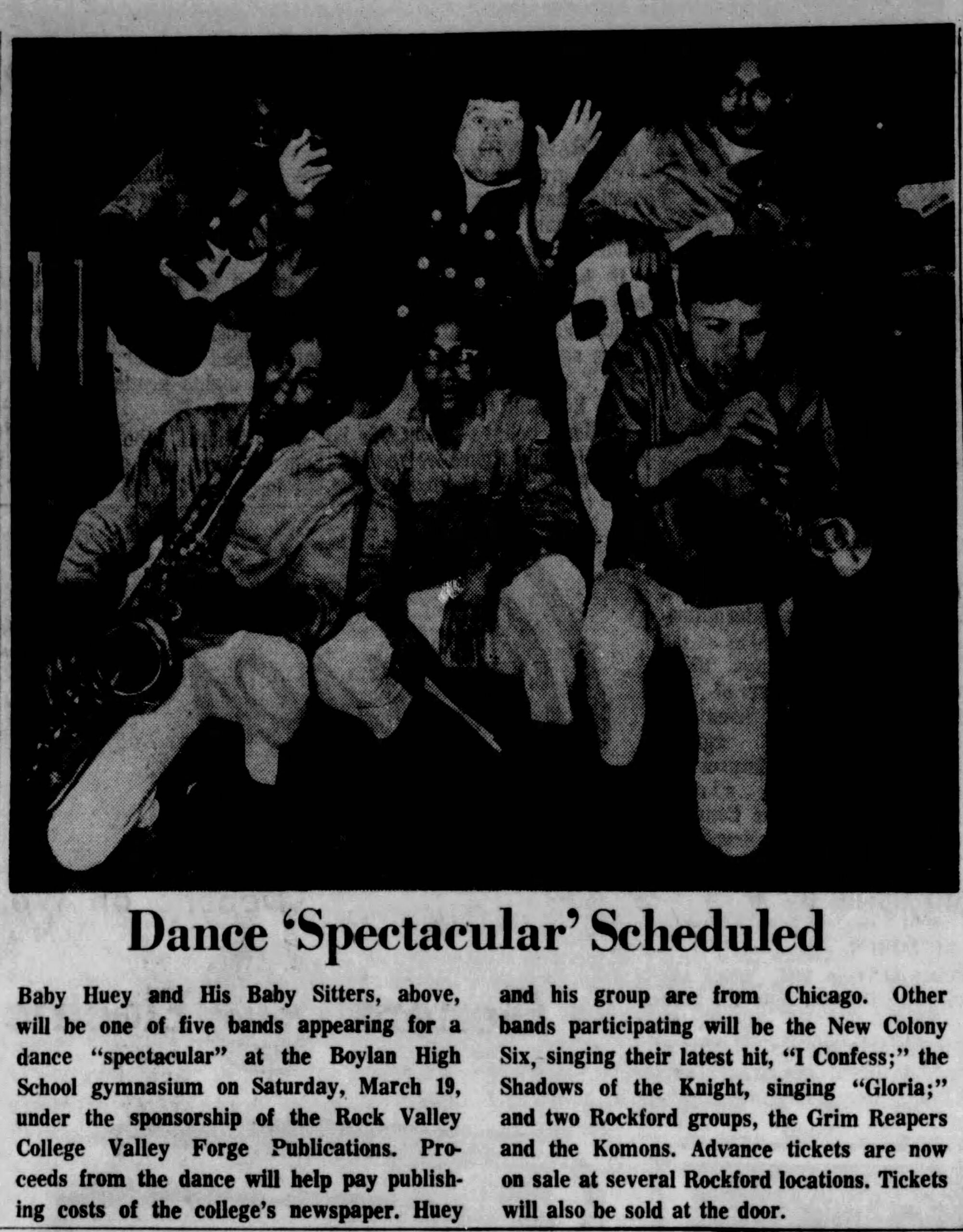
March 19 – Rockford, with the New Colony Six, the Shadows of Knight, the Grim Reapers and the Komons, at Boylan High School gym. Also the Flock, according to some news listings.
May 21 – Rock Island at the Monmouth College Scot Olympics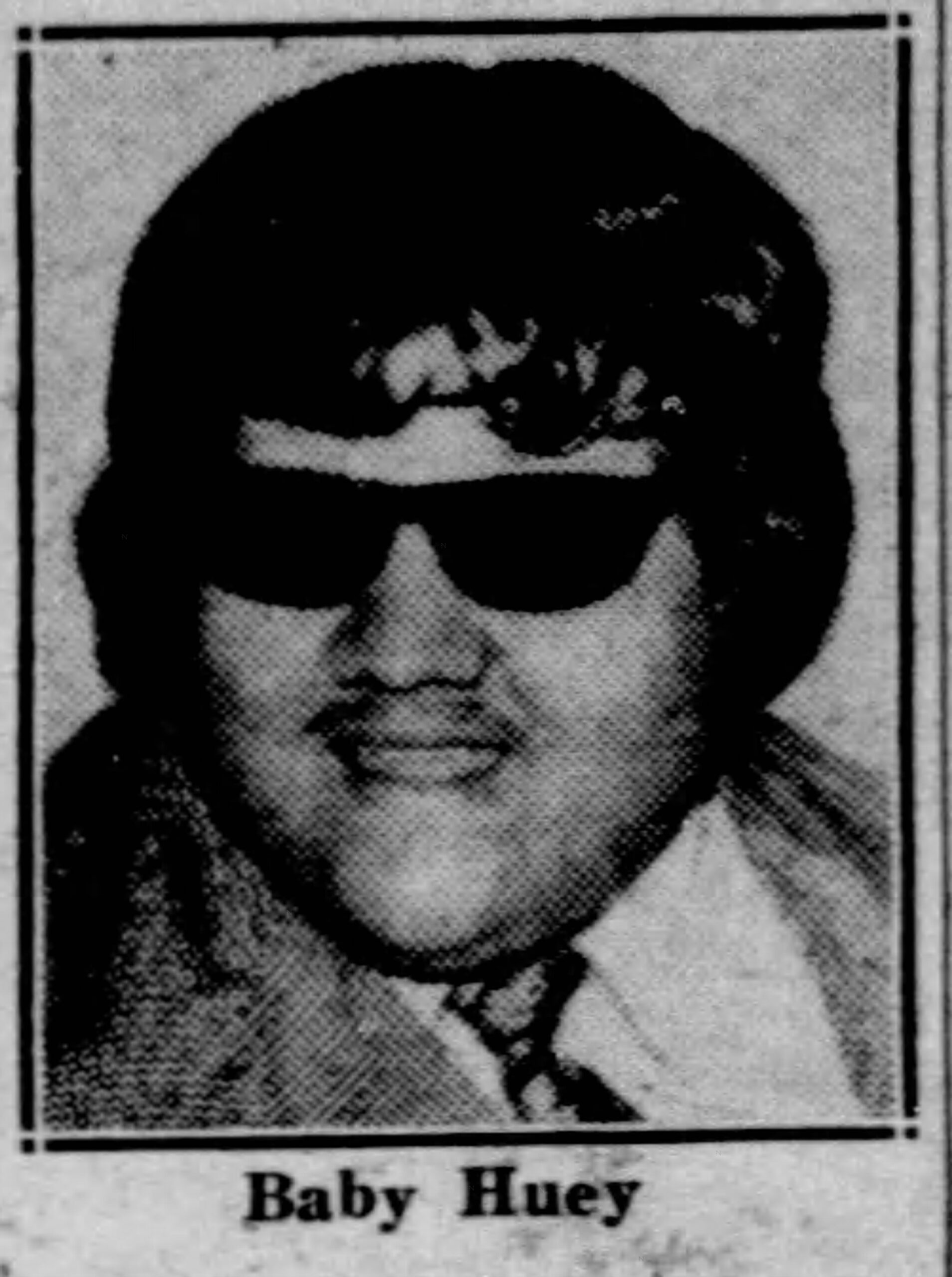
July 24 at Palms Shore Club, Emmons Ave, Brooklyn with Satan Four
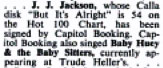
late July – early August – at Trude Hellers, NYC
September 5 – September 17 (?) – at Trude Hellers
September 10 and 11 – Palisades Amusement Park’s “Heller-Baloo” with Benny Gordon, Bertha Colbert and Abercrombie & the Fitches
October – at Trude Hellers, also an announcement that Capitol Booking has signed the group
October 7 & 8 – Romano’s Steak House, Hartford, CT
October 21 – Richmond High School Homecoming Dance
November 1, 1966 – November 15 – Trude Heller’s (NY Daily News)
November 19 – Bayone, NJ at Venice Tavern
Dennis Moore got drafted around 1966. Reno Smith became the drummer at some point.
I’m not sure when Melvyn Jones left the group. As Deacon Jones he wrote a memoir the includes his years with Baby Huey, 40 Years With the Blues Legends: the Life and Times of Melvyn Deacon Jones that I haven’t read yet.
Johnny Ross probably left in 1967, when he recorded two singles as Johnny Ross and the Soul Explosions, “I Can’t Help Myself” / “Sore Loser” on Chirrup 1523, and “Love-I-Tis” / “Chi’-Ca’-Go'” on La-Cindy 509.
The chronology of when later members joined is uncertain. Because James Ramey drew so much attention in the press as the group’s frontman, later articles never mention other members of the band.
1967
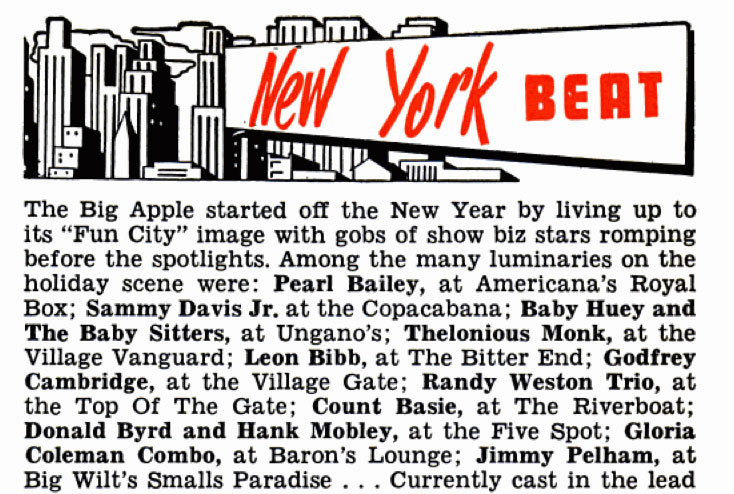
January – at Ungano’s club in New York
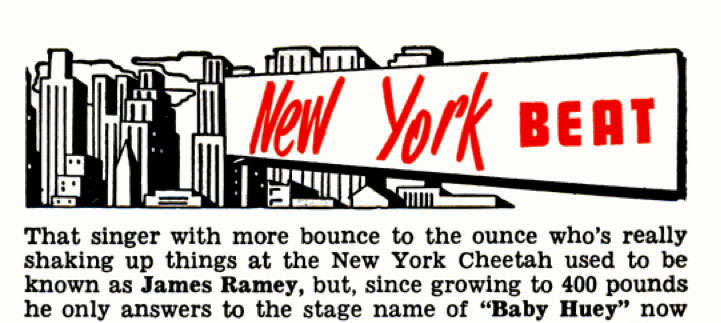
February 15-28 – the Cheetah, with the Exceptions Feb. 15-18
March 22 – April 12 – the Cheetah with the Chambers Brothers and the Rovin’ Kind through March 26
April 26 – Tempo Dance City 8813 Foster Ave, Canarsie, Brooklyn
The Cheetah was open Wednesdays through Sundays.
Robert Baker wrote about the Cheetah club in the Chicago Tribune on April 16, 1967:
The sound is continuous, provided by two bands that alternate each hour. Current attractions are the Griffith-Harter Union and Baby Huey and the Babysitters … Baby Huey, a kind of Motown Mama Cass, has been the biggest regular draw of the Cheetah since it opened last fall. He takes center stage with him where he moves in his bright red double-breasted suit, usually abandoning his tie after a couple numbers. The group features upbeat rock numbers as well as some slower soul pieces, often blue in both connotations of the word.

Rotund Band Leader Faces Dope Charge
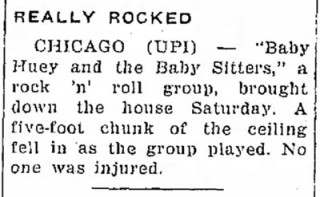
CHICAGO (UPI) – “Baby Huey,” a rotund rock ’n’ roller has been booked for a May 8 date in court.
A tinfoil package of what police believe is marijuana, a warm pipe, overheard talk of “smoking pot” – plus police insistence – helped the bushy-haired, 370-pound band leader get the unwanted engagement.
Possession of narcotics is the charge, police said.
Baby Huey, billed as “the biggest name in the business,” was arrested in his motel room Thursday with two friends. Police said they were tipped, possibly by a disgruntled fan, that there was a party going on.
Baby Huey, who said his real name was James T. Ramey, and Baby Karp and Ronald Wagner, both 21, Chicago, were freed on bond. Karp and Wagner are not members of “Baby Huey and the Baby Sitters.”
Police later ticketed Baby Huey’s brightly painted bus and towed it from the spot reserved for Mayor Richard. J. Daley’s limousine to the auto pound.
On July 6, 1967, the charges were dismissed:
Judge Kenneth R. Wendt ruled arresting officers did not have a warrant to make the raid on Ramey’s hotel room after receiving a tip.
Detectives said they arrested Baby Huey Apr. 13 after they found him lying on a bed with a package of a “crushed green plant” nearby.
June 7-11 – Ron’s Back Room, 1311 N. Wells in Old Town
September 1 – the Cheetah with the Exception and the Rovin’ Kind.
September 22-24 (dates uncertain) – the Cheetah: Billboard noted on September 30 that “Manager Buddy Fox reports that 15,000 turned out over the weekend to hear Baby Huey and Tommy James & the Shondells”
October 20-21 – at the Cheetah with H.P. Lovecraft and the Litter
October 22 – Benefit with the Litter at the Cheetah for the new Museum of Contemporary Art
November 10-21 – at the Cheetah in Chicago
December 30 – Bachelors Ball at the Frederick C. Crawford Auto-Aviation Museum, Cleveland. The Plain Dealer ran a large photo of Baby Huey on stage at the event, but the microfilm is too dark.
December 31 – at the Cheetah in Chicago with the Exception
By late ’67 or 1968, Baby Huey and the Babysitters were managed by Marv Stuart’s State and Madison Management (listed as Marv Heiman on wikipedia).
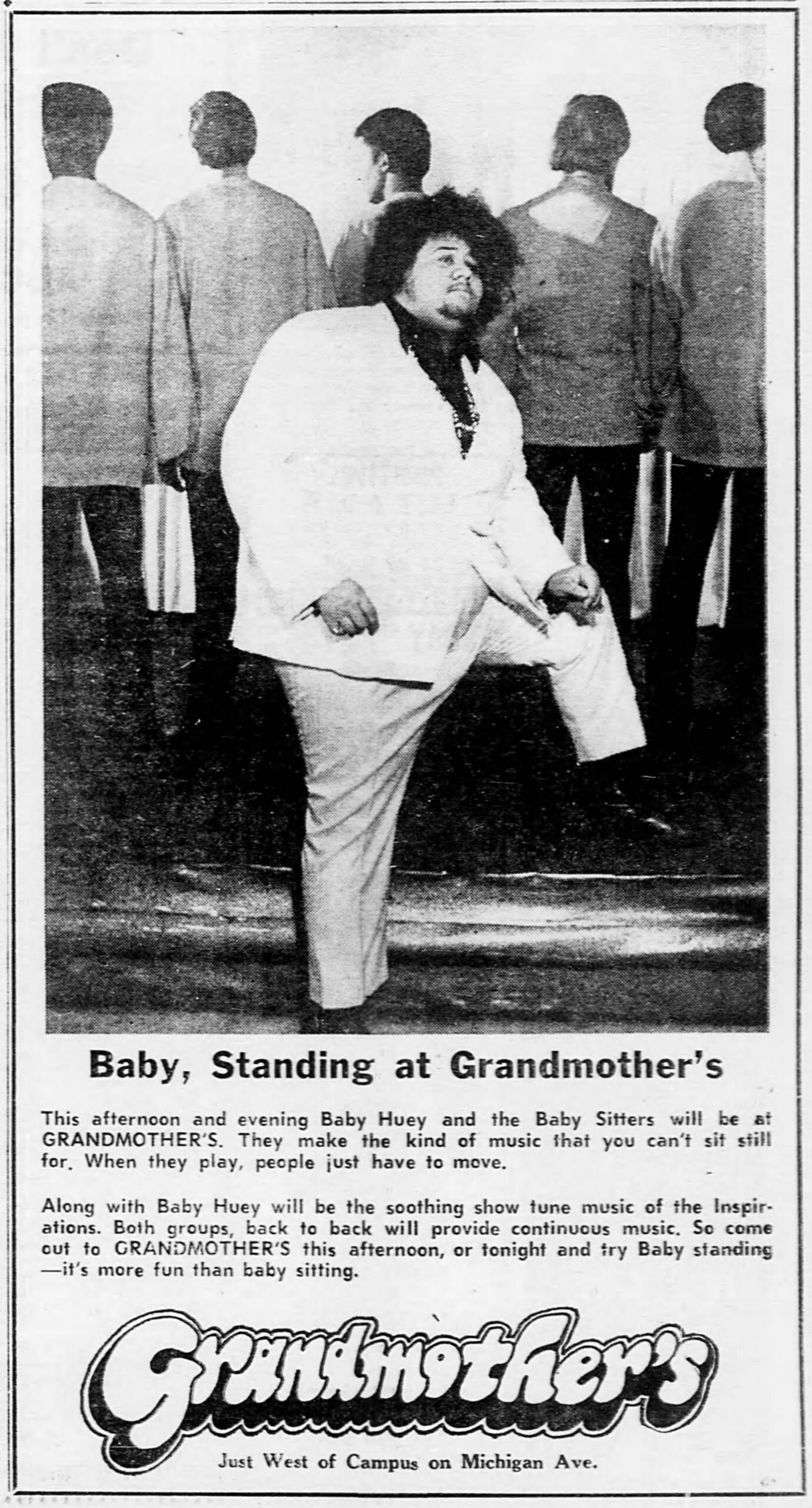
1968
February 1 – Michigan Tech Sno Ball in Houghton
February 25 – American Internatonal College Winter Carnival, Springfield, MA
March 1 – Electricians Hall, 5247 W. Madison with the Disciples of Mayhem
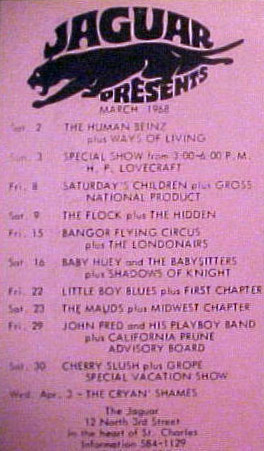
March 16 – at the Jaguar with the Shadows of Knight
March 23 – Marine Room at St. Clair hotel
April 5 – The Deep End, Park Ridge, Illinois
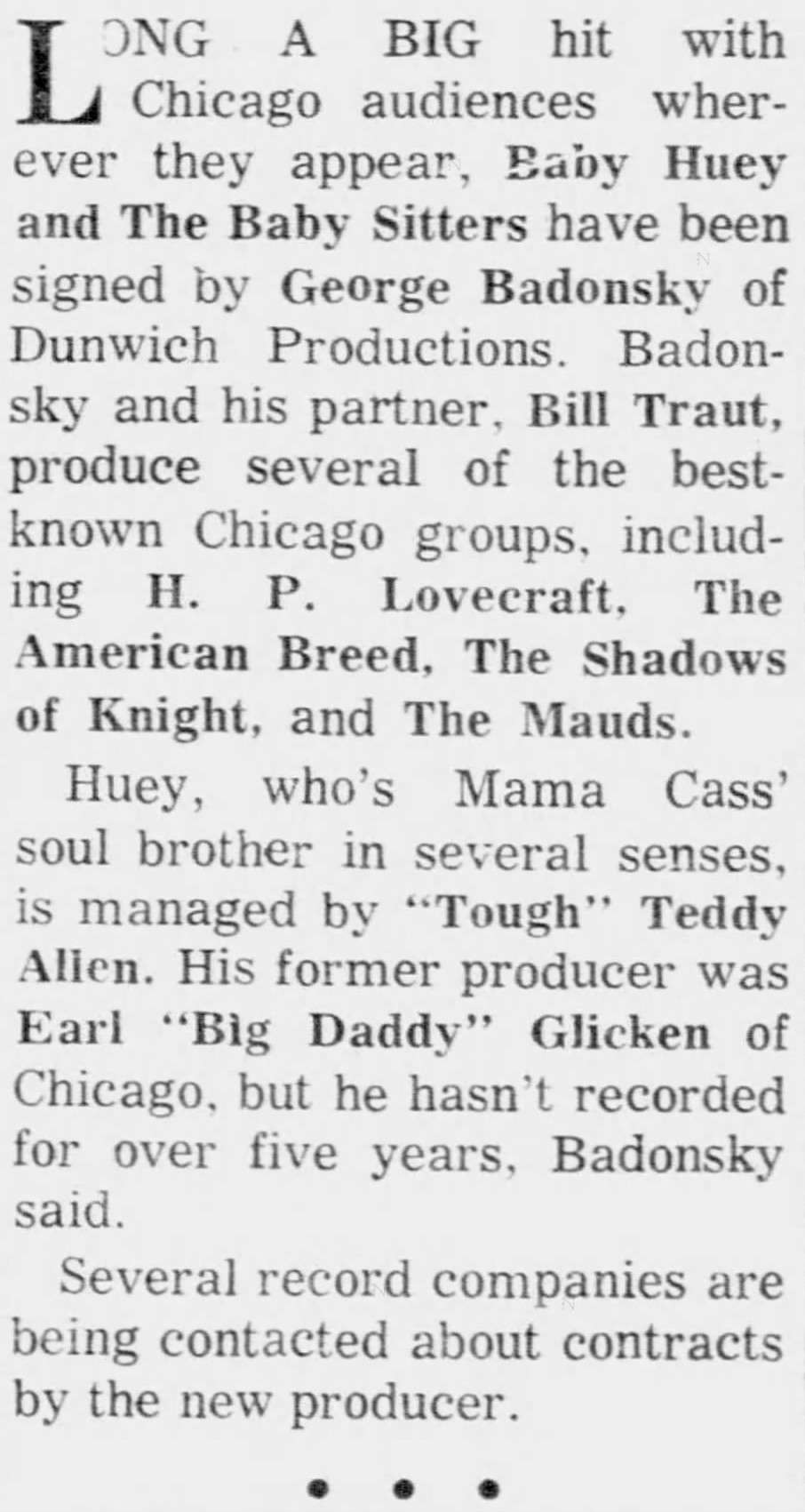
Baby Huey and The Baby Sitters have been signed by George Badonsky of Dunwich Productions … Huey, who’s Mama Cass’ soul brother in several senses, is managed by “Tough” Teddy Allen. His former producer was Earl “Big Daddy” Glicken of Chicago, but he hasn’t recorded for over five years, Badonsky said. Several record companies are being contracted about contracts by the new producer.
They had recorded about three years earlier, not five. And unfortunately nothing ever came of an association with Dunwich, which is a shame. Badonsky and Bill Traut of Dunwich would have been a great choice to produce the band. Unfortunately, there seem to be no recordings of Baby Huey and the Baby Sitters from the time of the four songs recorded in early 1965 until the release of”Mighty Mighty” in April, 1969.
Earl Glicken only has a couple record credits, as supervisor on the Ideals 1966 remake of their own song, “Go-Go-Gorilla” on Satellite 2011, and producer of their classic “Go Get a Wig” on St. Lawrence 1001 in 1965. He may have had something to do with the re-release of Baby Huey’s “Monkey Man” on Satellite 2013.
June 14 – Cleveland, reported by the Plain Dealer: “The 400-pund favorite of the younger set and his rock ‘n’ rollers came in from New York from a deb party which lasted until 5 a.m. yesterday morning to play for a dance given last night by four Hathaway Brown graduates for their friends at the Chagrin Valley Hunt Club. Hostesses were Robin Coakley, Paula Frohring, Suzy Sayle and Jane Wierdsma.”
June 28 – The Deep End
June 24-29 – Hollyoke Club, 3901 E. Wash. St., Indianapolis
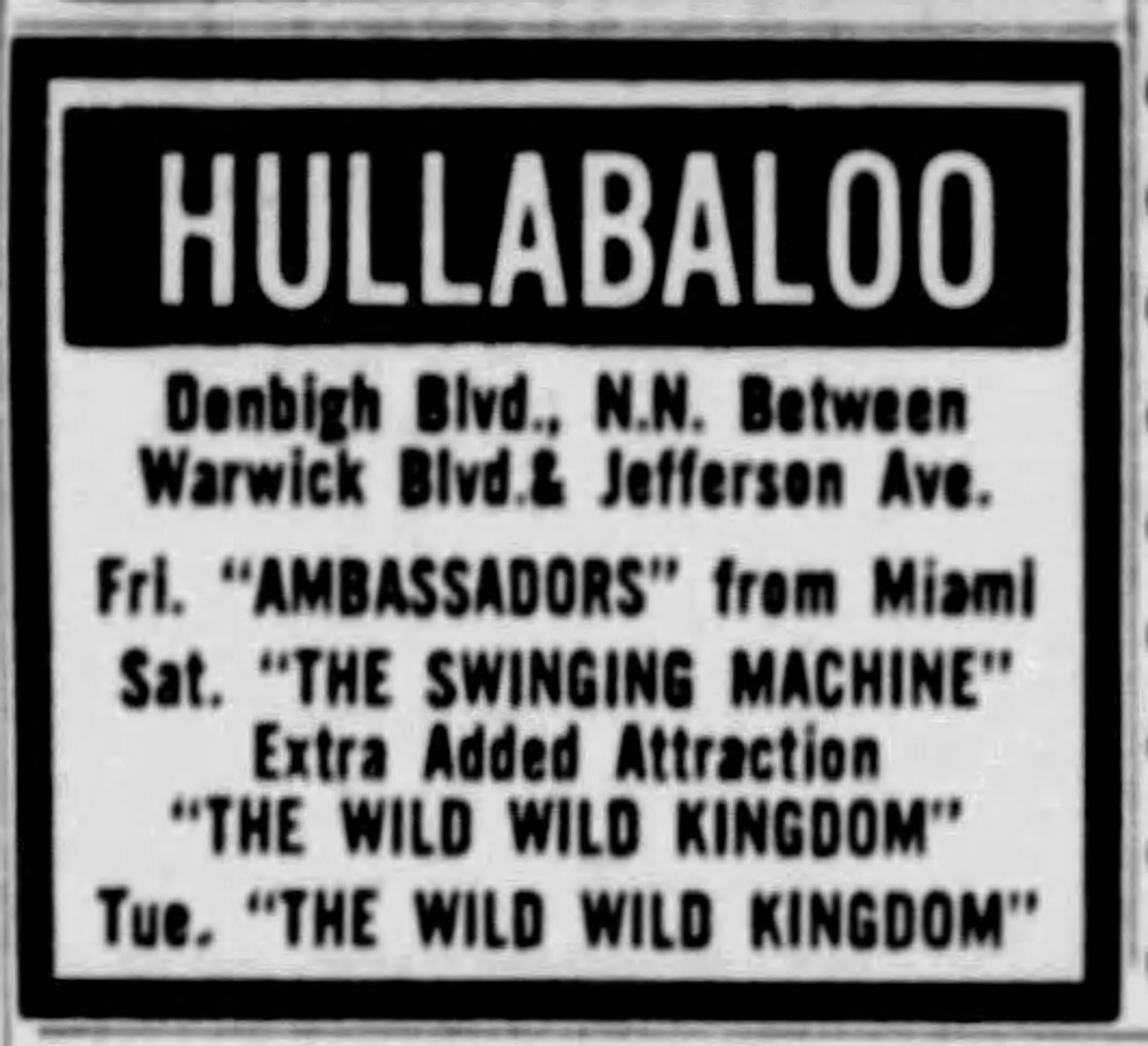
July 9 – Hullabaloo Club, Genoa Road, Belvidere, Illinois
July 10 – The Deep End
July 12 – The New Place with Christopher Robin & Friends
July 19 – The Green Gorilla
July 20 – The Cellar, with the Byzantine Empire
July 26 – The Deep End
August 2 – The Aragon on 1106 W. Lawrence
August 3 – Grandmothers in Lansing
August 7 – The New Place with Fire and Ice
August 9 – The Cellar with the One Eyed Jacks
August 9 & 10 – The Aragon with the Fenders and the Weaker Sex
August 17 – The Deep End
August 27 – at the Jaguar with Boston Tea Party
October 25 – Wild Goose in Waukegan at 8:30, The New Place at 10:30
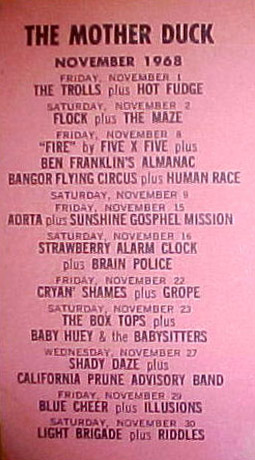
November 23 – at Mother Duck with the Box Tops
November 27 – The Deep End with the Lights of Darkness
November 29 – The Green Gorilla, Des Plaines American Legion Hall with the Commonwealth
December 30 – Bachelor’s Ball at the Auto-Aviation Museum, Cleveland (follow-up item noted the band canceled due to auto accident so the Imperial Wonders subbed)
Later members of the Babysitters included:
Plato Jones – percussion
Rick Marcotte – trumpet
Byron Watkins – tenor sax
Danny O’Neil – guitar
Charley Clark – tenor sax
Bobby Baker – alto sax and flute
Turk Littles [Alton Little] – trumpet
Othello Anderson – ?
These are the ones I’ve found in a smattering of news clips and in the comments below. The album credits five others: David Cook, Dan Alfano, dJack Renee, Phillip Henry, and Moose that I have not seen listed in the comments or news clips. Some of them could have been brought in to overdub the unfinished tracks for the album.
1969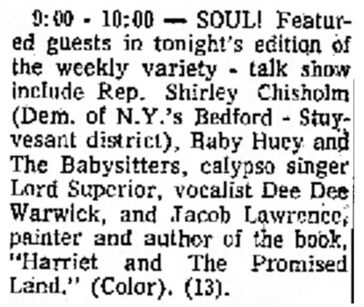
January 10 – The Aragon with the Illusions and the North Syde
January 17 – The Aragon with Operation Soul (formerly the Fenders)
January 18 – The Aragon with the Buckinghams and Operation Soul
February 7 – The Aragon with the Motown Sound, the West Side Story and the Rush Hour
February 14 – Valentines party at the Cheetah
March 1 – The Wild Goose, Rt 120 & Lewis Ave, Waukegan with the Illusions
March 15 – The Aragon with Sam the Sham and United Nations
March 16 – Gordon Technical High School, 3633 N. California Ave with the Mauds and the Soul Machine, 6-9 PM
March 21 – The Chances ‘R’, Champaign, IL
March 22 – The Wild Goose in Waukegan with Ben Franklin’s Almanac
April 1 – University of Illinois, Chicago Circle Campus, 750 S. Halsted, benefit for Biafran Relief, 1-4 PM
April 1 – first mention of their Buddah signing in Billboard
April 3 – The Basement, 310 Pearl, Grand Rapids
 April 4 & 5 – The Aragon with Doug Clark & the Hot Nuts and the Green Men
April 12 – “Fernando’s Musical Enterprises recently hosted a party for Baby Huey and the Babysitters at Barnaby’s Balcony. The group’s latest single on the Curtdom label is ‘Mighty Mighty Children'” – Billboard
April 21 – new run starts at the Cheetah
On April 24, 1969, the Herald Tribune reported:
A part time Evanston Township High school English teacher and a former rock ’n’ roll musician were arrested yesterday on charges of possession of $2,000 worth of heroin and marijuana … Jeffrey Sowers, 22 … who played with Baby Huey and the Babysitters, a Chicago rock band, also was arrested in the raid on [Noreen Tasley’s] apartment.
I haven’t seen Jeff Sowers cited as a part of the Babysitters beyond this news item.
April 30 and May 1 – at the Scotch Mist in Chicago
May 1 – Billboard reports the group scheduled to record their first LP for Curtom in New York.
May 2 – Chicago Tribune mentions Inner-National Booking “best known for its management of Baby Huey and the Babysitters.
May 6 – Soul! TV show, with Dee Dee Warwick, Lord Superior, Shirley Chisholm and Jacob Lawrence – anyone have a clip of this?
May 21 – Merv Griffin Show in New York (announced in Billboard May 17)
May 22 – The Chances ‘R’, Champaign, Illinois
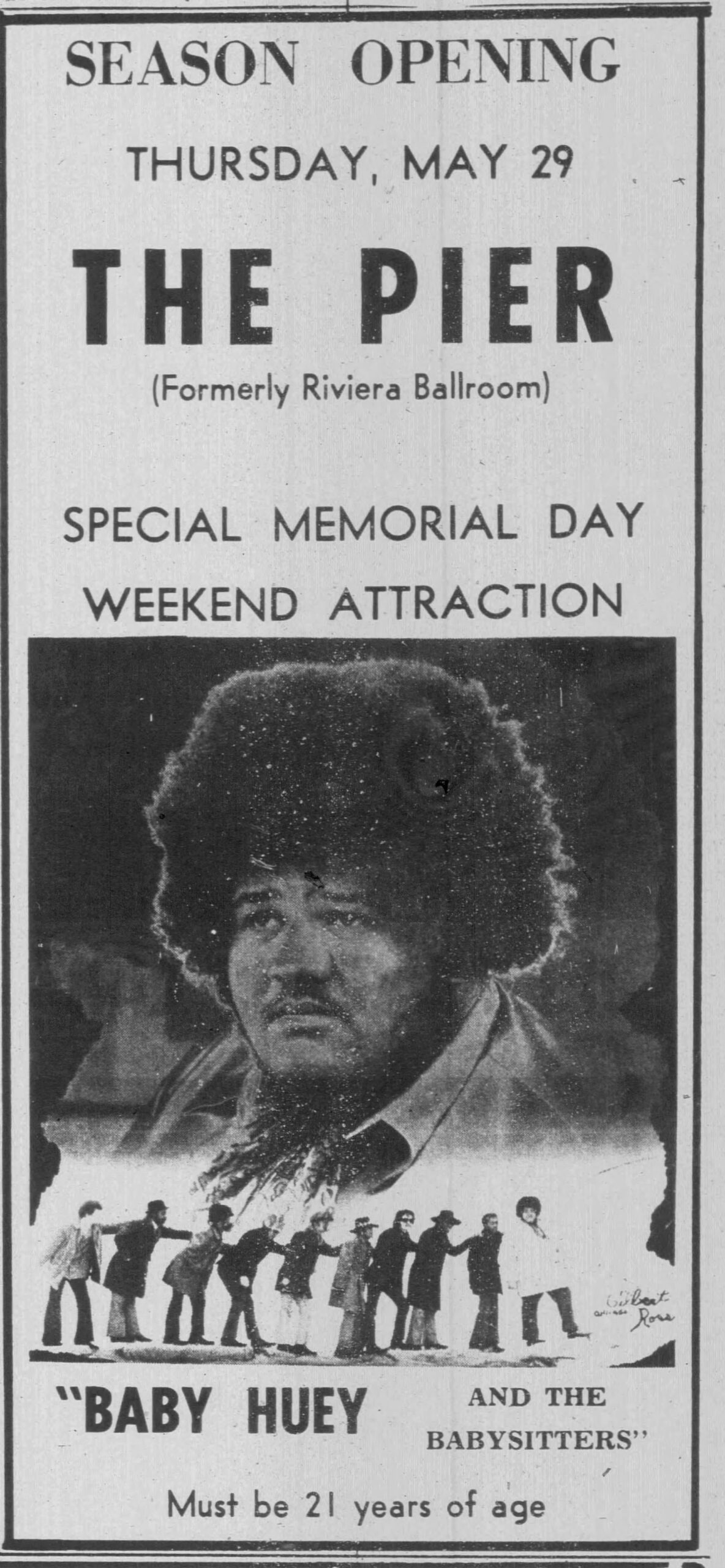
May 29 – The Pier (formerly the Riviera Ballroom) in Lake Geneva
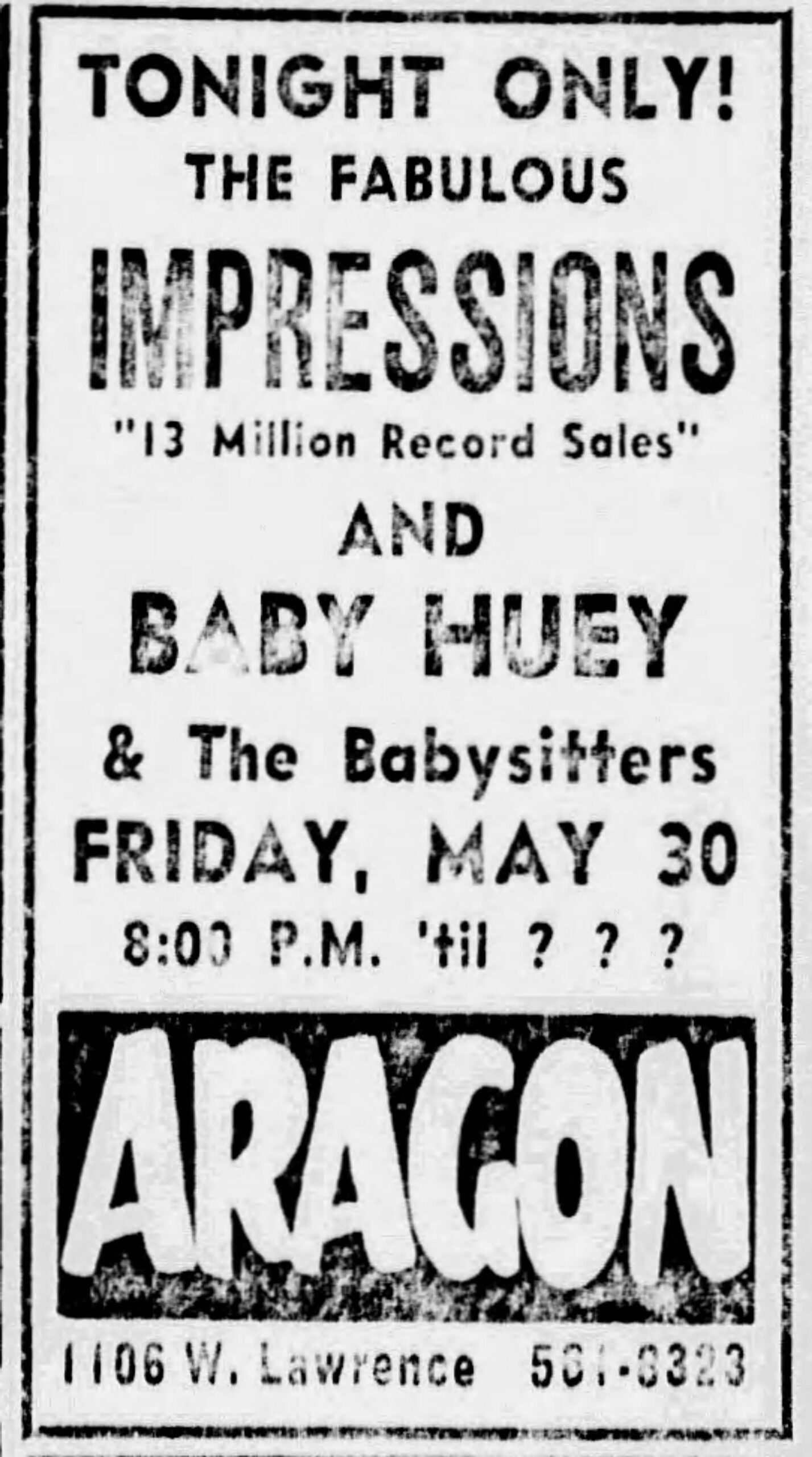
May 30 – The Aragon with the Impressions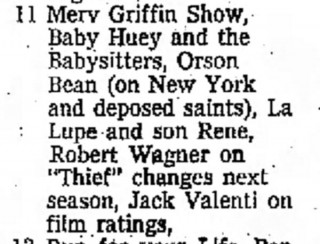
June 14 – The New Place with Mead
June 21 – The Aragon with the Buckinghams and Von Ryan Express
June 27 – The Aragon with Five Stairsteps & Cubie, and Spot & the Blotters
July 26 – benefit for Reese hospital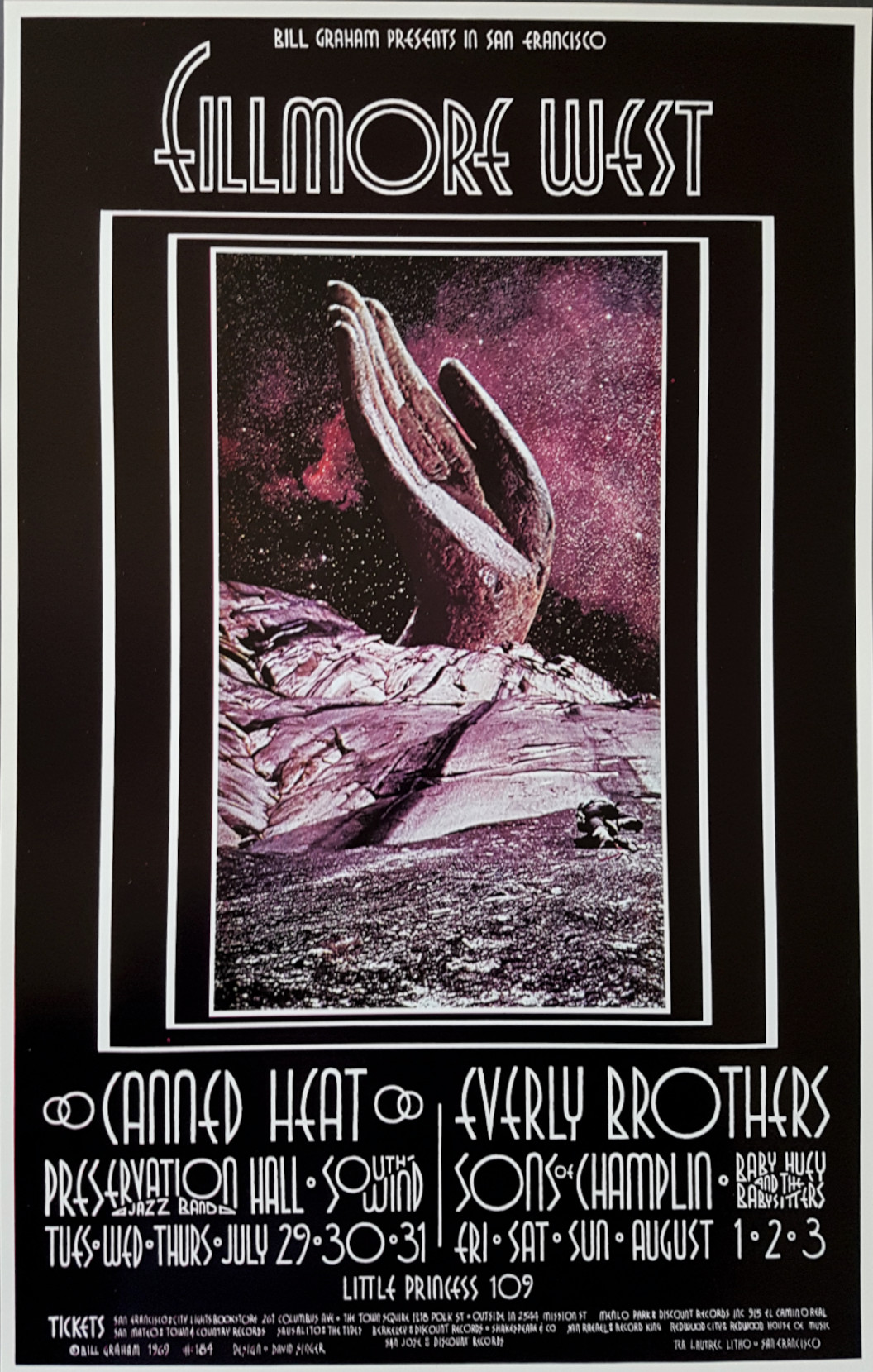
August 1-3 – The Fillmore West with the Everly Brothers and Sons of Champlin Cancelled, Frumious Bandersnatch took their place
August 4-5 – Basin Street West Most likely cancelled
In August, a syndicated column The Living Arts by Charles Hobson & Shelia Smith mentioned the group as being one of many to appear on the Chicago TV show Our People.
August 14 – Jet announces that Baby Huey was “ailing a bit” in Chicago.
September 5 – The Rectry, 4850 Menaul NE, Albequerque, NM
September 15-21 – the Whisky a-Go-Go with Eric Burdon of War
October 24 & 25 – Lally’s at State & Chestnut with Aorta
On November 2, the Chicago Tribune ran a profile by Clarence Page of a new group tentatively called Funky Skull including Jim Armstrong and Ken McDowell from Them, Curtis Bachman from the Buckinghams, and Reno Smith from the Babysitters. Reno is quoted: “I have played with a small instrumentation before. You are much more free this way, liberated from the limits of a single role in a large group.”
December 5 – The Aragon with Wayne Cochran & the C.C. Riders
The Tribune reported on December 11 “Wayne Cochran brought his blond bouffant hair-do to the Rush Over, where he did an impromptu bit with Baby Huey & the Baby Sitters.”
1970
February 4-8 – Whisky a-Go-Go, Los Angeles
April 29 – Marian Central Catholic High School (winners of the Pine Brothers Cough Drops contest), Woodstock, IL with Tommy James & the Shondells, the Litter and the Saints & Sinners
May 1-4 – The Dells at Lake Lansing
May 22 – Streator, Ottawa, IL, with the Second Coming (formerly Buddy & the Citations)
May 28 – The Tribune reports: “Baby Huey … reportedly has split up with the Baby Sitters and is rumored to be joining a Madison group, the Brotherhood.”
June 17-21 – The Dells at Lake Lansing
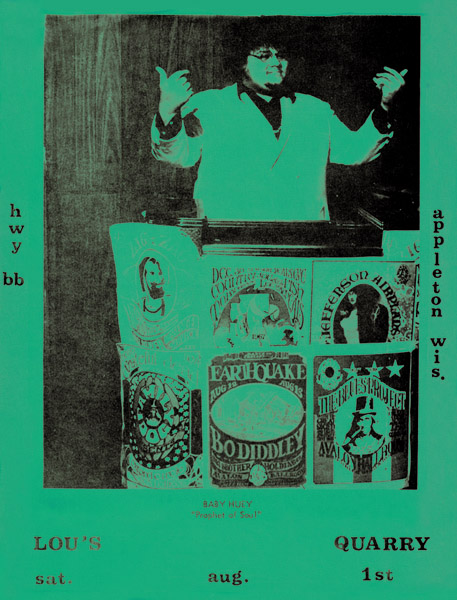
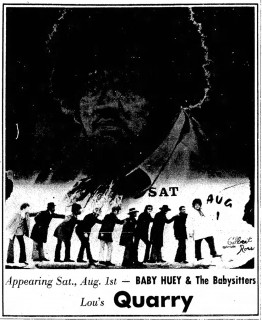
August 1 – Lou’s Quarry, Appleton, WI
October 25 – Val-Air Ballroom, Des Moines, IA
October 31 – Drake University Homecoming Dance, Val-Air Ballroom (scheduled but cancelled due to Jim Ramey’s passing on the 28th, replaced by Just Us and the Batch)
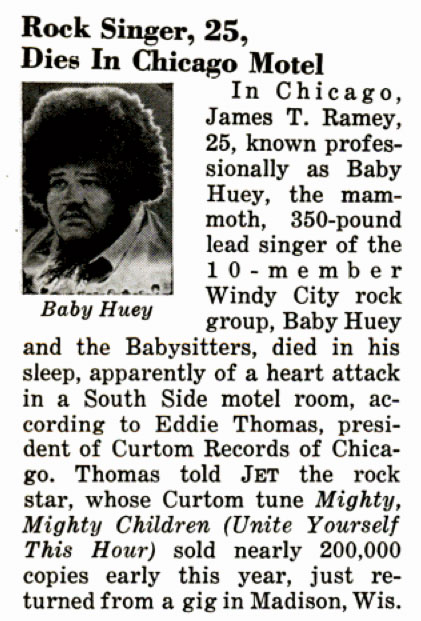
Baby Huey died in the Roberts Motel, 6635 S. King Drive, Chicago on October 28, 1970, after a show in Madison, Wisconsin.
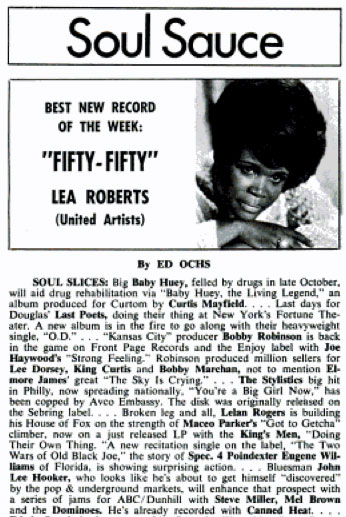
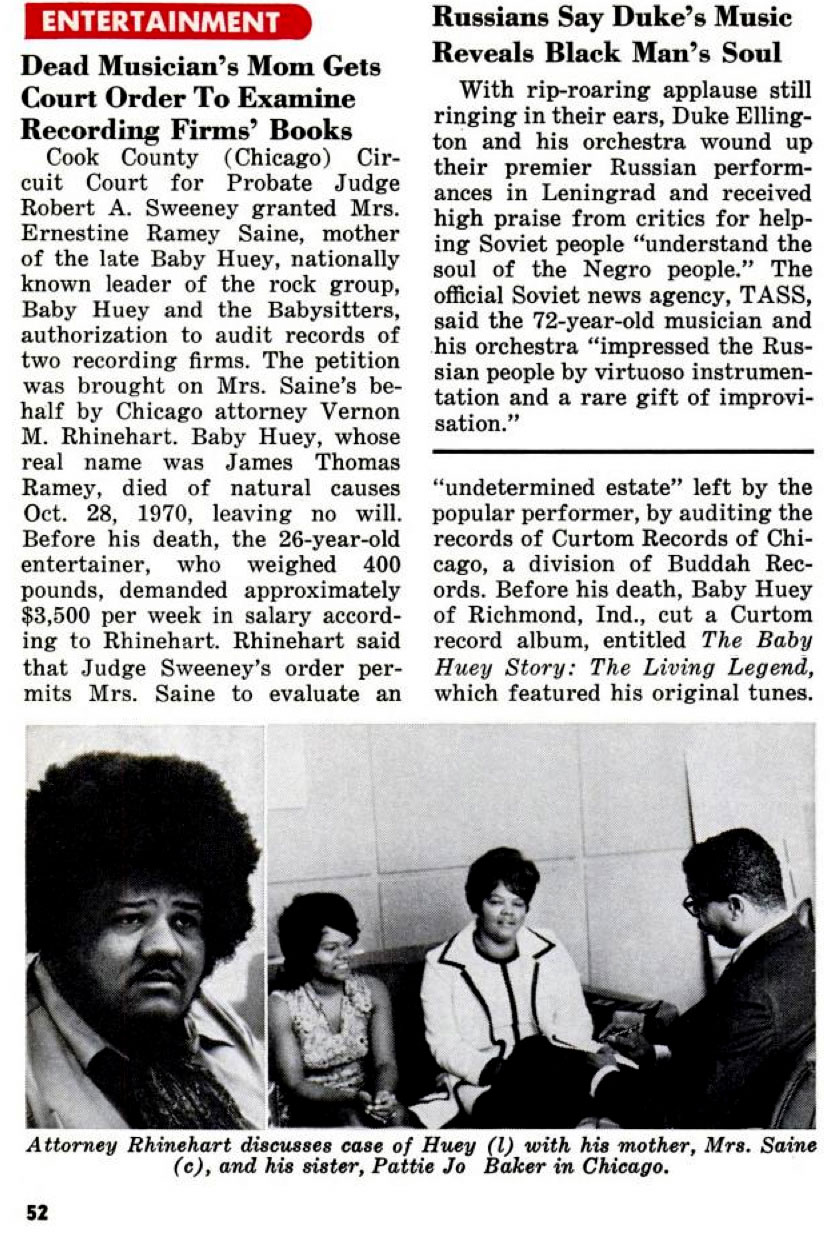
The Babysitters continued on for some time after James Ramey’s death, apparently with members such as Chaka Khan and her husband Hassan Khan, Charlie Clark (“Chup”), Jon French, Gail, Tommy Thompson, Kenny [surname?] … (see comments below).
Billboard mentioned that after Huey’s death, the Babysitters changed their name to Boink for at least one live show. However Robert Baker, in a comment below states “The Babysitters never changed their name to Boink. This was another concurrent group that had at least two ex-Babysitters in the group.” A listing for a December 4-6, 1970 appearance at the Factree in Calumet City specifies “formerly the Baby Huey Baby Sitters”.
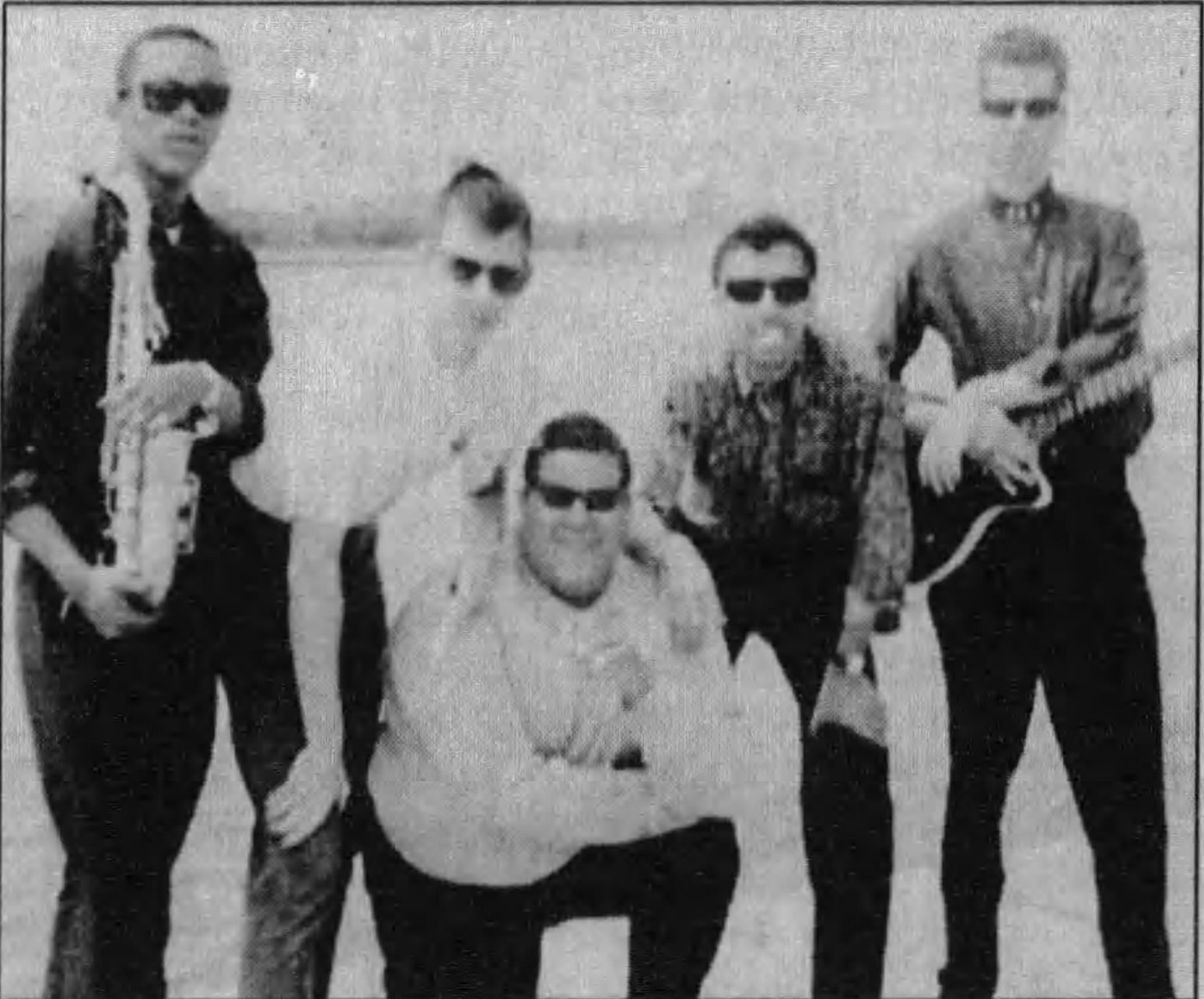
Thanks to Dean Milano for Capitol Booking Corp photo of Baby Huey and the Baby Sitters. Check out Dean’s book The Chicago Music Scene: 1960s and 1970s.
Live dates from publications including The Daily Herald, the Tribune, the Des Moines Register, the Belvidere Daily Republican and others. Certainly this is a far from complete list of their gigs, and also a number of those listed were probably cancelled or postponed.
In 2005 an acetate came up on auction that was supposed to be an unreleased instrumental by Baby Huey and the Baby Sitters. I had a sound clip up here for over a year before Mark Namath identified it as “Zoobie” by the Noisemakers. The acetate was probably a DJ or collector’s cut misidentified as Baby Huey – there’s no connection between the groups.