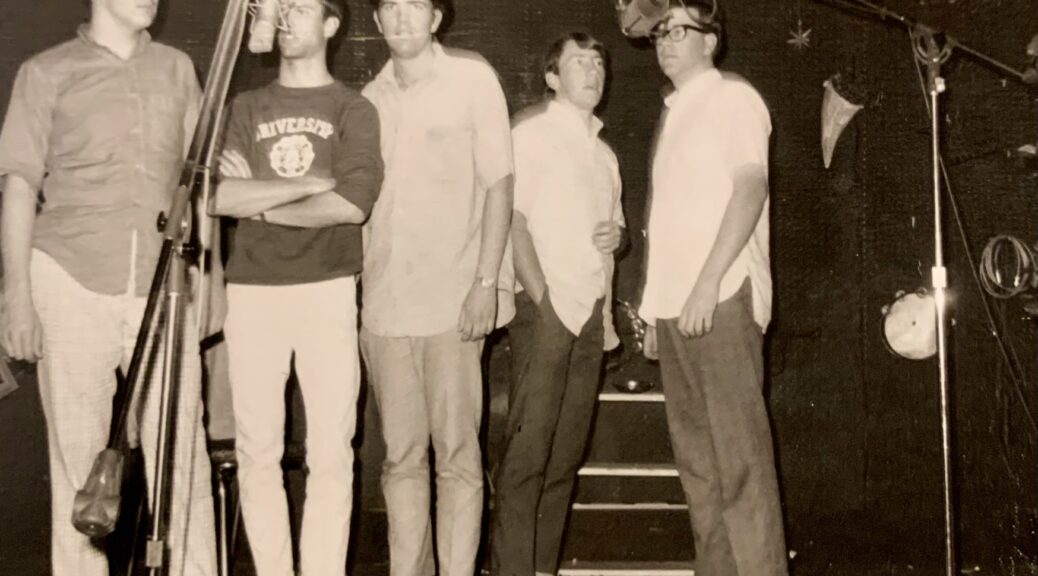
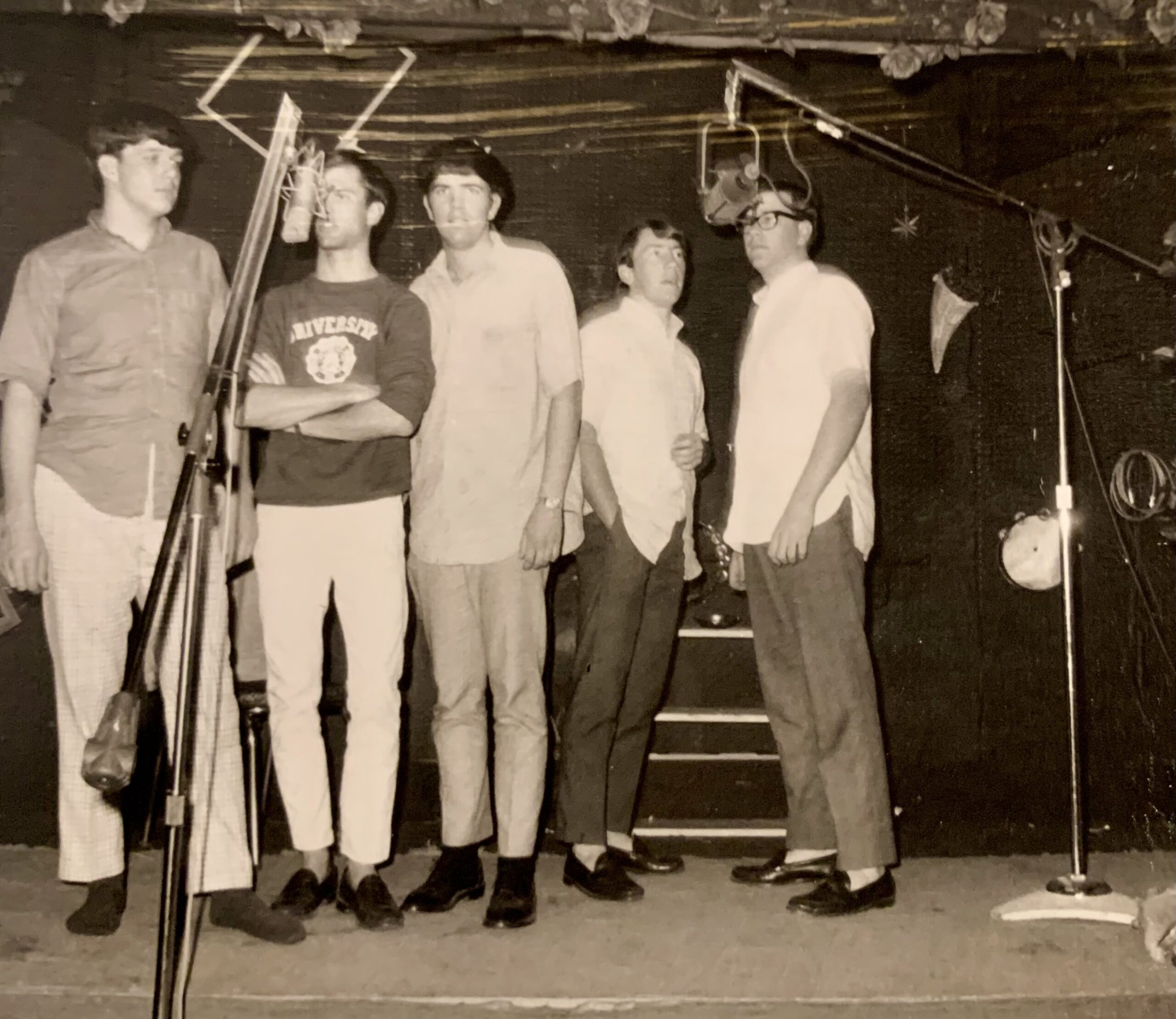
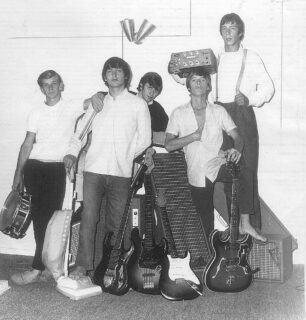
The Villagers came from Sarasota County in Florida, just south of Tampa. Some or all of the members graduated from Riverview High School class of ’65.
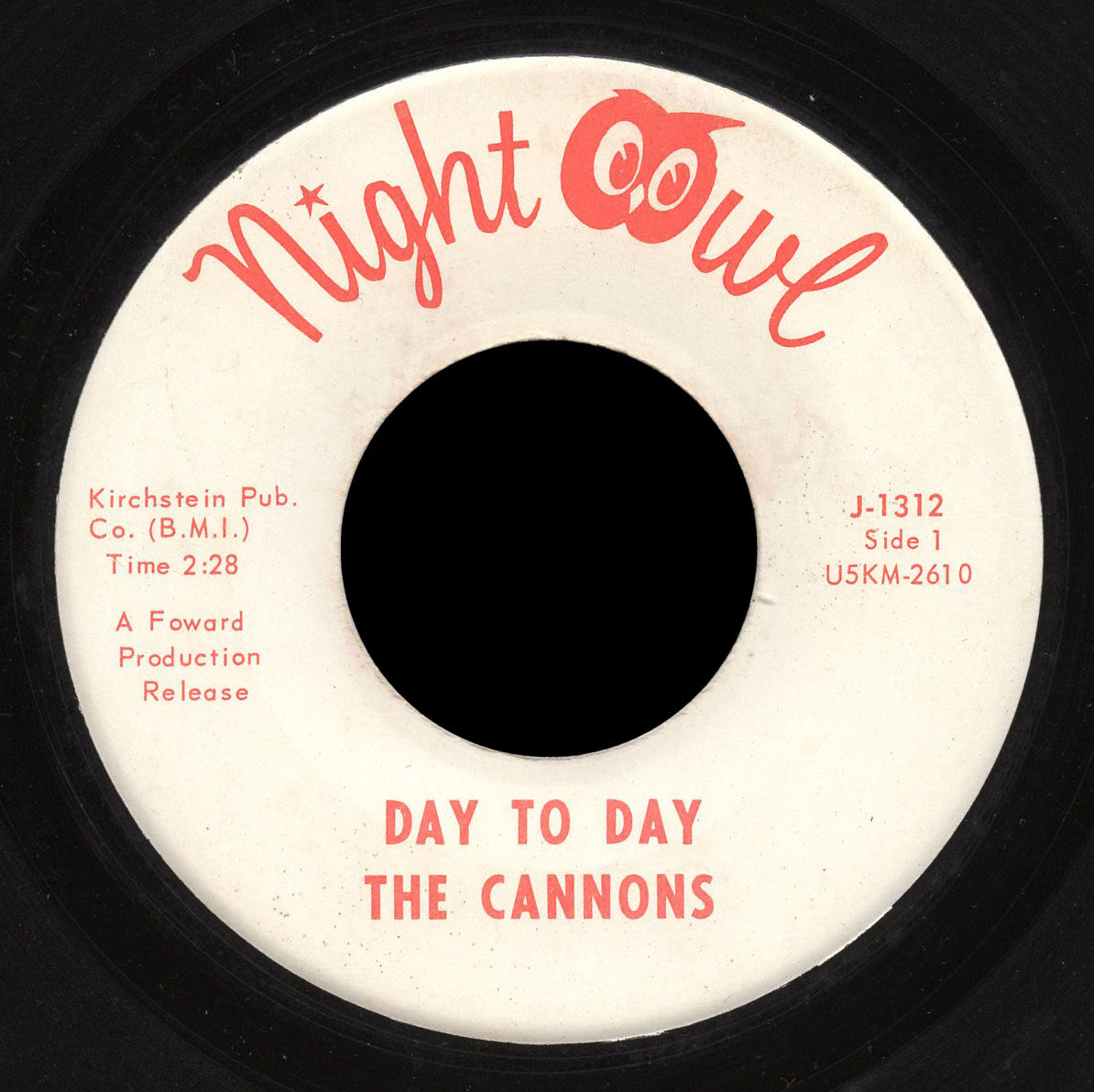
They cut one fine record “Joann” / “Glad You’re Back” on Dale Records 107. “Joann” is a fine teen-type original by Jim Spoto. “Glad You’re Back” is an excellent fast-tempo original by Neal Larson, with neat harmonies and driving drumming.
The Sarasota Herald-Tribune featured a photo of the band on July 7, 1964, describing them as:
… a recently reorganized ensemble … a formerly all male group, now includes the talents of Gretchen Holland at the drums. Other musicians, from left, include, Ken Larsen, Jim Spoto, Neil Larsen and Bill Burgsteiner.
The Tampa Bay Times reported on May 6, 1965 that the Villagers came in third place at the Suncoast Star Parade talent contest at Bayfront Center, with members listed as Gretchen Holland, Kent Larson, Jim Spoto, Wally Kirsten and Neil Larsen.
A notice in the Tampa Tribune on September 23, 1965 gives a different lineup:
Bradenton – A free concert will be given at Cortez Plaza Shopping Center Saturday at 5 p.m. by “The Villagers.” The rock ‘n roll recording stars consist of Kent and Neil Larsen, Jim Spoto, Grechen Holland and Wally Kirstin and have won many honors through the state.
The record and articles have variations in spelling, Neil or Neal, Larsen or Larson.
At a 45th reunion at Riverview High School class of ’65, the Villagers played with a lineup of Bill Burgstiner, Jim Spoto, Harold Harms, and Kent Larson.
Somehow the record ended up on a New Orleans label, Dale Records 107, with mastering codes 133-3552/3. The code prefix 133 is unfamiliar to me.
It was recorded by Rick Jarmon, who is also unfamiliar to me. I cannot find any other credits for his engineering or production.
They were a talented group, and I wish they had made more records.
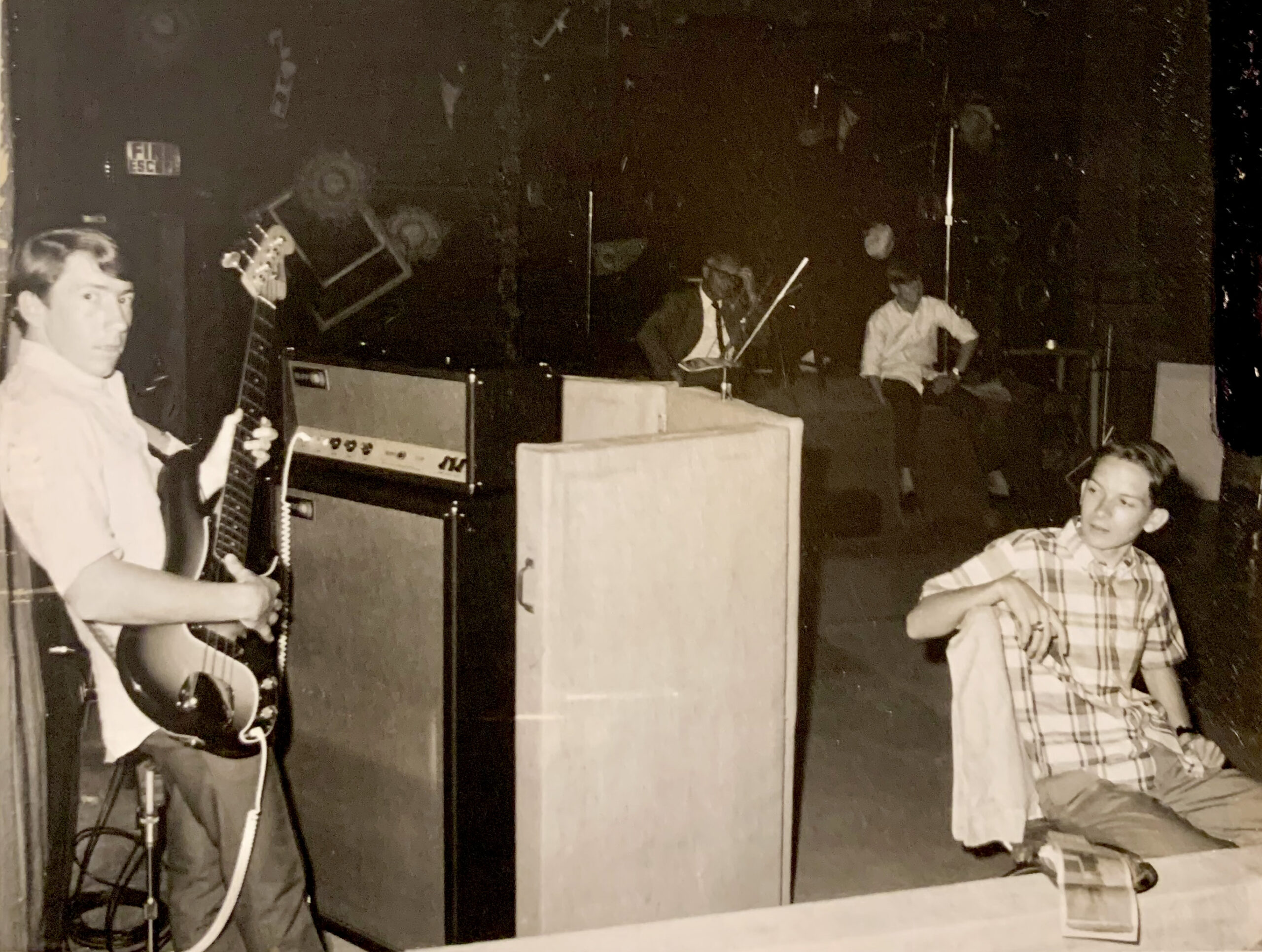
The Dynamics recording at Atlanta Sound Studios, 1967. From left: Steve Diehl, Bruce Allen, Stanley Newman, Ronnie Osborne, and Bob Garrett
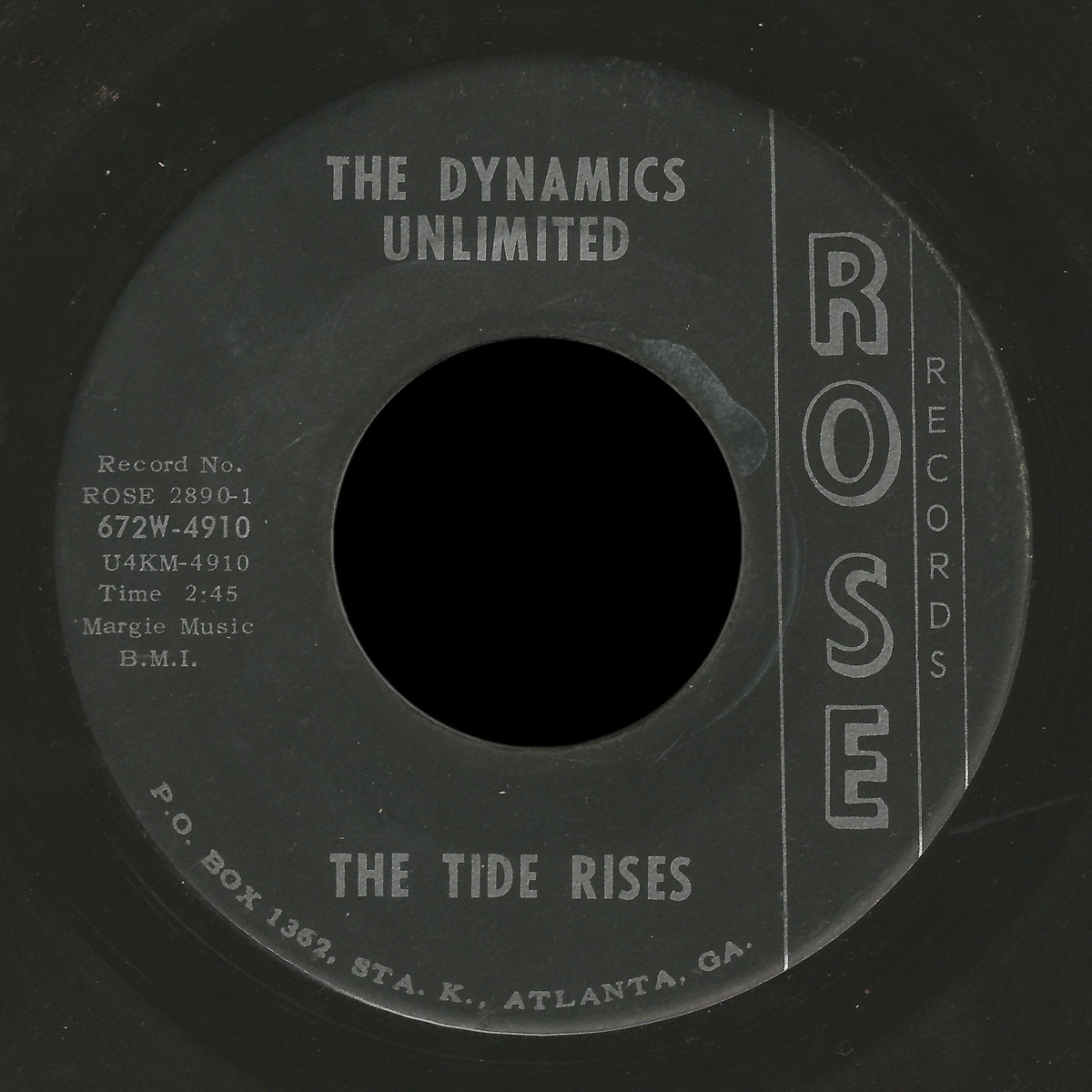
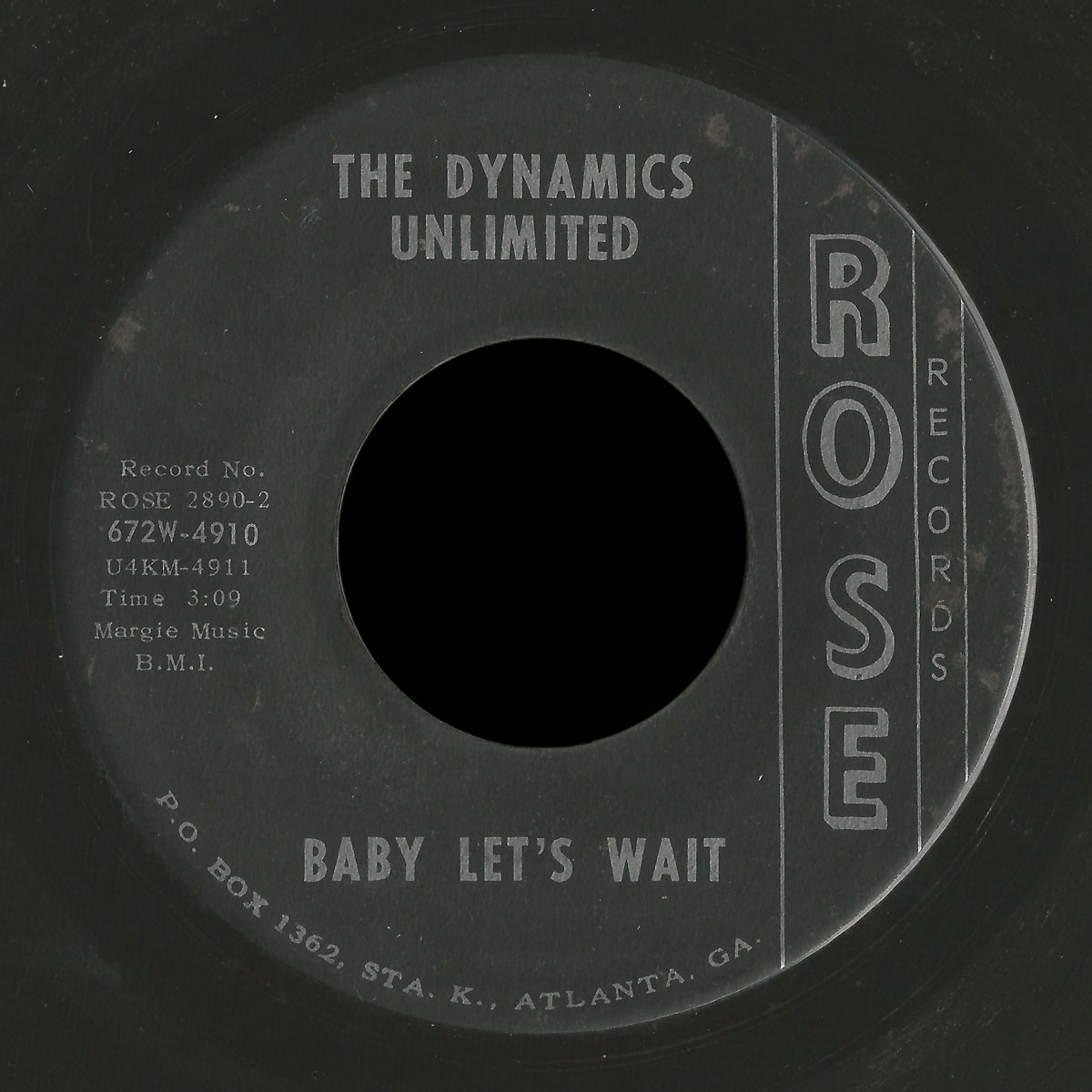
The Dynamics Unlimited released one 45 on the Rose Records label, the melancholy “The Tide Rises” (lyrics taken from the poem by Longfellow) b/w “Baby Let’s Wait” on Rose 2890. Publishing is through Margie Music, BMI. The RCA custom press # U4KM-4910/1 points to a 1967 date.
The band then backed Jerry Ashley for his single on Rose 2091, “Don’t Tell Me Why” / “Come to Me”, two originals by Ashley also published by Margie Music.
The Dynamics on break at an officers’ club. From left: Bob Garrett, Stanley Newman, Bruce Allen, Steve Diehl, and Ronnie Osborne
I knew nothing about the Dynamics until drummer Bruce Allen contacted me in April, 2024 generously sharing the photos seen here:
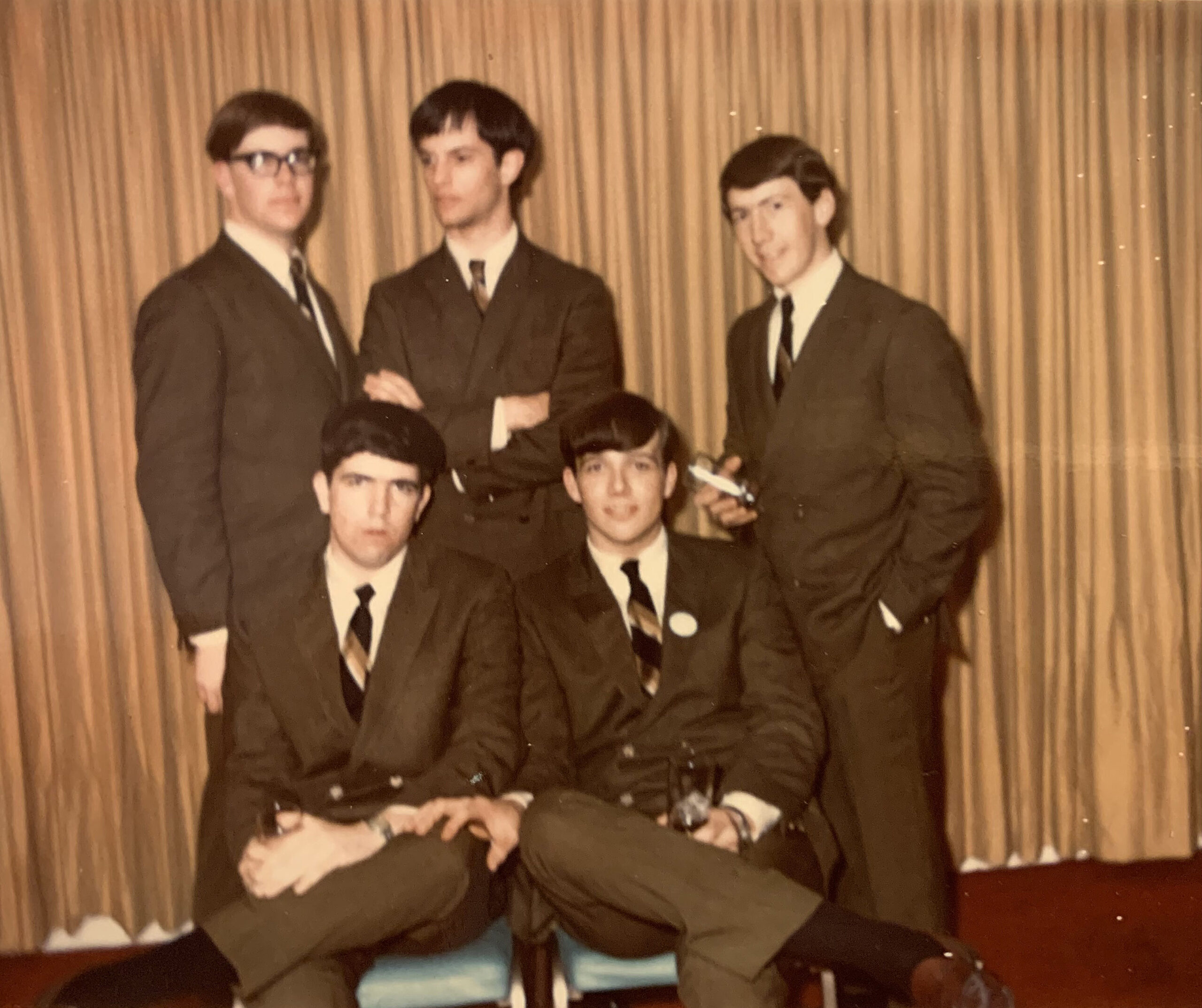
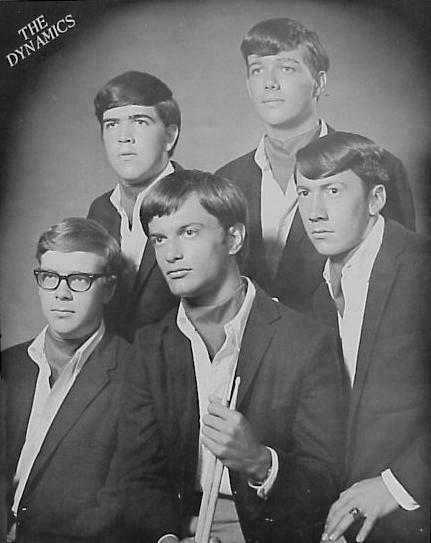
Dynamics promotional photo, early 1967
My name is Bruce Allen, and I was the drummer for the Warner Robins, GA band known as The Dynamics Unlimited. I was one of the three founding members, along with Stanley Newman and Bob Garrett. About 1965-6 we added a keyboardist, Steve Diehl, and a bass player. At first Dan Ross (dec.) played bass for us, but by the time of our recording of “The Tide Rises”, bass was being played by Ronnie Osborne.
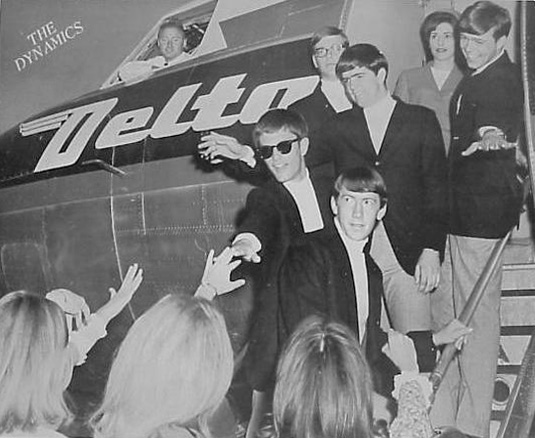
Beginning in about 1966, Steve Diehl’s father, Mr. Carl Diehl of Warner Robins, managed the band and handled all money matters. The band members were paid proportionally after each performance.It was during 1967 and 1968 that we had the promo photos made, played as a studio band for Jerry Ashley on one record, and recorded our version of “The Tide Rises”, and “Baby, Lets Wait”. Many weekends (we were still in high school) were taken up with rehearsals and local performances. During spring and summer breaks we performed further afield at several Officer’s Clubs, Battles of the Bands, and private clubs. Mr. Diehl was a fine gentleman and took great care of the band when we traveled. No one did drugs or even drank much alcohol. It was a fabulous way to spend our later high school years.
Regarding Jerry Ashley, I only recall The Dynamics Unlimited performing as a studio band for him on two or three recordings. I don’t recall performing with him outside of the studio.
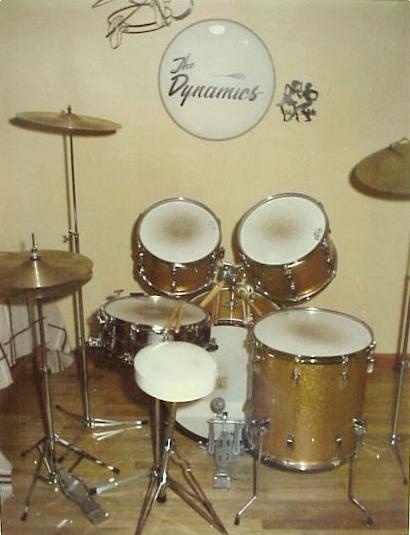
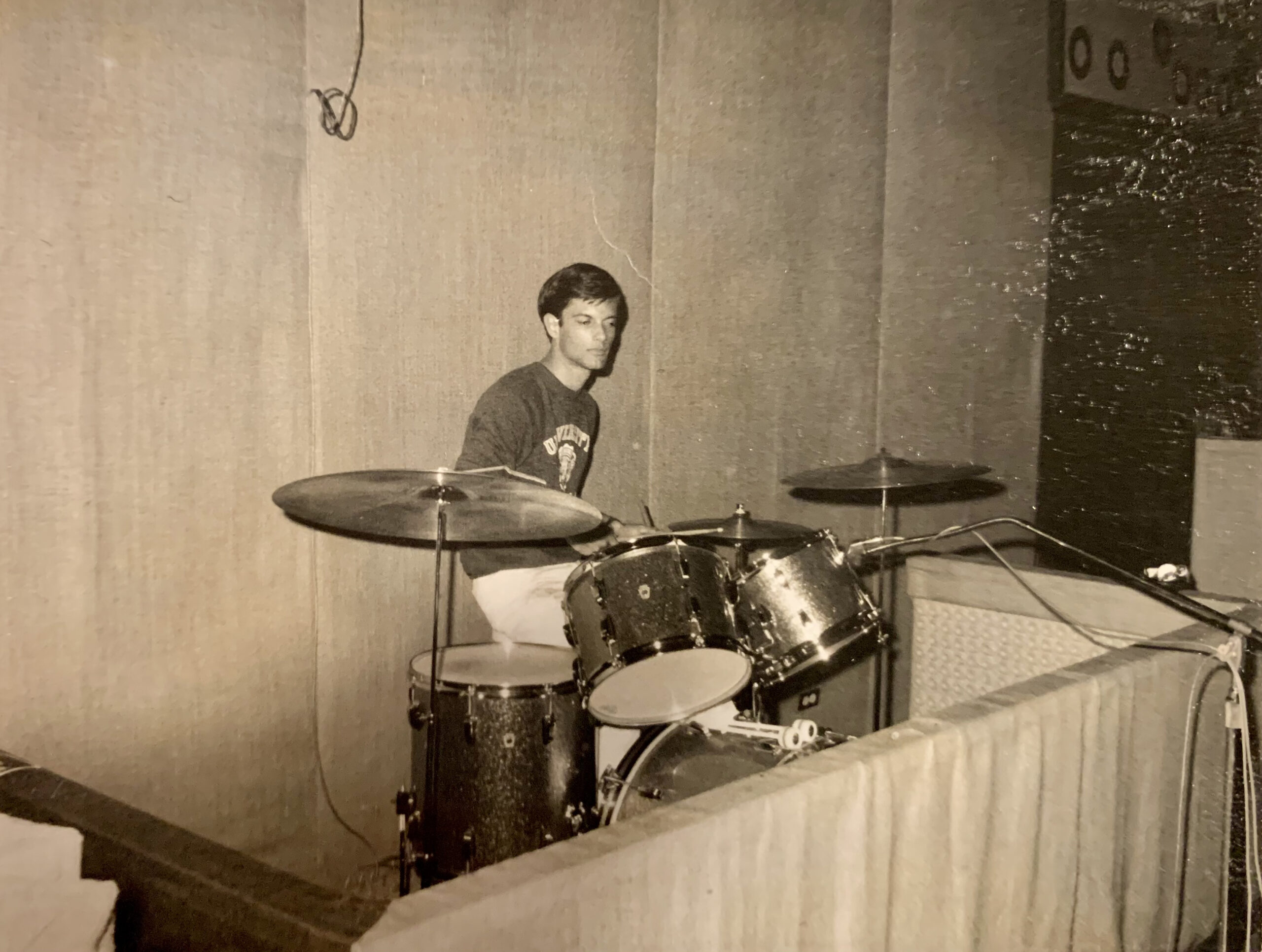
Dynamics promotional photo, 1967Bruce Allen’s Ludwig drums, 1966
I left the band in 1968 after performing a show at Ronnie Barn’s club in Macon GA during late summer, after which I passed out and was diagnosed with mononucleosis. Because the doctor told me that I could not play for at least six months, and because we had bookings, I sold my 1966 Gold Sparkle Ludwig drums with Zildjian cymbals and all of my interest in the band and equipment to Ricky Hughes of Warner Robins, who played drums for the band until the band dissolved in about 1971-72.
I have lost touch with Ronnie and received no reply from what I believe to be his last address in Seneca, SC. All the other band members are deceased. Bob died first in (I believe) Nashville in the 1980s or 90s. Steve Diehl went to serve in Viet Nam about 1971 as a helicopter pilot, was decorated for bravery, and on return to civilian life he drove a heavy rig for (I believe) Hunt Transportation company. He died of a heart attack several years later. I do not know what happened to Steve’s marvelous Hammond B3 organ. Stanley went to work at Robins AFB and died about ten years ago, and Dan Ross was a prominent business man in Warner Robins in the auto industry, and died within the last ten or so years. So, as far as I know, I am the only member of the band that is still living.
Ronnie Osborne on bass, at recording of The Tide Rises 1967
I went off to the University of Georgia in Fall of 1968 and got a degree in Chemistry in 1972. I then went to medical school at the Medical College of Georgia, earned an M.D. honors degree in 1976, did a residency there in dermatology, and taught on the faculty until 1983. I entered private practice in Dermatology in Macon, GA in 1983, where I practiced until 1994. I left medicine in 1994 to run two LLC businesses, and in May of 2007, the Prince and the Government of Liechtenstein appointed me as the first diplomatic consul in history for the Principality of Liechtenstein. I still perform that job as a State Department accredited Honorary Consul.
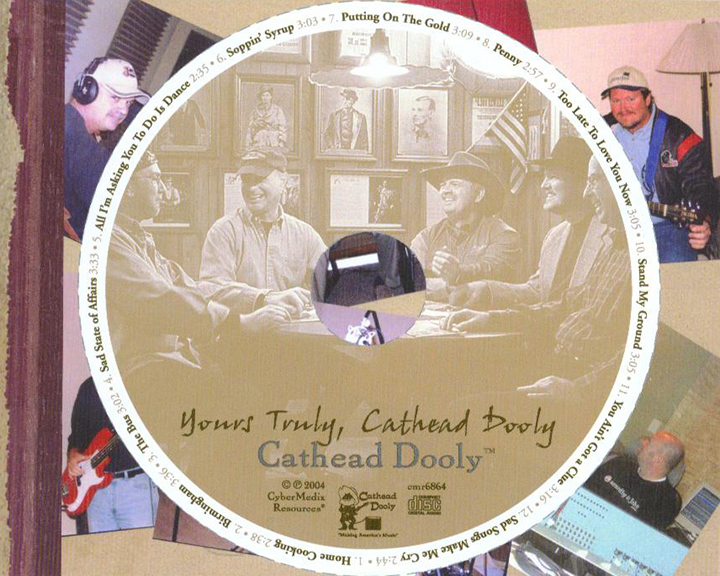
Bruce Allen of the Dynamics in the studio, 1967Yours Truly, Cathead Dooley CD
I have continued to play drums and today have three sets of drums (Ludwigs, Gretsch, and Roland Pro Vs). In the 1990’s I played drums with the GEDA Allstars for three years (a band formed by the Economic Development Authority for the State of Georgia). I also had a very successful band in the early 2000’s called Cathead Dooley and we performed tours in Wales during 2003 and 2004. We recorded a CD of all original material called, Yours Truly, Cathead Dooley.
All photos courtesy of Bruce Allen.
Bob Garrett and Ricky Hughes would join Coldwater Army, who recorded a good blues-rock album Peace for Agape in 1971.
This is a 2024 update of a basic post from 2014.
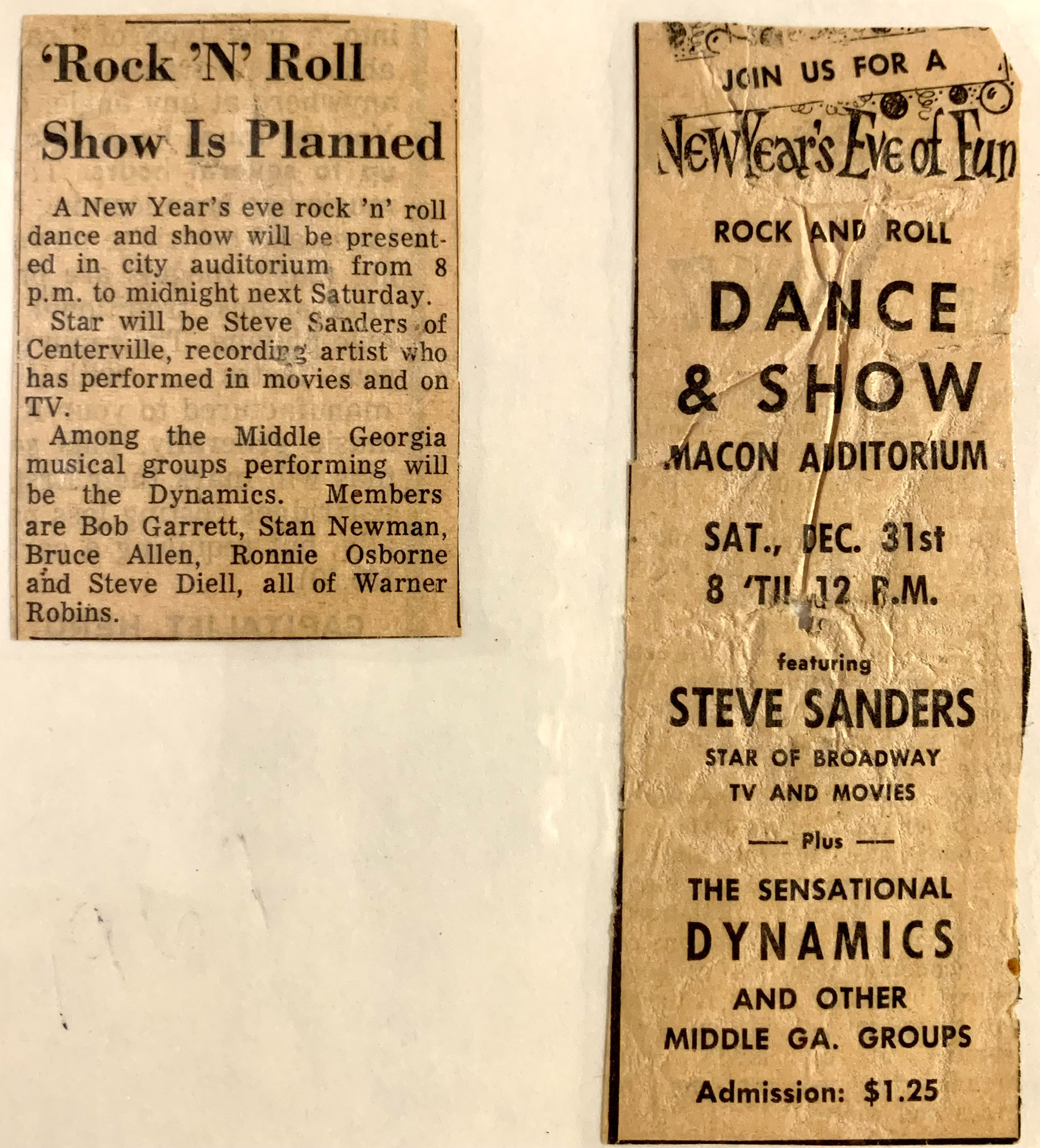
Clippings for the Dynamics and Steve Sanders at Macon Auditorium
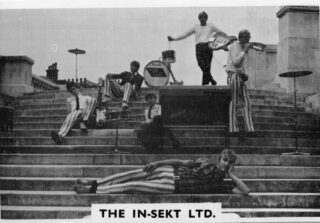
L-R: Derek (last name unknown for now) lead guitar, Roger Semon, Alan (last name unknown for now) keyboards, Alan Brown (drums) (Ed: Mick Tucker (Sweet) used to work for his dad at a car showroom in West Harrow) and Mac Bruce (rhythm guitar). Front: Martin Cheeseman (bass)
Roger Semon (lead vocals)
Derek ? (lead guitar)
Alan ? (keyboards)
Mac Bruce (rhythm guitar)
Martin Cheeseman (bass)
Alan Brown (drums)
This northwest London band was formed around 1964 with the above line-up.
The group got the opportunity to open for a number of high-profile artists at the Wimbledon Palais on at least two occasions, if not more, during 1966-1967, including The Move and John’s Children, as part of the Radio Caroline nights.
Semon remembers Radio Caroline used to trail the group’s name when advertising the show(s) on air.
The original formation also supported The Small Faces at Oddfellows Hall in Watford (possibly 7 March 1966) just as “Sha La La La Lee” was released!
Sometime in 1967, Derek and Alan left and lead guitarist Martin Jarvis from The Motion joined.
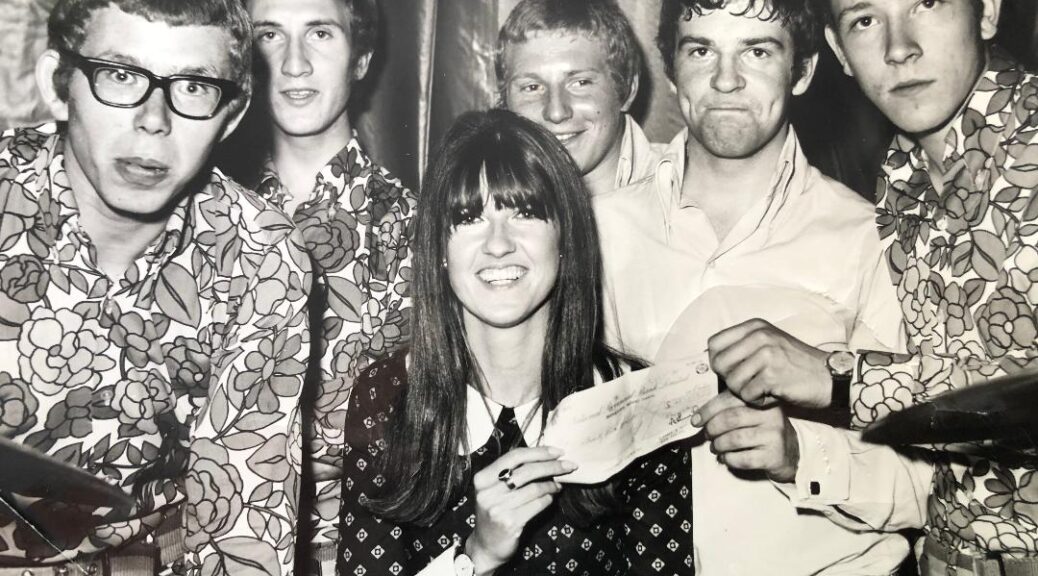
The new In-Sekt Ltd after winning the Boreham Wood beat competition. L-R: Mac Bruce, Martin Cheeseman, Cathy McGowan, Alan Brown, Roger Semon, Martin Jarvis
The second incarnation supported The Who at the California Ballroom in Dunstable and The Move at Wimbledon Palais. When they opened for The Move, the Birmingham band chopped up a TV with an axe at the end of their set on the main stage and Semon remembers the venue’s manager went nuts because the floor was badly damaged!
During 1967 Mac Bruce departed and they continued as a quartet.
Then in 1968, the group changed name to Coconut Ice. Under this name, the musicians supported Julie Driscoll & Brian Auger at the California Ballroom in Dunstable as well as Edison Lighthouse and a few others.
In 1968 Coconut Ice also started landing regular support gigs at the Clay Pigeon in Eastcote, opening for The Sweet many times as well as Locomotive (possibly 15 December), Love Affair, The Tremeloes (1 December) and Marmalade (6 October).
During this period Martin Jarvis left and they carried on with another guitarist who was influenced by Jimi Hendrix.
In late 1969, however, the band broke up when Roger Semon replaced Jeff Curtis in The Kool.
Thanks to Roger Semon for the information. Please get in touch in the comments below if you can add any more information
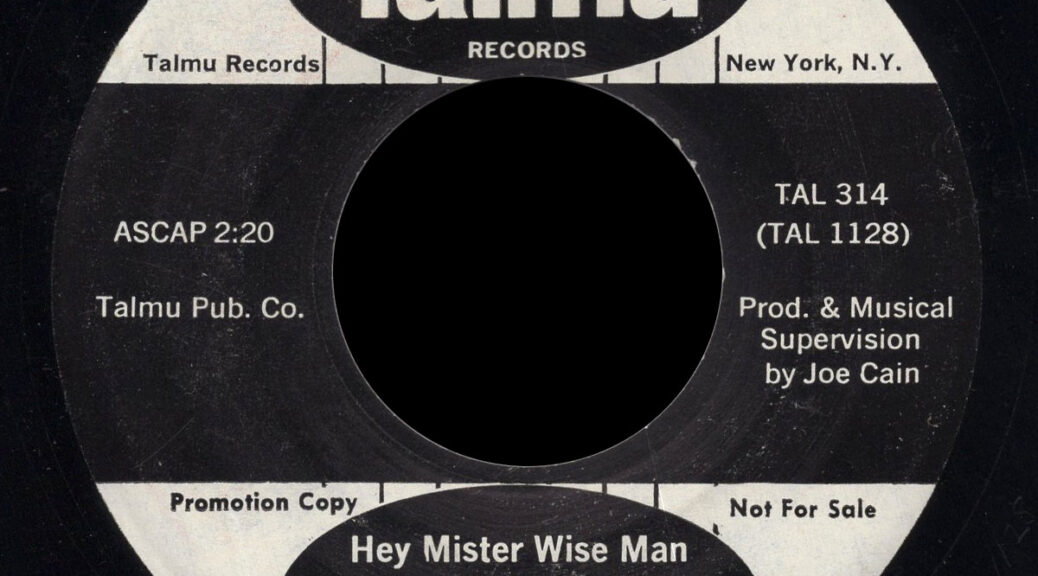
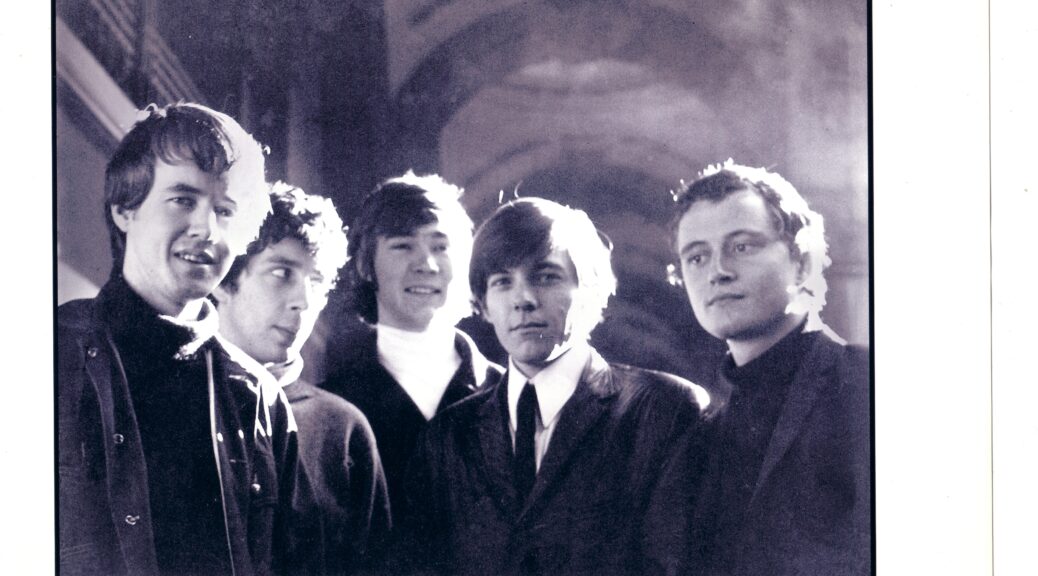
6 Tickets to Shangri-La and The Ides of Love each had one 45 on Talmu Records. The groups sound alike, and all four songs were written by the team of Ed Malinowski and Tom Flynn.
6 Tickets to Shangri-La released “Lovely People” / “I’ve Got To Find A Way” on Talmu 311 in February, 1968, with Leroy Kirkland arranging and Fred Giachino producing.
The Ides of Love released “Hey Mister Wise Man” / “Something So Pretty” in November on TAL 314, this time with Joe Cain producing and supervising.
Cash Box reviewed both 45s.
I cannot find copyright registration for any of these songs, but Talmu and Giachino registered two other Flynn/Malinowski songs in January, 1968: “Objection Overruled” and “She’ll Make Me Happy”. I suppose a demo of these should exist somewhere, and it would be good to hear them.
Talmu Records had a New York City address.
I’d appreciate any further info on Tom Flynn and Ed Malinowski’s musical careers.
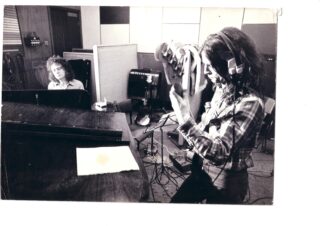
Python Lee Jackson in 1966. Left to right: David Montgomery, Mick Liber, Malcolm McGee, Lloyd Hardy and David Bentley. Photo may be subject to copyright
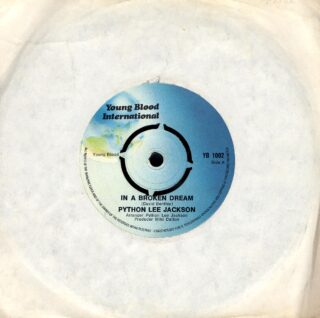
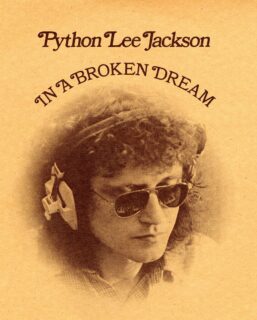
Python Lee Jackson are best known for their association with singer Rod Stewart and the hit single “In a Broken Dream”, which reached #3 on the UK charts in September 1972. First released on the Young Blood label in late 1970, the song had been salvaged, mixed and re-mixed from a track that was originally recorded during April 1969 by the late DJ John Peel for his Dandelion label.
When Young Blood’s founder Miki Dallon re-issued the single for a third time on Young Blood International and it became a massive hit in late 1972, hardly anyone knew that the band behind it had once been one of Australia’s most revered underground groups.
Formed in December 1965, Python Lee Jackson went through numerous incarnations during their Australian period and recorded three impressive singles for CBS before disbanding prematurely in January 1968. The band probably would have been forgotten in the mists of time if hadn’t been for original members Mick Liber and David Montgomery, who decided to revive the group’s name in England in late 1968 with early member and song-writing talent David Bentley.
To understand how the connection with Stewart was forged, it is perhaps appropriate to start with the man who composed “In a Broken Dream” and ultimately brought the band the recognition that had eluded it during its early years down under.
Pianist, composer and singer David Bentley (b. 1943, Brisbane, Australia) started out playing at local school dances around his hometown before moving to Sydney in 1961. Classically trained, Bentley taught himself jazz piano and, shortly after relocating to Australia’s largest city, he hooked up with The Riverside Jazz Group, a Perth outfit that had gravitated east in search of fame.
“I joined when the previous piano player decided his true destiny lay in selling typewriters,” remembers Bentley.
“John Helman joined when the original bass player headed back to Perth [while] Don McCormack had replaced the drummer at an earlier stage. The remaining original members were cornet player, King Fisher, clarinettist Brett Lockyer and trombonist Don Thompson. It was a good band. Chicago-style jazz as distinct from the two-beat banjo/tuba-style then prevalent in Sydney.”
When accomplished English blues/gospel singer Paul Marks joined The Riverside Jazz Group, he brought with him a wealth of experience. Bentley maintains that Marks asserted an influence on those Riverside Jazz Group musicians who would later form The Id.
“Paul was a bearded bohemian whose idea of dressing up was to wear sandals instead of going barefoot,” he recalls.
“We once did a gig at the Trocadero Ballroom, a cavernous Sydney dance palace. The management took exception to Paul’s appearance and turned off the PA. Undaunted he sang acoustically, loud and clear above a six-piece band.”
After a couple of years in music, Bentley resumed his parallel career as a journalist. Joining the ABC in Melbourne, he spent his leisure hours carousing with the university/Carlton crowd who populated the neighbouring pubs. One night in early 1965, he was hitchhiking on a country road when he stepped into a car with The Rolling Stones’ “Not Fade Away” thumping on the radio.
“I thought, ‘I can do that’,” recalls the keyboard player. “Soon afterwards, I chucked in my job and headed to Sydney where Don McCormack and John Helman had formed a blues outfit with mouth harpist Shane Duckham and a raspy-voiced guitarist named Peter Anson.”
Provisionally known as The Syndicate and predominantly jazz influenced, the new group was lent street cred by Anson, who had been a member of well-known Sydney blues/grunge band, The Missing Links. The Syndicate’s line up proved short-lived, however, and around August 1965 Duckham was given the elbow.
“Shane was English, a bluesman to his bootstraps, and a great mouth harp player but he had a drug problem and, having been raised on country blues, adopted a laissez faire approach to bar lengths,” explains Bentley.
“He later died under mysterious circumstances while working on a prawn trawler in northern Queensland. He remained a friend to all of us. Later, when I was with Python Lee Jackson, he often joined the band on stage as our honoured guest.”
The group recruited disabled singer Jeffrey Leo Newton to fill Duckham’s shoes. “Jeff suffered from spina bifida but possessed great strength in his upper torso, moving with agility on sticks,” explains Bentley. “He had a powerful voice and, despite his handicap, a good stage presence.”
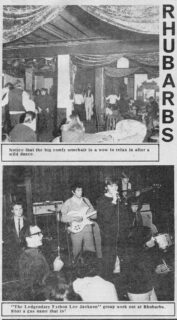
With Newton on board, folk impresario Jim Carter entered the picture as the band’s manager. Carter changed Jeff Newton’s name to Jeff St John and the band became Jeff St John & The Id (after a popular comic strip The Wizard of Id). When Carter opened Rhubarb’s disco in Neutral Bay on Sydney’s fashionable north shore in late 1965, The Id became house band. A couple of months later, the band signed to the Spin label and released its debut single, “Lindy Lou”, which barely dented the Sydney charts despite heavy rotation on radio.
The Id had begun to consolidate its reputation and establish a loyal following when the police closed Rhubarb’s in March 1966 – and, in the hiatus, Bentley looked around for a fresh challenge.
It was at this time that he met up with drummer David Montgomery (b. September 1945, Melbourne, Australia) and British expatriate guitarist Mick Liber (b. 1 March 1944, Peebles, Scotland) – laying the foundations for Python Lee Jackson’s most successful line-up.
A seasoned drummer, Montgomery would be the only member to stay the course throughout the band’s long and tangled history. Having started out playing in Melbourne’s jazz scene during the early 1960s, Montgomery moved to Sydney in early 1964 where he came under the wing of future Max Merritt drummer, Stewart Speer.
“He was a great jazz drummer and guided me in my youthful naivety,” says Montgomery from his home in Los Angeles.
Jazz may have been his passion but Montgomery was wise enough to know that it didn’t pay the bills and after answering a newspaper advert, he hooked up with an English rock band in a migrant hostel in the Sydney suburbs.
Led by London-born guitarist and singer David Burke and rhythm guitarist Ron Edwards, the band played the standard British rock/R&B repertoire of the day.
“We did only a few gigs in Sydney and then, for some reasons that were obscure to me at the time and remain so now, headed off to Newcastle for a season, playing in a very big, flashy local pub,” recalls Montgomery.
Faced with drunken crowds, each night descended into farce and after several months, the group decided to head further north to Cairns in Queensland.
“Cairns at the time was not the tourist hotspot it has since become. It was a rugged outback cow town, a recuperation spot for immigrant workers injured in mining accidents in the plants at Mount Isa and other places further inland,” notes Montgomery.
“I look back on my stay as a rich, not-to-be-missed experience, but at the time I regarded it as a sentence of exile. I knew I had to be in a big city if I hoped to achieve anything in music.”
It was at this stage that Burke decided to recruit a new singer. “He sent to Sydney for a certain legendary character and singer, one Frank Kennington, who had been with The Missing Links among others,” explains Montgomery.
“It was then that I was first made aware of Python Lee Jackson, a mysterious name that Frank had apparently taken over from Andre de Moller, another English immigrant to Sydney.”
“This may be myth but the story I heard was that an English barrister and part-time blues guitarist named Andre de Moller dreamed up the name while gazing at the chalkboard at Suzie Wong’s in Sydney,” reflects David Bentley on the origins of the Python Lee Jackson name.
“Suzie Wong’s was a Chinese restaurant that, bizarrely, employed jazz and R&B groups. When someone complained that attendances were down, de Moller wrote Python Lee Jackson on the blackboard – and a big crowd turned up.”
Before travelling to Australia in the early 1960s, de Moller had led Ealing, west London R&B band, Clay Alison & The Searchers who included future Python Lee Jackson guitarist Mick Liber.
On de Moller’s return home to the UK, recalls Montgomery, Frank Kennington, “inherited the mantle, the name, the legend, the mystique, everything.”
Kennington arrived in Cairns around November 1965 but quickly realised that the move was a mistake.
“I was hot to blow out of Cairns and the band, and so was Frank,” remembers Montgomery.
“He told me about his friend Mick Liber, a great guitarist, and suggested that we head back to Sydney, put something together, and give it a shot.”
Back in Sydney, they enlisted Liber for the original Python Lee Jackson. A brilliant guitarist, Liber had an intriguing past.
Having moved to west London from Scotland with his family at an early age, he joined a local skiffle band in the late 1950s.
From there he graduated to playing in various rock groups around the Ealing area, including Clay Alison & The Searchers (with Andre de Moller) and Frankie Read & The Casuals, whose personnel over the years included future Jimi Hendrix drummer Mitch Mitchell and future New Animals bass player Danny McCulloch (both before Liber’s time).
In an interesting side note, Liber became friendly with Keith Moon and Pete Townshend when they were members of The Detours. Townshend lived in Liber’s dad’s house in Sunnyside Road when he was studying at Ealing Tech.
Having first met Frank Kennington (b. 1945, Ealing, Middlesex) during his school days, Mick Liber decided to try his luck down under in January 1965 after Kennington’s father arranged for his travel to Sydney.
Only 19 years old, Kennington had arrived in Australia around October 1964 after briefly fronting west London band The Unit 4 with future Brinsley Schwarz guitarist Ian Gomm.
The singer invited Liber to join him in Sydney and, on his arrival, they briefly revived the Unit 4 name with future Python Lee Jackson bass player, Lloyd Hardy plus rhythm guitarist Roger Homan, drummer John Webber and the aforementioned Shane Duckham guesting on harmonica.
Unit 4 with Frank Kennington (second left) and Mick Liber (far right). Photo may be subject to copyright
However, Kennington soon moved on to join a transitional line up of The Missing Links in mid-1965. Liber, meanwhile, hooked up with The Denvermen for six months, appearing on the band’s final single Bo Diddley’s “I Can Tell” c/w Gene Vincent’s “Time Will Bring Everything”.
The single, incidentally, also featured Kennington, who had joined the band in its death throes. With The Denvermen on their last legs, however, Kennington soon took up David Burke’s offer to join his group in Cairns.
Looking around for a bass player, Kennington, Liber and Montgomery added Roy James in December 1965 and the original Python Lee Jackson was born.
Initially, the group found work playing in a discotheque in an old, disused hotel in Surry Hills before word spread.
“We did the usual ‘underground’ gigs – parties for Oz Magazine, university functions – and probably the odd surf club,” remembers Montgomery.
“We were an underground band, though, which was a prestigious epithet in some minds, particularly ours, as I recall. We were the darlings of the smart young set.”
One of the most notable events during this period took place when the band was engaged to play The Rolling Stones’ post-concert party at a harbour side mansion in Sydney, which is where Brian Jones and David Montgomery first met and struck up a rapport. When Python Lee Jackson later moved to England, the two musicians crossed paths again in an “odd way” (more of that later).
Judging by some of the members’ exploits, it appears that the original Python Lee Jackson line up was brim-full of colourful personalities.
“Roy James was a rather enterprising character,” recalls Montgomery. “I was given to understand that he made his living by housebreaking. On one memorable occasion, according to Roy, he equipped himself with a hand trolley, a clipboard, and an official-looking grey dustcoat. Arriving at the side door of Sydney stadium, he rapped authoritatively on the door, which was eventually opened by the elderly caretaker/watchman.”
Apparently, one of the big British bands had been completing a sound check earlier that day and the bass player coolly informed the caretaker that he had “come to pick up the amps”.
According to Montgomery, the poor man didn’t know anything about this but the band’s bass player did look all official and the mid-1960s were, after all, more trusting times.
“Roy calmly proceeded to load two beautiful Vox amps from the stage on to the trolley, which he then wheeled back up the aisle to the door, obligingly held open by the caretaker for Roy’s convenient egress,” continues Montgomery. “Handing the man his official receipt, Roy departed the premises and we had new amps.”
However, the escapades weren’t always so innocent. After only a few months together, Frank Kennington, who was partial to stealing cars, got busted in Melbourne for marijuana possession and after spending several months in Pentridge prison in the suburb of Coburg, was deported as an undesirable alien.
Kennington would later work as a roadie for The Who and eventually moved into rock management. He was Motorhead’s first road manager and moved out to California in the 1970 but died in 1998.
“The irony of being shamefully ejected from Britannia’s erstwhile convict colony may have occurred to Frank during those long, dreary months of confinement, but who can say?” reflects Montgomery.
The group had no time for sentimental ruminations. With stacks of gigs lined up, Python Lee Jackson recruited Bob Brady from The Missing Links to help honour the engagements. Montgomery also recalls that another Missing Links member, keyboard player Chris Gray helped out on several gigs as well, as did future Id member Ian Walsh.
According to Iain McIntyre in his excellent book, Tomorrow is Today: Australia in the Psychedelic Era 1966-1970, the band linked up with Sydney film makers’ co-operative Ubu in March 1966 to provide the soundtrack to the pop art James Bond spoof, Blunderball alongside The Id, which may have been how the Bentley connection was originally made.
Whatever the truth is, it wasn’t the band’s last dealings with the co-operative. A few months later, Mick Liber was on hand to record the soundtrack to Ubu film maker Albie Thoms’ successful entry to Canada’s Expo ‘67 film, Man and His World. Both films, incidentally, have since become cult classics.
But we’re jumping ahead of ourselves. David Bentley could see potential in what Mick Liber and David Montgomery were doing. “Bentley and Mick and I talked about putting something new together, using the name Python Lee Jackson,” explains Montgomery.
With former Unit 4 bass player Lloyd Hardy completing the formation, impresario Jim Carter, whose club Rhubarb’s on Sydney’s exclusive North Shore had been a big success with The Id as resident band, now approached Python Lee Jackson to appear in a new version of the club in inner Sydney’s Liverpool Street, playing five nights a week.
The Id, meanwhile, had re-established at another club, Here, in North Sydney. Bentley played the first couple of weeks at Here with his old band but bailed out to join Python Lee Jackson when the new Rhubarb’s opened in late May 1966.
First, however, the new Python Lee Jackson line-up had to find a singer. “It was decided that we would need a strong presence to front the band,” explains Montgomery. “Frank had a certain charisma, but he wasn’t exactly a singer’s singer. We wanted to get someone who could handle that end of it as well.”
The band’s first choice was Danny Robinson, who later became front man and singer for The Wild Cherries, but at the time was playing bass and singing with Melbourne group, The Weird Mob. Hitchhiking down to Melbourne, Bentley and Montgomery scoured the local club scene but were unable to persuade Robinson to relocate to Sydney. Their attention was then drawn to another talented musician playing with local group (the original) Wild Cherries.
With his good looks and bluesy baritone voice, Malcolm McGee (b. 1 November 1945, Melbourne) was, according to Montgomery, “definitely the right choice”.
An established blues guitarist, McGee had been playing on Melbourne’s live circuit since the age of 15, performing Josh White, Blind Willie Johnson and Big Bill Broonzy covers. (Incidentally, he was also a childhood friend of the late Trevor Lucas, who later found fame with English folk-rock band, Fairport Convention).
One of only a handful of accomplished blues players, McGee was an obvious choice for The Wild Cherries when they decided to move into R&B at the end of 1965. While with the group, McGee made some tentative recordings, which though unreleased at the time, have since been issued as part of Half a Cow Records’ comprehensive CD, That’s Life and also appear on Groovie Records’ LP compilation, The Wild Cherries – 16 Pounds of R&B.
McGee remembers the fateful meeting that led to his joining Python Lee Jackson. “[The Wild Cherries] had a Sunday afternoon gig in the middle of Melbourne and Bentley came and sat in. I had never heard anyone play so well. It was sort of like having Ray Charles sit in.”
At the show, McGee only sang a couple of vocal lines but as he was putting his guitar away, Bentley approached him and asked for his contact number. As McGee recalls, Bentley wanted to discuss an offer to join Python Lee Jackson. “I think he came round the next day and I said, ‘Right-o, I’ll be there in a week’s time’.”
After McGee arrived in Sydney in mid-May, the new line up had only a few days to rehearse a set list before Rhubarb’s opened and, according to Montgomery, the repertoire was basic and bluesy. Even so, “the whole thing, club and band, was a huge success, quite unanticipated from my point of view.”
On 22 May, Sydney newspaper The Sun-Herald informed its readers in the “Glitter” column that Rhubarb’s had opened that week in “a cellar at the bottom end of Liverpool Street” and that the band there was Python Lee Jackson. Three weeks later, in its 12 June issue, the newspaper’s “Young World” section ran an expose on the band under the header “Just who is Python Lee Jackson?”
The article offers an interesting insight in the band’s first six months and reveals that during its brief life it had survived four singers, two organists and five bass guitarists! Singer Malcolm McGee, David Bentley (who is named as Bentley Rigg) and “Cadillac” Lloyd Hardy had joined three weeks ago.
“Responsibility for much of the group’s impact is guitarist Mick Liber, who is the first man in Australia to use feedback effectively,” the article notes. “Mick, who came from London 18 months ago, learnt this technique from Peter Townshend, guitarist with the Who.”
While the group would build up a steady following along the Australian east coast throughout the latter half of 1966, Rhubarb’s would provide a handy base and enable the musicians to develop a unique sound.
“Initially the band was for gigging. The idea was to develop the music,” states McGee. “We didn’t really want to record. In fact, we didn’t even see ourselves as a pop act although we had to compete in that world.”
Photo: Go-Set. Image may be subject to copyright. Python Lee Jackson at Rhubarb’s in July 1966
Python Lee Jackson’s live reputation quickly paid dividends. In the first few months of its existence, the group was invited to appear on the late singer Billy Thorpe’s TV show It’s All Happening where they would become regular guests.
According to Ben Whitten, who later compiled the 2009 Half a Cow Records CD Python Lee Jackson: Sweet Consolation 1966-1973, one of the band’s most memorable TV appearances was on the ABC show, Be Our Guest, where the musicians performed Ike Turner’s “I Idolize you” and another whose title has been long forgotten by those involved.
Python’s Lee Jackson’s studio debut was as backing band for top rating Sydney DJ Austin Ward’s single “Emergency Ward” c/w “Who Do You Love?” Issued on Parlophone Records that November, the record sank without a trace. (Ed – it did establish a radio connection that would stand the band in good stead, however.)
Sometime in September 1966, however, David Bentley left the band and returned to Brisbane.
“I left because it turned out to be grind and I had strong ideas about music,” he says.
Back home, the keyboard player spent the next couple of months picking up work with various groups, including sitting in with The Purple Hearts for their farewell gig at the Red Orb club in February 1967. Later that year, he returned to Melbourne where he worked as a journalist for the Australian Broadcasting Commission. In his place, Python Lee Jackson recruited pianist Bob Welsh.
“Bob was a fine player, but he had something of a narcotic habit at the time, and on one notable occasion actually fell asleep at the keyboard in the middle of a song,” recalls Montgomery.
“Fortunately, his fingers had locked on to the tonic chord, so nobody noticed until the tune ended and Bob kept right on playing and sleeping.”
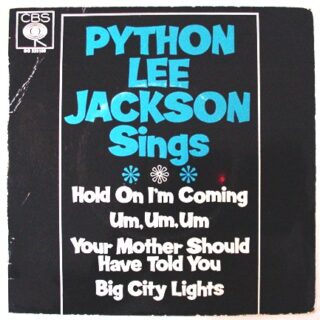
Within weeks, Python Lee Jackson had signed to CBS and returned to the studio to cut their first single. Recorded at Ossie Byrne’s studio in Hurstville, just outside Sydney, and with Spin Records’ founder Nat Kipner in the producer’s chair and with Maurice Gibb of The Bee Gees engineering, the band’s first outing coupled a catchy version of Major Lance’s “Um-Um-Um-Um” with a cover of Stan Kesler and Stacey Davidson’s “Big City Lights”.
“[The single] was really my first recording with the band,” explains McGee. “We were very fond of that sort of Chicago sound, that Major Lance thing. It’s a Curtis Mayfield tune”.
Released in December 1966, “Um-Um-Um-Um” was a minor national hit and, according to David Kent in his Australian chart book, peaked at #79 on 7 January 1967. Exceedingly rare now, the A-side has since turned up on Raven’s excellent compilation series, Sixties Downunder.
As “Um-Um-Um-Um” was taking off, Python Lee Jackson joined a number of bands to support The Bee Gees at their final Australian show, held at the Trocadero Ballroom in Sydney, before heading to the UK and international stardom.
“We were set up on the back end of a rotating stage,” recalls Montgomery. “As the other act finished up, the stage started to revolve and we came into the audience’s view. We kicked off with ‘Hold On (I’m Coming)’, and for some reason I couldn’t hear anything anyone was playing, including myself. It took me a few seconds to figure out that the sound of seven or eight thousand people screaming was drowning everything out. I was stunned. It was the biggest thrill I had experienced in music up until then.”
“Um-Um-Um-Um” helped raise Python Lee Jackson’s profile and around this time, the band made a cameo appearance in the film, The Surfing Years where the musicians can be seen performing at Rhubarb’s.
Ever since joining Python Lee Jackson in late May 1966, Lloyd Hardy had used the nickname “Cadillac” because of his love for fast American cars but it was later that he adopted a new stage persona to conceal his real identity.
“Because he had to hide from his wife now and then and from legal matters pertaining to such, he was [also] Cadillac Lloyd Hudson,” recalls McGee.
So bad was Hudson’s situation that he had to leave the band at one stage.
“He was a wild man himself. He wasn’t short of ways of causing trouble,” remembers McGee on his former band mate.
“On a night when he was behaving, there was this boxer from Newcastle swinging himself about fairly drunk. He just kicked Lloyd’s hand as Lloyd was going past. We were going towards the stage and Lloyd looked round quite innocently and the guy’s gone, ‘What are you looking at?’ Whoosh and knocked him out cold. I can still hear Lloyd’s heels hit the ground after the rest of him.”
Someone in the club called the cops and the boxer was restrained but the fun and games didn’t end there.
“Eight of them were surrounding Lloyd and going, ‘What are we going to do? Call an ambulance or what?’ and he’s woken up and seen eight police uniforms and gone berserk,” continues McGee. “They ended up throwing him in jail as well!”
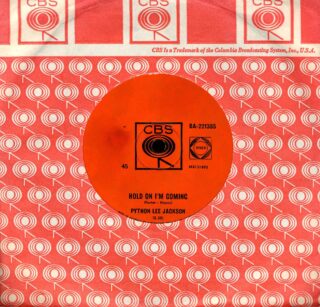
While Lloyd cooled his heels in Brisbane for a couple of weeks, Python Lee Jackson substituted Duncan McGuire, the bass player from Doug Parkinson’s group, The Questions, and returned to the studio to record further material. The fruits of these sessions turned up on the band’s second (and most successful) single, a cover of Sam and Dave’s “Hold On (I’m Coming)” backed by Bob Welsh and David Montgomery’s “You’re Mother Should Have Told You”.
“I never liked our version of [’Hold On’] myself. I used to hate it every time we had to do anything of Sam and Dave’s because I’m a baritone,” laughs McGee.
“Actually, all the tops on ‘Hold On (I’m Coming)’ are sung by Doug Parkinson. You know, because we recorded it at nine in the morning and after you’ve done 45 songs the night before, you’re not ready. So Dougie did the top harmony for me on that one.”
With an extended stay in Melbourne lined up, the group made plans to head south. However, Duncan McGuire had to stay behind to mix the single so the group asked Cadillac Lloyd Hudson (now going by the name Virgil East) to undertake the tour. (Ed. Hudson would die in the 1980s.)
“Duncan mixed that track in his own studio,” remembers Montgomery. “Fine musician, lovely man, but inexplicably he omitted the bass from the final mix! Duncan could never explain this satisfactorily, and I always found it difficult to accept that the engineer/bass player could neglect to ensure that his own instrument was audible on the finished record.”
“I don’t know what he was on that night but by the morning I think he might have sped it up a bit and also almost completely left the bass out,” adds McGee. “There are bass lines in there but you can’t hear them.”
It didn’t matter as far as record sales went. Released in March 1967, “Hold On (I’m Coming)” was a sizeable hit, peaking at #42 on the national charts on 29 April. Interestingly, for some inexplicable reason, it was banned in Tasmania!
Photo: Go-Set. Image may be subject to copyright
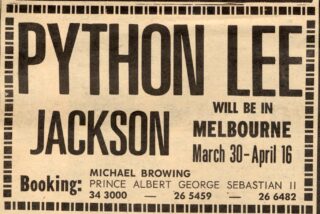
Based in Melbourne during the first two weeks of April, Python Lee Jackson was inundated with work.
“We were usually sort of flogged right into the ground by the amount of work we had to do,” recalls McGee.
“On a Friday or a Saturday night, we would do four gigs one after the other. That was why we got into the recording because if you didn’t get airplay, you didn’t get booked for all of those spots. Getting airplay is like free advertising. That pushes your price up.”
As an indication of the band’s heavy workload, Melbourne’s teen magazine, Go Set, advertised at least three shows for Saturday, 8 April, including an appearance at The Scene with, among others, The Twilights; a show at the Catcher with the likes of The Clefs and The Wild Cherries; and a late show at Sebastians with The Third Party.
Heading back to Sydney, Duncan McGuire re-joined the band for a brief spell before Dave MacTaggart from Adelaide group, The Black Pearls took over. Like Lloyd Hardy, MacTaggart would cause some confusion in the Python history as he also used another stage name, Dave Curtis.
Photo: Go-Set. Image may be subject to copyright. Bob Welsh (far left) and Dave MacTaggart (centre)
Buoyed by the public’s reception to their previous release, Python Lee Jackson returned with a third single in August, a cover of Sam and Dave’s “It’s a Wonder” backed by Lieber and Stoller’s “I Keep Forgetting”, which had first been covered by Chicago bluesman Chuck Jackson.
It should have been another hit but the single’s chances of making the charts were hampered by the refusal of some Australian radio stations to give it airplay. According to Go-Set magazine, “There has been no apparent reason given, so one is led to believe that the recording is not up to standard.”
Interestingly, both sides of the single were given considerable airplay in Tasmania, which, as mentioned previously, had banned the band’s previous release. This was no doubt due to Python Lee Jackson’s recent visit, which apparently was met with hysterical crowds.
The single’s release coincided with the band’s return to Sydney where it held down a 13-week residency at Here Disco, kicking off on 16 August. Sometime during the band’s stint at Here, Bob Welsh left the band and bebop alto sax player Bernie McGann (b. 22 June 1937, Granville, New South Wales, Australia) was recruited in his place.
Despite the regular work, however, Python Lee Jackson were slowly unravelling. As Malcolm McGee had hinted to Go-Set months earlier, the constant touring was taking its toll on the band members and their ability to progress musically.
“Our next single will definitely be an original composition, and we hope it will be to everyone’s liking,” he told the teen magazine. “It has been hard for us to find the time to write material due to heavy commitments, but we realise now it is a must.”
Speaking to this writer in 2007, McGee recalls one occasion that illustrates how much distance that the band was expected to cover to play gigs.
“I remember once in the 90-mile desert between Melbourne and Adelaide, Mick Liber was saying, ‘This is scary man. In England there’s a village over every hill’. He said, “Out here we’ve got to walk 60 miles if we break down. I don’t like it, it’s too empty’.”
The heavy touring meant that the promised “original material” never materialised and any big money the group made seemed to be going to someone else. Perhaps seeing the writing on the wall, Mick Liber departed during November 1967.
“We were down in Melbourne doing some TV show and I just decided to quit,” recalls Liber from his home in New South Wales. “I’d had enough and came back to Sydney.”
Former Strangers’ guitarist Laurie Arthur took over for the last few months of the band’s existence. A highly experienced guitarist, Arthur had been playing on the Melbourne scene since the late 1950s.
“He wasn’t flash like Mick but he was a good journeyman player,” explains McGee. “He had a vast history of rock ‘n’ roll behind him when he came to us.”
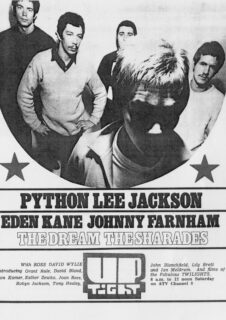
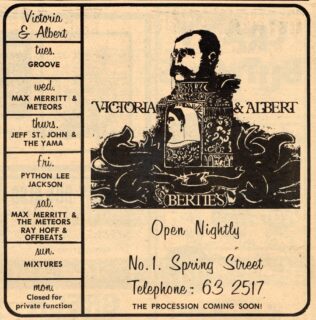
While playing in Melbourne, Python Lee Jackson played at Berties on 29 November, followed by a performance at Sebastian’s the next evening.
Photo: Go-Set. Image may be subject to copyright
During the first week of December, the musicians performed at several clubs, including the Trip and the Mod Tavern before heading back to Sydney to play at the Flower Pot with The Wright of Waye on 7 December. While here, the musicians recognised the end was in sight.
McGee doesn’t recall the date but if it indeed did happen, it was a fitting end to the band’s Australian incarnation as the club had previously been the legendary Suzie Wong’s – the same venue where the Python Lee Jackson name had first appeared on the chalkboard! (Ed – Python Lee Jackson did in fact return to Melbourne after this show for a string of dates, including one at Opus on 16 December with Lynne Randell, The Dream and The Sounds of Silence and an appearance at Highway 31 with The Mixtures the following night.)
In January 1968, the band members called it a day and immediately found work in separate projects.
“Mick had left a couple of months before [and] we weren’t getting airplay, so it was a diminishing return,” recalls McGee on the decision to finally dissolve the group.
“I remember at one stage, we came back from Adelaide having gone to Sydney to Melbourne to Adelaide and back to Melbourne. We’d done 69 gigs in 28 days and there wasn’t much money over at the end of it and we just said, ‘Fuck, what are we doing?’”
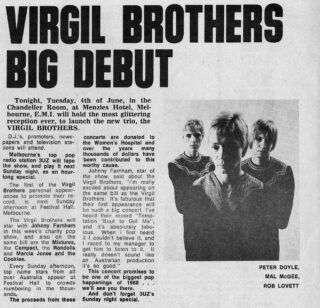
Malcolm McGee re-joined his former cohort in The Wild Cherries, Rob Lovett and initially ex-Purple Hearts singer Mick Hadley in the Walker Brothers-style trio, The Virgil Brothers that same month.
The line-up lasted one rehearsal before former solo singer the late Peter Doyle took over from Hadley. After rehearsing for six hours, five-six days a week for five months, The Virgil Brothers made their public debut on 4 June at the Menzies Hotel in Melbourne, followed by a national debut on the top evening news programme, This Day Tonight.
Photo: Go-Set. Image may be subject to copyright
That same month The Virgil Brothers released their debut single, a cover The Knight Brothers’ “Temptation ‘Bout To Get Me” on Parlophone Records, which was quickly followed by a second single “Here I Am” before heading off for the UK in January 1969 to try their luck. (Doyle later joined The New Seekers).
McGee left the band before their move overseas and later worked with the short-lived group, Rush where he reunited with Duncan McGuire, fresh from a stint in Southern Comfort, and former Wild Cherries cohort, drummer Kevin Murphy. Rush, which also featured guitarist Billy Green from Doug Parkinson’s band The Questions and pianist Steve Yates, never recorded.
“It was a fairly drugged out kind of band,” McGee recalls. “Everyone was dropping acid all the time.”
By the early 1970s, McGee had dropped out of the music scene, disillusioned with the current trends.
“I didn’t feel comfortable with all these people sitting around singing with their gentle voices about love and brown rice,” he reflects.
Living in the country, the singer only returned to the limelight in 1980s when he began to find work singing on adverts. Ironically, it was the most money he ever made from the business.
“I sung on almost every beer ad in Australia,” he laughed when interviewed for the original article. At the time McGee had started to record new material with a friend, which he described as a mix between chill lounge music and Motown and hoped to release it in the near future. Sadly the singer passed away on 17 May 2012.
“I phoned Malcolm when I heard he was ill with cancer but the hospital could find no record of him,” says Bentley. “I later learned that he had booked in as ‘Bobby McGee’. A joker to the end.”
Although Python Lee Jackson’s Australian saga was over, that wasn’t the end of the story. As events transpired, guitarist Mick Liber would subsequently revive the name in the UK later that year.
Since leaving the band in late ‘67, Liber had kept busy. Initially he joined a reformed Id, who’d split from singer Jeff St John that summer. He then worked with Billy Thorpe and The Aztecs for six months, “playing a regular six nights a week gig” at the Whisky in Sydney’s King’s Cross, alongside bass player Paul Wheeler and drummer Johnny Dick.
Sometime around August 1968, however, Thorpe decided to relocate to Melbourne and Liber briefly gigged with Gulliver Smith in The Noyes. His involvement proved short-lived. Within a month he found out about a boat trip to England, which required a ship band.
“There was no money but [it] was a free trip back to England and we thought we’d go on that,” he says.
With this thought in mind, Liber enlisted former Id bass player John Helman, who’d recently been working with Levi Smith’s Clefs, together with singer Phil Jones from The Unknown Blues and sax player Mal Capewell.
More importantly he coaxed back original member David Montgomery and creative force David Bentley, both of whom had been working together in funk/jazz trio The David Bentley Trio with bass player Hamish Hughes. (Ed: Dave Montgomery had initially worked with Doug Parkinson In Focus from January-late April 1968 before hooking up with Bentley.)
David Bentley Trio. Photo may be subject to copyright
This ambitious jazz project had been performing in discos around Melbourne for about four months, most notably at the Thumpin’ Tum, where the group made its debut on 5 June and held the late night residency at weekends and at a weekly disco held in Lilys, a dance hall at St Kilda.
“The trio was loosely based on Ramsay Lewis/Les McCann style,” recalls Bentley. “Sometimes it worked spectacularly; sometimes we attracted blank stares. My girlfriend at the time was a talented actress who, with her friends, helped stir up the crowd by dancing and generally demonstrating how to enjoy our stuff. We also benefited from a young drummer who came to all the gigs and clapped the offbeat so loudly and with such impeccable rhythm that the entire room would join in.”
For each gig, Bentley had to bring in an acoustic grand piano and mike it up. While it was undoubtedly a novel idea, the keyboard player soon realised that the project could not be sustained and accepted Liber’s offer to re-join his former band.
“We enjoyed a certain following among Melbourne’s bright young professionals but, in the end, we realised that it was foolish to swim against the tide,” he recalls.
“The David Bentley Trio was a really enjoyable project,” adds Montgomery. “It was a chance for me to get back to the jazz idiom that I had started out in. We packed it in only when the opportunity of a free trip to Europe came up in September 1968.”
As Bentley recalls Mick Liber and John Helman had already been booked on a Greek cruise ship (called “The Patris” which was making its final voyage to London) and persuaded the booker to also include David Montgomery. Bentley opted to fly instead.
“Airfares were cheap and I’d been corresponding with a Melbourne girl who was then living in London,” he recalls. “I met up with the other guys in Athens, and headed to London soon afterwards.”
John Helman has hazy memories of his brief stint with Python Lee Jackson but remembers the voyage to England clearly.
“The moment we set foot on the ship, the Greek entertainment officer threw up his hands and exclaimed, ‘But I told them in the office that I already had a band for this trip’,” he recalls.
The problem was soon sorted out. However, the musicians realised that Mal Capewell was missing.
“Mal was late for everything,” continues Helman. “At departure time in Sydney Mal hadn’t turned up so the ship set sail without him. As we cruised down the harbour the ship stopped and a small boat approached. A ladder was lowered from a doorway in the side of the ship and up clambered Mal. The same thing happened as the ship left Fremantle.”
Once away, Python Lee Jackson entertained the crowds alongside two other bands, including a Greek ensemble that had bazoukis and a clarinet and packed the main room.
“We shared the gig in a bar with a trio – piano, drums and sax whose repertoire consisted of unknown eastern European nightclub music,” remembers Helman.
“We played our versions of western nightclub music for an hour a night and we struggled to find an audience as I’m sure none of the passengers had ever heard of Python Lee Jackson.”
After six weeks of sailing, the ship finally docked in Djibouti in French Somaliland where the musicians disembarked.
“The cruise ship paid for our flight to Athens, whereupon we all travelled overland through Greece to Italy, and then up through Europe to England,” Phil Jones told American journalist Chris Walsh on the final leg of the voyage.
“When we reached our final destination in London, everyone dispersed and began pursuing their own thing.”
While Phil Jones subsequently became Shiva in the English progressive band Quintessence, Capewell would record with Robert Palmer and Elkie Brooks in Dada among others before returning back to Australia.
On his first night in London, Bentley remembers Python Lee Jackson’s former front man, Frank Kennington taking everyone to see Pink Floyd perform at the Roundhouse (the date appears to have been 26 October).
The other significant person he met during his first few days in town was Speedy Keen, who’d hung around in the same social circle in Ealing that Liber had frequented before moving to Australia.
“Frank was one of the first people to welcome us when the band arrived in London and appeared to be on first name terms with Pete Townshend who had been a contemporary of Mick Liber’s when both guitarists were teenagers in Ealing. He also appeared to be on friendly terms with Speedy Keen,” says Bentley.
By late 1968, Keen had come under Pete Townshend’s wing and would subsequently become part of Thunderclap Newman, famous for the UK #1 “Something In the Air”.
As 1968 drew to a close, Bentley remembers Python Lee Jackson, now comprising himself on keyboards and vocals, John Helman on bass and original members Mick Liber and David Montgomery, performing at the Vesuvio Club in Tottenham Court Road for six weeks.
“The place had been set up by The Rolling Stones guitarist Brian Jones’s gofer Spanish Tony and was in decline by the time we got there. The bar was never replenished. The light bulbs were never replaced. Mick Liber found the remains of Brian Jones’s Vox AC/30 amid the debris behind the stage. He replaced the speakers and used it to good effect for many years afterwards.”
The Rolling Stones connection did not end there. During the spring of 1969, Bentley remembers participating in a session with The Rolling Stones at Olympic Studios in Barnes, although the track was never released.
Later that summer, Montgomery found an opportunity to rekindle his relationship with Brian Jones, whom he first met during aforementioned Rolling Stones tour of Australia in February 1966.
“I had a call from my friend Craig Collinge, drummer with Manfred Mann [Chapter Three], telling me that, although it was still very hush-hush, Brian had been fired from The Stones and would soon be looking to put a new group together [and] would I be interested?” explains Montgomery.
“In order to speak to Brian, I first had (for security reasons) to call John Mayall’s wife, who convinced of my bona fides, passed my number along to Brian himself. All very cloak and dagger.”
Montgomery says that all communication with the former Rolling Stone was done by phone and as fate would have it, he was set to go down to Jones’s East Grinstead house on 3 July, the day that the news broke of his death.
“I had spoken to him on the phone at about 1pm the previous afternoon, and he was to meet me at East Grinstead train station the next morning. He sounded unusually vague and very stoned. Early the next morning, my girlfriend got up first to go to work, but ten minutes later she returned with an armful of the morning’s papers all announcing the death, late on the previous day, of Brian Jones. Something of a pall fell over the proceedings after that.”
Things were still touch and go for the band. During the first months of the year, Python Lee Jackson had moved on from the Vesuvio club to work at the Arts Lab on Drury Lane. With funds dwindling, Bentley resumed his journalism career with a magazine group in Fleet Street.
Mick Liber, meanwhile, played some additional gigs with some pub bands around the Ealing area, including his old group, Frankie Reid & The Casuals. He also started to pick up some session work thanks to the bass player in The Jeff Beck Group.
“It was Ronnie Wood who phoned me up and got me my first session, which was pretty amazing,” recalls Liber.
“It was a strange session. I had to go to this studio ’cause Ronnie couldn’t make it and they played me a basic track and said, ‘Can you play some fills?’ And I said, ‘Well, there’s no vocals so I don’t know where the fills go’. And they said, ‘Just imagine where the vocals go and play some fills like that!’”
However, in April 1969, the band’s prospects appeared to improve. Mick Liber scored a deal with CBS, thanks in part to the band’s previous connection with Richard Neville, who would become notorious as a central figure in the OZ obscenity trial.
As a result, Python Lee Jackson recorded a couple of demos for CBS A&R man Clive Selwood with a mystery singer. Young Blood Records producer, Miki Dallon owns three Python Lee Jackson titles from this period – “It’s A Groove to Be Dead”, “I Wonder Who” and “Big Fat Momma” and it’s quite possible that these are those very same tracks. The sound quality may not be great but all of the songs are impressive.
“Really Tried to Love You” with Bentley singing was recorded around this time with a line up featuring Liber, Helman and Montgomery. The track was picked up for the Half a Cow Records CD.
With the recordings done, John Helman bowed out. “Although I did those gigs as well as a recording session with the guys I can’t recall much as I was drifting away from the guys and them from me,” he explains.
Helman returned to Australia in late 1970 and was last heard living in Byron Bay on Australia’s east coast.
Despite Helman’s departure, Clive Selwood was impressed by the rough demo and suggested that the band try for a hit single. A session was hastily scheduled and bass player Jamie Byrne was drafted in from recently arrived Australian band, The Groove.
“That afternoon, while I was waiting for my girlfriend to turn up for after-work drinks, I tapped out some random feeling-sorry-myself lyrics and, in the evening I put some chords and a melody to the words,” says Bentley. “The song was ‘In a Broken Dream’.
“[The] next day, as I was walking past a record shop, I heard Joe Cocker singing ‘With a Little Help from My Friends’ and decided that I wasn’t the right guy to sing my song. When I told the other members of the band that I wouldn’t be singing, they were very pissed off. Next thing I remember, I’m in Montgomery’s Chelsea flat teaching the lyrics to Rod Stewart who had been recruited by an acquaintance of Mick’s.”
Montgomery continues the story: “We had a ‘manager’, a slick car salesman with pretensions to become Andrew Loog Oldham or Brian Epstein. He told us he knew Rod Stewart very well, having sold him a Lotus or Ferrari or something, and he was sure he could get him to join the group or at least sing on the recording date.”
Bentley, who recalls hearing that the band’s erstwhile manager had persuaded Stewart to sing the song in exchange for a set of car mats, says the session went badly at first.
“The band hadn’t done much playing in London. Everyone was feeling uptight and the first run-throughs of ‘In a Broken Dream’ were less than promising,” he explains.
“In upshot, [the late] radio presenter John Peel, who was producing the track for his Dandelion label, sent out for beer – and we drank quite a lot of this stuff in the interests of heightened relaxation. Rod, as always, sang well but, because the lights had been doused, he missed the last verse, repeating the first one instead, filling in at one point with a hummed mmm mmm mmm which subsequent cover versions have faithfully copied.”
To kick off the session, Stewart and the group had begun jamming on a track that would later turned up on the B-side of the first pressing of “In a Broken Dream” under the title, “Doin’ Fine”. As the band’s keyboard player explains, the track was a spirited one-chord groove that harked back to the band’s glory days at Sydney’s Rhubarb’s club when he occasionally took over the microphone to deliver an impromptu stream-of-consciousness monologue over a repetitive riff. Stewart for his part used the same groove to accompany lyrics loosely based on The Temptations’ “Cloud Nine”.
It was spur of the moment stuff. Still, the track delivered raw energy and crackling power. Montgomery’s insistent drums and Byrne’s pumping bass provided a framework for Liber’s soaring and impassioned guitar, mingled with Bentley’s funky Hammond licks – and Rod Stewart’s gravelly voice topping off the groove. (Ed – at the same session, Stewart and Python Lee Jackson also recorded another loose number called “The Blues”.)
Everyone liked the track “In a Broken Dream” but, for some reason, nothing happened.
“The word ‘hype’ had an ominous resonance at the time and I think John Peel, who was the guru of anti-hype, felt ambivalent about a well-known singer performing anonymously on the recording,” explains Bentley.
As a result, the track languished in the vaults for the next year – and Bentley resumed his career as a journalist. That is until early 1970 when producer Miki Dallon, who had gained possession of the tapes of “In a Broken Dream”, contacted him.
“[Clive Selwood] came to my office and played three titles: “In a Broken Dream’, ‘Doin’ Fine’ and ‘The Blues’, which although featuring the distinctive voice of Rod Stewart, I wasn’t all that impressed with at first,” recalls Dallon. “They hadn’t been professionally produced – more thrown together in my opinion – a bit of a shambles really.”
Despite his initial reservations, Dallon asked Selwood to leave him with a copy of the tape and after a few more listens began to get ideas about how he might turn “In a Broken Dream” into a far more commercial track.
As Dallon admits, it was only after meeting David Bentley that he was convinced the project was worth pursuing and instructed his lawyer to make the deal. A few days later the multi tracks were dumped on Dallon’s desk.
Over the next couple of months Dallon drifted in and out of Pye Studios mixing, re-mixing, adding, subtracting, over-dubbing and adding backing vocals in the chorus before setting a release date for October 1970.
While all of this was going on, Python Lee Jackson hired multi-instrumentalist Tony Cahill (b. 20 December 1941, South Camberwell, Melbourne, Australia) to replace Jamie Byrne, who had returned to The Groove. Cahill had played drums with The Purple Hearts in Australia before moving to Britain and joining The Easybeats in mid-1967.
With Cahill on bass and with Gary Moberly replacing Bentley on keyboards, the musicians who had once formed the nucleus of Python Lee Jackson spent the best part of 1969-1970 on the road, abetted by a succession of “crackpot singers” as Montgomery puts it.
According to Time Out magazine, Python Lee Jackson played one show at the Bottleneck Club in the Railway Tavern, Stratford, east London during June 1969.
Using the name The Memphis Soul Band, they provided support for The Virgil Brothers, which by now was stripped down to a duo comprising Peter Doyle and Malcolm McGee’s replacement Danny Robinson.
“This was a pretty good group,” notes Montgomery. “The singers were sensational but we were contracted (by a notoriously shady booking agency) to play a series of working men’s clubs in the north of England and never really found our audience. The tour was a bizarre and somewhat depressing experience.”
Things looked promising when Miki Dallon released “In a Broken Dream” on his Young Blood label in October 1970. However, the disc sank with barely a ripple.
Undeterred by this setback, Dallon encouraged Bentley to write more material (the superb “Sweet Consolation” dates from this period) and began producing an album featuring, as far as possible, members of the original Python Lee Jackson line up in early 1972.
A notable ring-in was the talented English jazz guitarist Gary Boyle, who’d previously been part of The Brian Auger Trinity. Tony Cahill came in on bass for the new sessions and the album also featured the backup singers from Joe Cocker’s band and a complete string section.
David Bentley and Tony Cahill. Image may be subject to copyright
Mick Liber participated when he could but was busy with his ongoing commitment to rock group Ashton, Gardner and Dyke (with whom he recorded the hit, “Resurrection Shuffle” and toured for about three years).
In September 1970, he also recorded with lesser-known London band, Third World War and played a gig with Rod Stewart at the Roundhouse during this time when Jeff Beck failed to turn up.
Bentley, meanwhile, had resigned his job as a London correspondent for the Fairfax chain in Australia and was struggling financially – until, miraculously, “In a Broken Dream” surfaced in the US Hot 100.
The US release of “In a Broken Dream” backed by “Boogie Woogie Joe” (featuring Bentley on vocals) ascended to a modest #56 in the charts, but the exposure was enough to convince BBC radio to select the single for airplay and it soon received its third UK release.
On 23 September 1972, Melody Maker’s Chris Welch reviewed “In a Broken Dream” in the magazine’s singles of the week section. On the subject of the band’s unusual name, Chris Welch first asks whether the release had anything to do with Lee Jackson of the Nice or Snake Hips Johnson before clearing up any confusion by name checking Rod Stewart.
“They do say this is the song Rod cut years ago and was paid in car seats for the session,” he reports. “At least it shows he was singing well all those years ago, and it’s a nice enough tune to be a hit. A weird situation for one and all.”
Rod Stewart’s fame may well have been a factor behind the single’s success as it rocketed up the UK charts to #3. The single also became a huge hit on the European continent and has since been used as the soundtrack to numerous documentaries and films, including Breaking The Waves. (Ed – in Australia, the single was a minor national hit, climbing to #84.)
“When “In a Broken Dream” broke in the United States, Young Blood finally came good with an advance on royalties,” says Bentley. “I remember it vividly because it happened on the day my son Zeke was born.
“Six weeks later, when he was old enough to travel, I bought an old VW sedan, bundled up my wife and baby boy and followed the sun to Fornalutz, a small village in Majorca where I wrote songs every day.”
Amid olive groves and wild seascape, Bentley barely registered the pop chart success that he had worked so hard to achieve.
“I remained in Spain for almost a year, missing all of the fun and business that went with having a hit,” he says. “Truth to tell, I was simply grateful for a place in the sun, happy to be out of the public eye.”
In the music press at the time, Rod Stewart had complained that he had not been given a mention on the single, suggesting that the singer hadn’t been told his vocal would appear on the release.
“Miki Dallon may not have mentioned it to him but I know that I did,” confirms Bentley. “In fact, I once spent half a day tracking him down via his then manager Billy Gaff, and finally reaching him by phone.
“At the time, Rod didn’t seem particularly interested. Still he must have liked the song because he has since released “In a Broken Dream” twice under his own name.”
Meanwhile, the GNP Crescendo label released the Python Lee Jackson tracks featuring Rod Stewart from 1969 along with the new material produced by Dallon on an album, aptly titled In a Broken Dream. One track from the session, “Nightclub in the Day” was not used at the time and later appeared on the Half a Cow Records CD Python Lee Jackson: Sweet Consolation 1966-1973.
When the album failed to chart, The Python Lee Jackson saga appeared to be at an end. Well, almost. Armed with a cache of fresh songs, Bentley returned to the UK from Spain to record a second album, abetted by New Zealand musicians, Dave McRae (keyboards and Moog bass) and Bruce Johnstone (baritone sax), Sydney percussionist Richard Miller and Chris Bonnet on vocal harmonies.
“I remember we recorded during a very hectic time for me,” says Bruce Johnstone.
“I was back from a US tour as a member of Maynard Ferguson’s band and in the middle of recording M.F Horn 3 with Maynard. During breaks in the sessions, I would grab a cab across town to overdub things for David’s project, then back to the Maynard Ferguson project.”
Titled Piano Players Ball, the album was, Bentley says, a more spirited project than the first album, but there were differences of musical opinion and the project was still born.
According to Miki Dallon, a number of tracks were completed to his satisfaction – “Turn The Music Down”, “Get Back On Your Feet Again”, “When You Do Your Thing”, “Thin Armed Hairless Man” and “Piano Players Ball”. (Ed – one of Bentley’s songs, “Sweet Lady Zelda” was re-recorded and produced by Miki Dallon as “Lady Zelda” for a single by Don Fardon, but without success.)
As Bentley later told Ben Whitten for the Half a Cow CD release: “Miki Dallon and I could not reach agreement as to the direction the album should take. The project went into hiatus soon after the bed tracks and rough vocals went down.”
The Piano Players Ball tracks were later picked up and released for the first time, albeit it an unfinished state, on the Half a Cow CD, Python Lee Jackson: Sweet Consolation 1966-1973.
As for the other Python Lee Jackson members Tony Cahill and David Montgomery moved to Paris where they hooked up with musicians from New York band, King Harvest, touring the US in support of the hit single “Dancin’ in the Moonlight”.
After returning briefly to the UK, both musicians travelled to Los Angeles to record an album with Peter Doyle, which was never released. Montgomery has since taken up residency in the US and currently live in Los Angeles. Cahill meanwhile headed back to Australia briefly but sadly died in Los Angeles on 13 August 2014.
Mick Liber remained in the UK until 1973 (working mainly with Dana Gillespie) when he returned to Australia. While in the UK, he also recorded with Medicine Head, Chris Barber and Ashton, Gardner & Dyke among others.
Back down under, he did numerous sessions for EMI before providing the music for the classic surf movie, Crystal Voyager.
In later years, Liber played with a band called Blerta in New Zealand, toured and recorded with singer Wendy Saddington and had his own group, Rocket Pilots. He also recorded with Peggy Zelm and continues to perform live on the Australian rock circuit.
Bentley returned to Australia in the mid-1970s. He continues to record and perform original material as well as pursuing a parallel career as journalist, columnist, food critic and travel writer. In 2005, he released his first album in a decade, Last Man Standing on Hot City Records.
Since the original version of this article appeared, he has recorded two further CDs and continues to play in and around southeast Queensland with his trio and various guests.
Python Lee Jackson’s best known song, “In a Broken Dream” meanwhile has continued to go from strength to strength.
Bentley explains that John Fogarty of Minder Music acquired the publishing from Miki Dallon’s YoungBlood many years ago. His promotion of the song has led to an unexpected resurgence in recent years.
One of the most surprising covers was Harlem rapper Rocky A$ap’s remix, retitled “Every Day”, which was featured on the soundtrack of the Baywatch film. Much of the original recording was used in the remix, says Bentley, who heard that when it hit the charts, Rod Stewart sang it to a huge crowd in Hyde Park and everybody sang along.
“There have literally been dozen of cover versions,” says Bentley. “I understand that Amy Winehouse was set to do a version of the song shortly before her death”.
Thank you to David Bentley for his considerable input. Also, many thanks to David Montgomery, Malcolm McGee, Mick Liber, Tony Cahill, John Helman, Chris Walsh, Ben Whitten, Barry McKay, David Kent, Bruce Johnstone, Miki Dallon and Mike Paxman.
Today I’m featuring two rockabilly artists, George Quarta Jr. and Bob Cribbie, who both grew up in Hudson, New York.
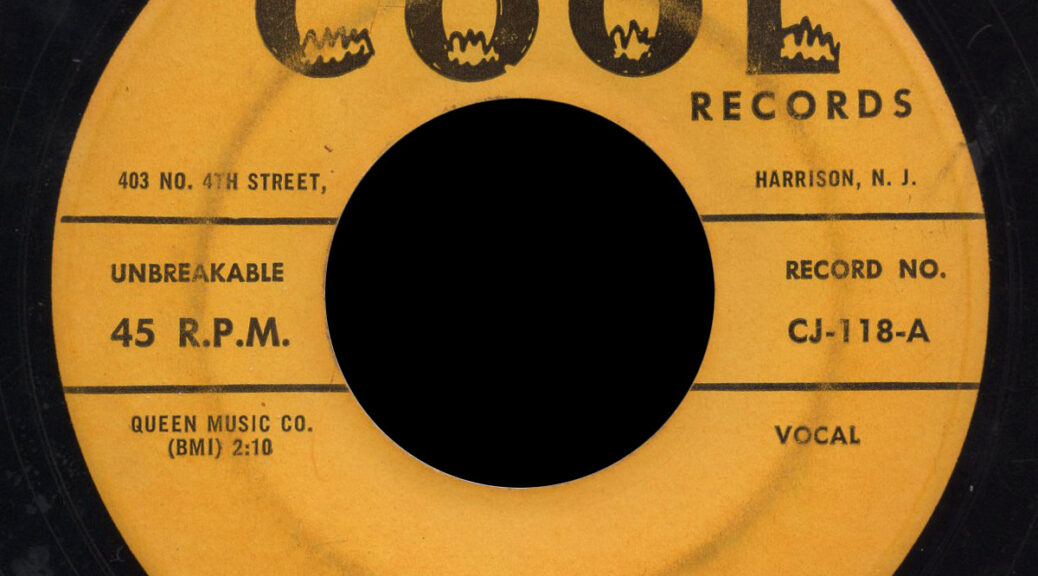
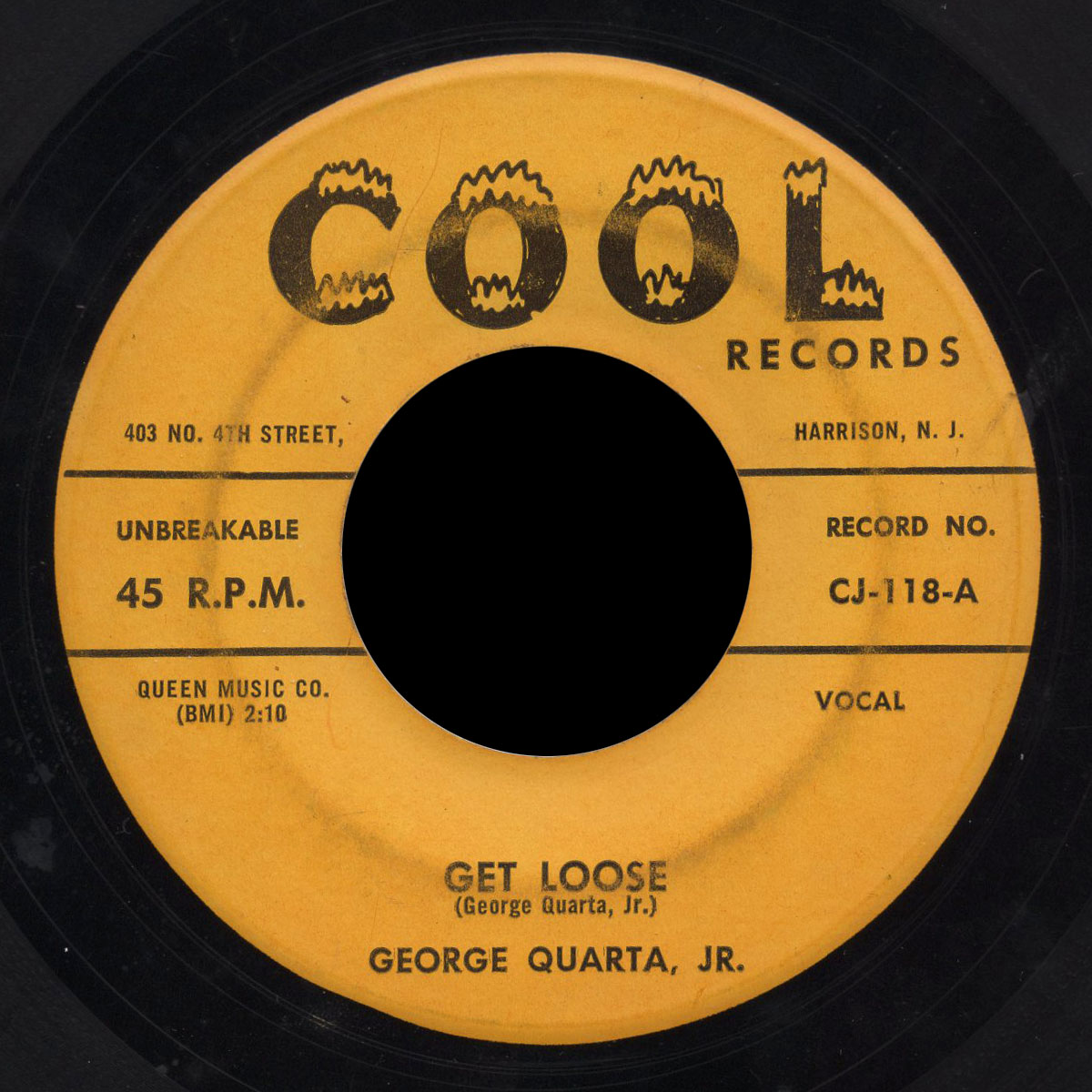
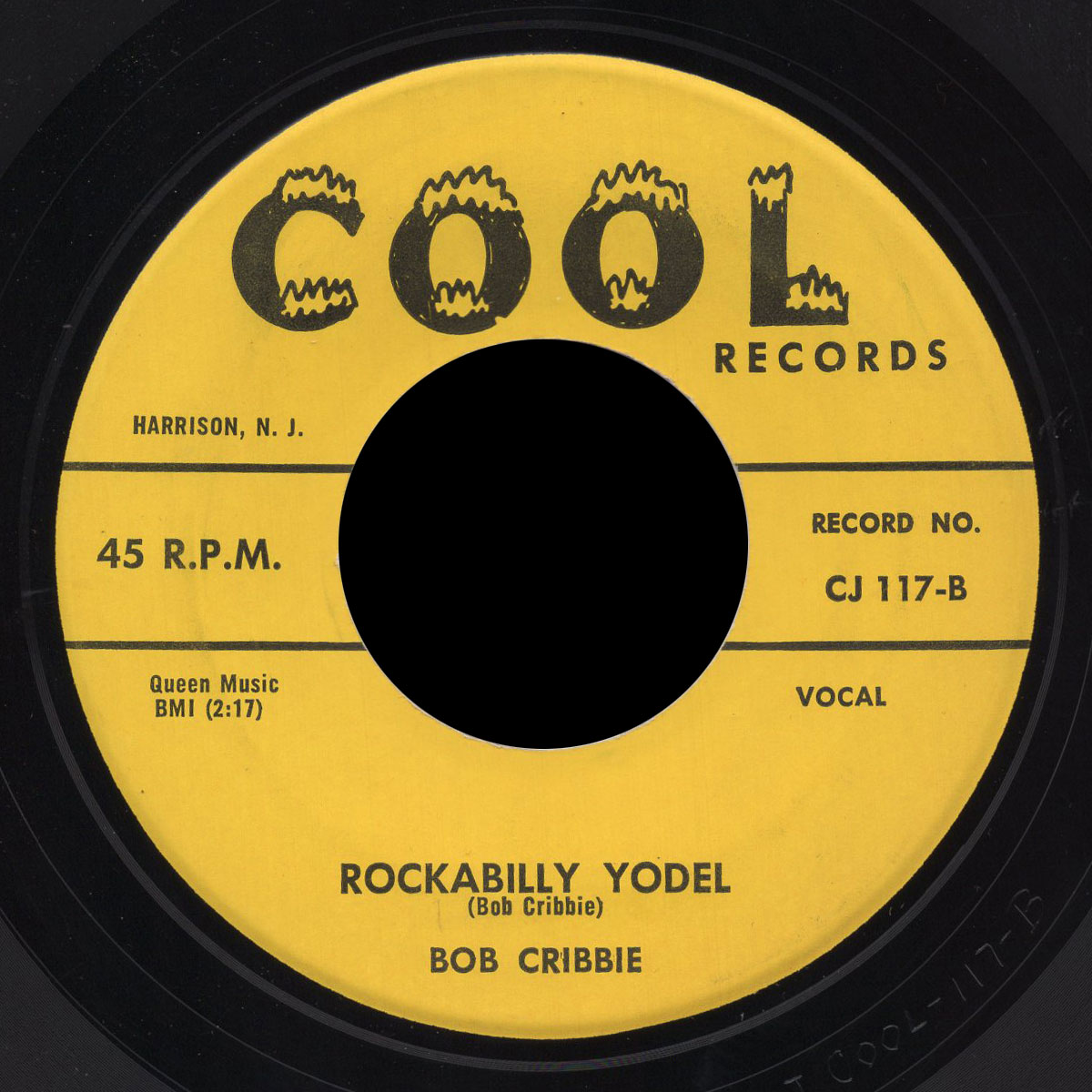
In 1959 they each released a 45 on the Cool Records label out of Harrison, New Jersey. George Quarta Jr. cut “Get Loose” / “Don’t Move”, and Bob Cribbie made “Vow of Love” / “Rockabilly Yodel”.
Cool Records attracted artists from Florida to Vermont. The Hudson connection might be coincidental. The records do not sound similar and may have been cut at different sessions or studios. What makes me think this could be more than coincidence is the 45s had successive release numbers: Bob Cribbie on Cool Records CJ-117, and George Quarta on Cool CJ-118.
George Quarta was born on December 21, 1931 and died on September 6, 2017. Quarta’s obituary states “He performed in the Hudson area including at the old Community Theatre where billboards of George lined the walls as the girls excitedly gathered to hear him sing and play his guitar.” The Community Theatre still stands, but has been disused for decades.
Bob Cribbie’s vocal on “Vow of Love” is straightforward, but his delivery on “Rockabilly Yodel” is very much “outsider” in nature; he certainly has an odd sense of timing! Bob became known as a idiosyncratic yodeler, appearing on radio and late night TV under his own name and then as Avalanche Bob.
Did George and Bob know each other? I have no idea. Nearly everyone involved in these records has passed away.
What was the connection that brought Hudson NY artists to record at Cool?
It was likely veteran talent scout Jim Small, of nearby Elizaville, NY.
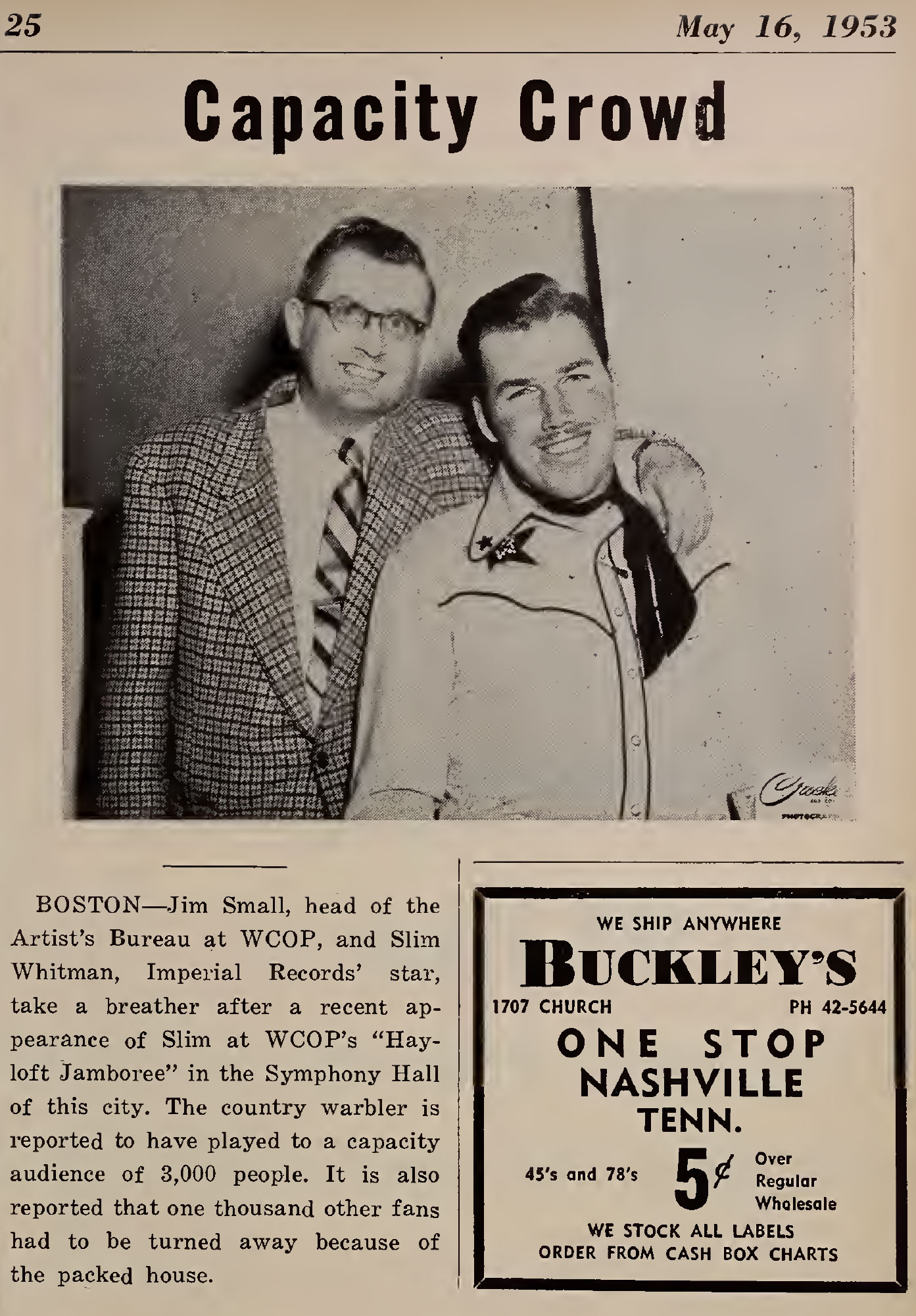
Jim Small and Slim Whitman after WCOP’s Hayloft Jamboree, Cash Box May 16, 1953
Jim Small’s ten years of mentions in trade publications hints at the tough life of a record A&R man.
In 1953 and 1954, Jim received mentions in Cash Box as manager of WCOP, Boston, and business manager of New England’s “Dude Ranch Jamboree” out of WJAR-TV, in Providence, RI.
Billboard, Sept. 29, 1958: Jim Small of Elizaville, N.Y. .. has accepted talent-scout duties with Johnny Dee’s Vitam Distribution Company, Harrison, N.J., and Johnny Ponz’s Ace Records, New York. Jim will cover Dee’s three labels, D, c.&w.; Vitam, pop, and Cool, rock ‘n’ roll. He’ll cover c.&w. and rock ‘n’ roll for the Pony label. Small, who was laid up most of last winter with pneumonia, says he’s good as new again.
Cash Box, October 11, 1958:
Jim Small … has been chosen by two record companies as a national talent scout. One is Vitam Distribs of Harrison, N.J., which has three labels: the strictly country “D” label, the pop Vitam, and the rock ‘n’ roll Cool label. Small will represent all three. The other outfit is Ace Records, New York, which will add country releases to its pop catalog.
(I am not familiar with a Harrison, NJ “D” label. It could be that it was not used because of Pappy Daly’s D label out of Houston which started earlier that year. I know of only one release on Vitam, Ray King and the Joe Derise Orchestra, “Can It Be Love” / “I’ll Always Love You.”)
Billboard, November 24, 1958 reported:
Visitors at the desk last Wednesday en route to the Nashville deejay festival, were promoter-manager Jim Small of Elizaville, N.Y. and a pair of his artists, Dick Sawyer of Stratford, N.Y. and Neil Swanson, who for the last four years has appeared on “Teen-Age Barn” TV show originating in Schenectady, N.Y … Sawyer’s initial release on Cool Records, “Sandy” b.w. “New Kind of Lovin’,” is due for early release.
The Glens Falls, NY Post-Star on August 6, 1959 mentions talent scout Jim Small in connection to Gerald Galusha, who made a record for Cool as Jerry Edwards, “Shedding Tears” / “Easy to Please” on Cool CJ-128.
Billboard August 3, 1959:
Jim Small, A&R man with Joe Flis’ Milo Recording Company, Harrison, NJ, has taken over the personal management of three Cool Records artists – Dave Osborn, Johnny White and Artie Davis. Small recently ushered Osborn to Wheeling, W.Va., for a guest shot on WJVA’s World’s Original Jamboree. White’s newest Cool release couples “Cryin’ Room” and “Rose in the Garden,” while Davis’ new one on that label is “Book of Love” b/w “Hawaiian Boogie.”
Billboard, April 4, 1960:
Jim Small, who has been associated with the c.&w. music field more than 25 years, has been named vice-president of Milo Recording Company, Harrison, N.J., by owner-manager Joe Flis. Jim has long served as talent scout for Milo and organized the firm’s c.&w. department with its Cool label. Small is presently in De Land, Fla., recuperating from an attack of ulcers which laid him low for several months. He is continuing with his scouting and auditioning during his Florida stay. With him is his right-hand man and assistant, Dave Osborn. Small’s home and office is in Elizaville, N.Y. [Dave Osborn came from nearby Hillsdale, NY, and made records on both Milo and Cool.]
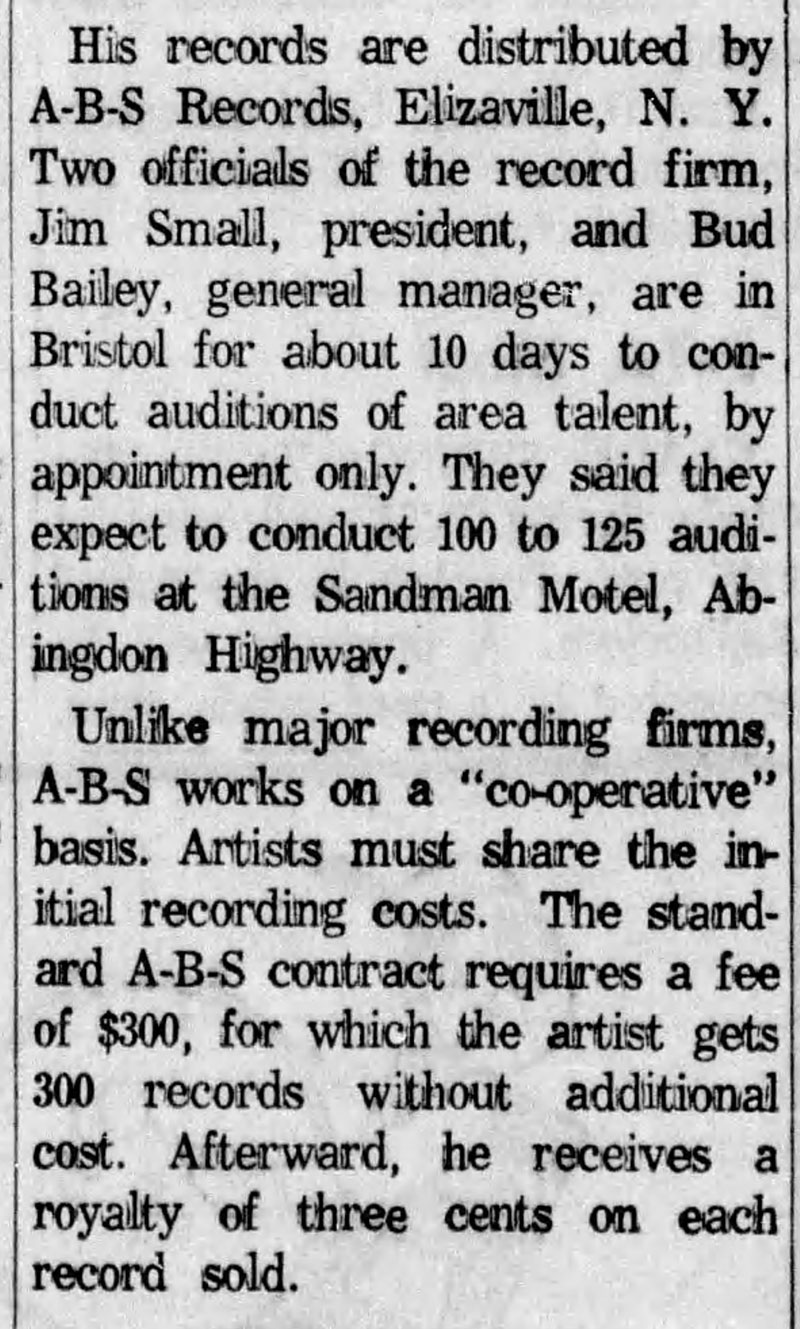
Jim Small’s A-B-S Records label in March 1963: the artist pays $300 for 300 records … future royalties uncertain. George Quarta and Bob Cribbie probably made a similar deal with Cool Records
Billboard, July 25, 1960:
Jim Small, Veepee of Milo Recording Company and Cool Records, Harrison, N.J. is currently on a talent-scouting expedition thru Pennsylvania. Touring with him are his assistants Bud Bailey and Bob Weiss. Dave Osborn, who worked with Small out of the Cool branch in DeLand, Fla. the past winter, is spending the summer with his band in his native New York State. He will return to Florida with Small in the late fall. Jim reports that he is amazed at the amount of solid c.&w. talent that has been overlooked in Pennsylvania.
Billboard April 13, 1963:
Jim Small, president of A-B-S Records, Inc., Elizaville, N.Y., is back in action after spending most of the last 10 months in the hospital. Small has named Bud Bailey as general manger of A-B-S. Firm last week released a new one by Mickey Barnett and His Wranglers, “Just a Memory” b.w. “I’m Sorry I Cheated on You,” both penned by Mickey himself. A new A-B-S religious release spots “I’ve Been With Jesus” and “When I Move” as done by the Missionaires Quartet of Miami.
The Wilmington, Delaware News-Journal March 10, 1964:
Howard Rash, a songwriter and singer of country and western ballads, has purchased ABS Records from Jim Small of Elizaville, N.Y., and DeLand, Fla.
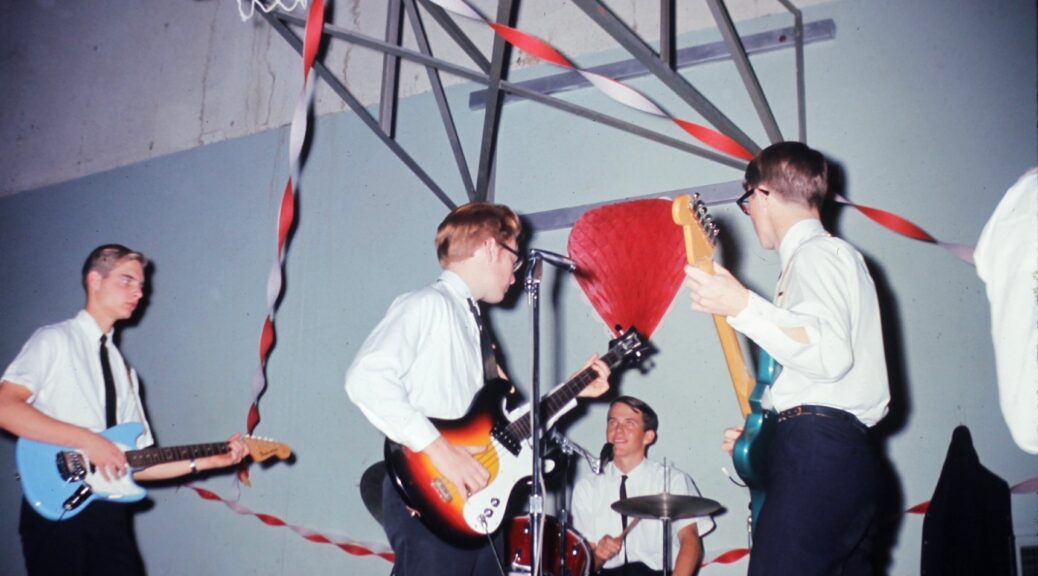
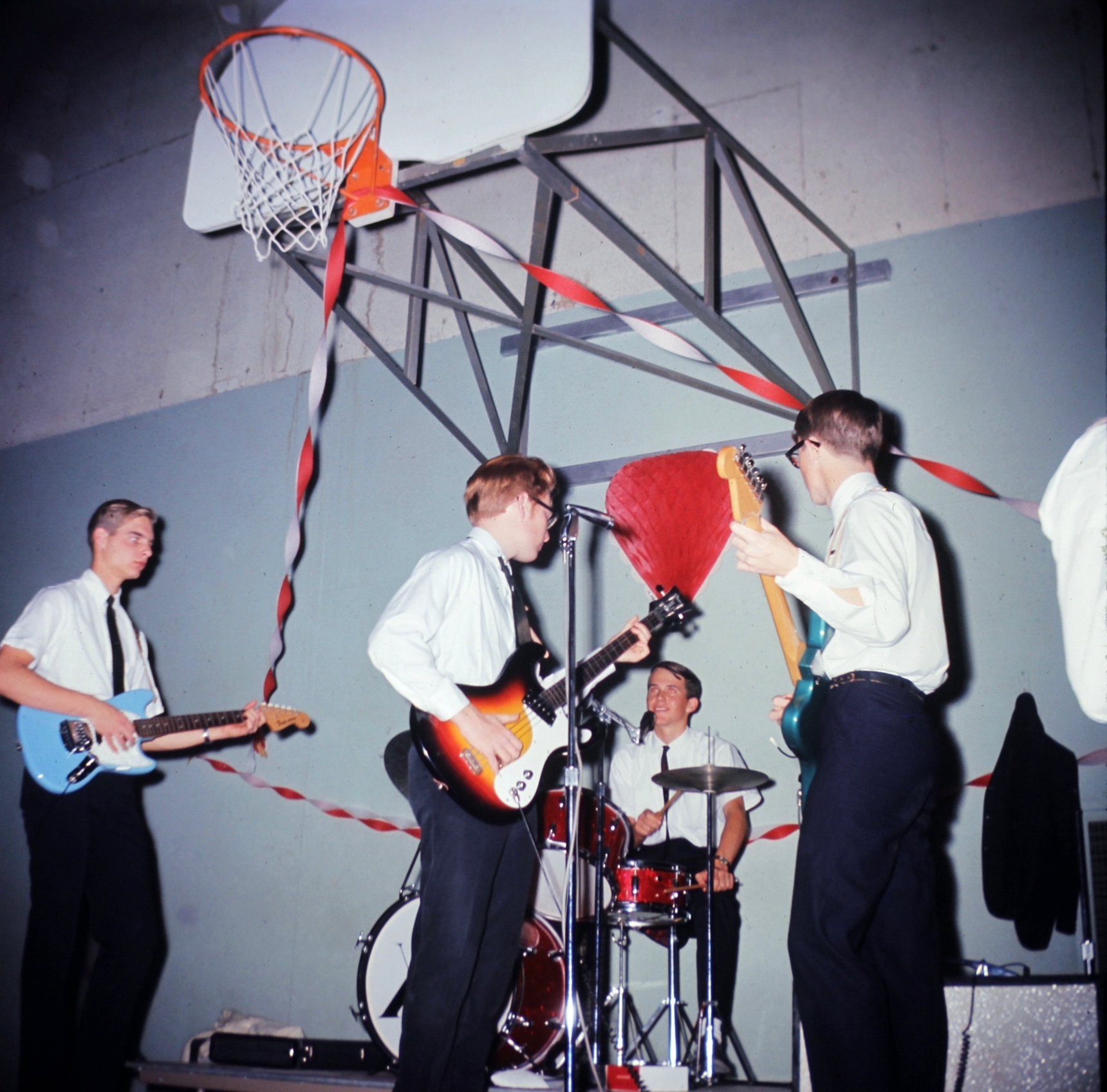
The Xployts at a high school Valentine’s Day dance in Riverside, 1965
Mike Butler sent in these photos and wrote to me about his band, the Xployts. Members included:
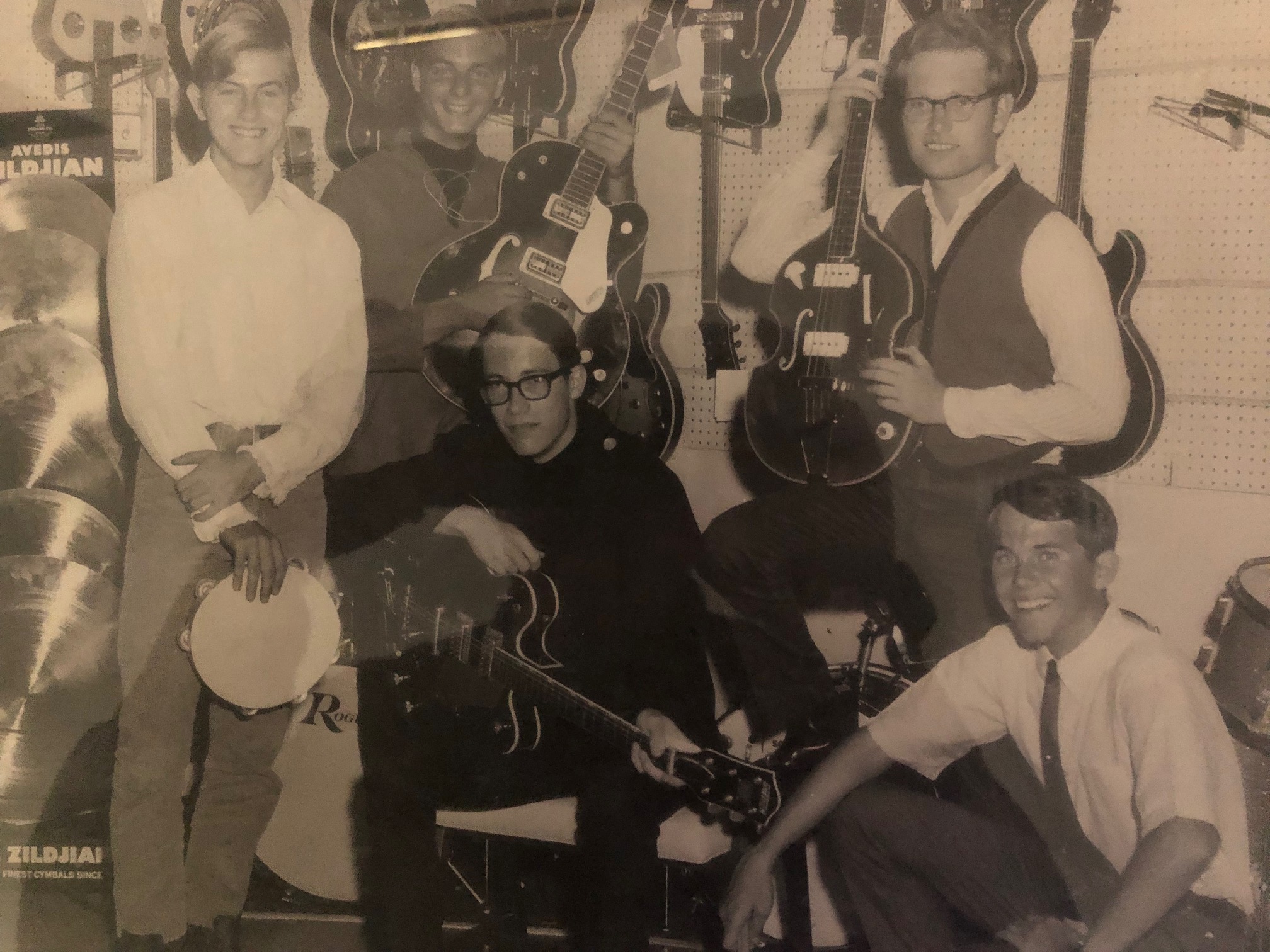
Berl Bartz – vocals Mark Sherrill – guitar Mike Butler – guitar Ned Moore – bass Warren Moore – drums
The Xployts played in the Inland Empire area of Southern California from 1965 through 1969. We started as a surf band then moved to a cover band for top forty songs, and ended up as a blues band.
We played local high school dances, proms, street dances, teenage night clubs, and a local concert venue named Swing Auditorium. Swing Auditorium was the first place The Rolling Stones played when they arrived in the United States in 1964. We played a couple of gigs with the Whatt Four and The Light.
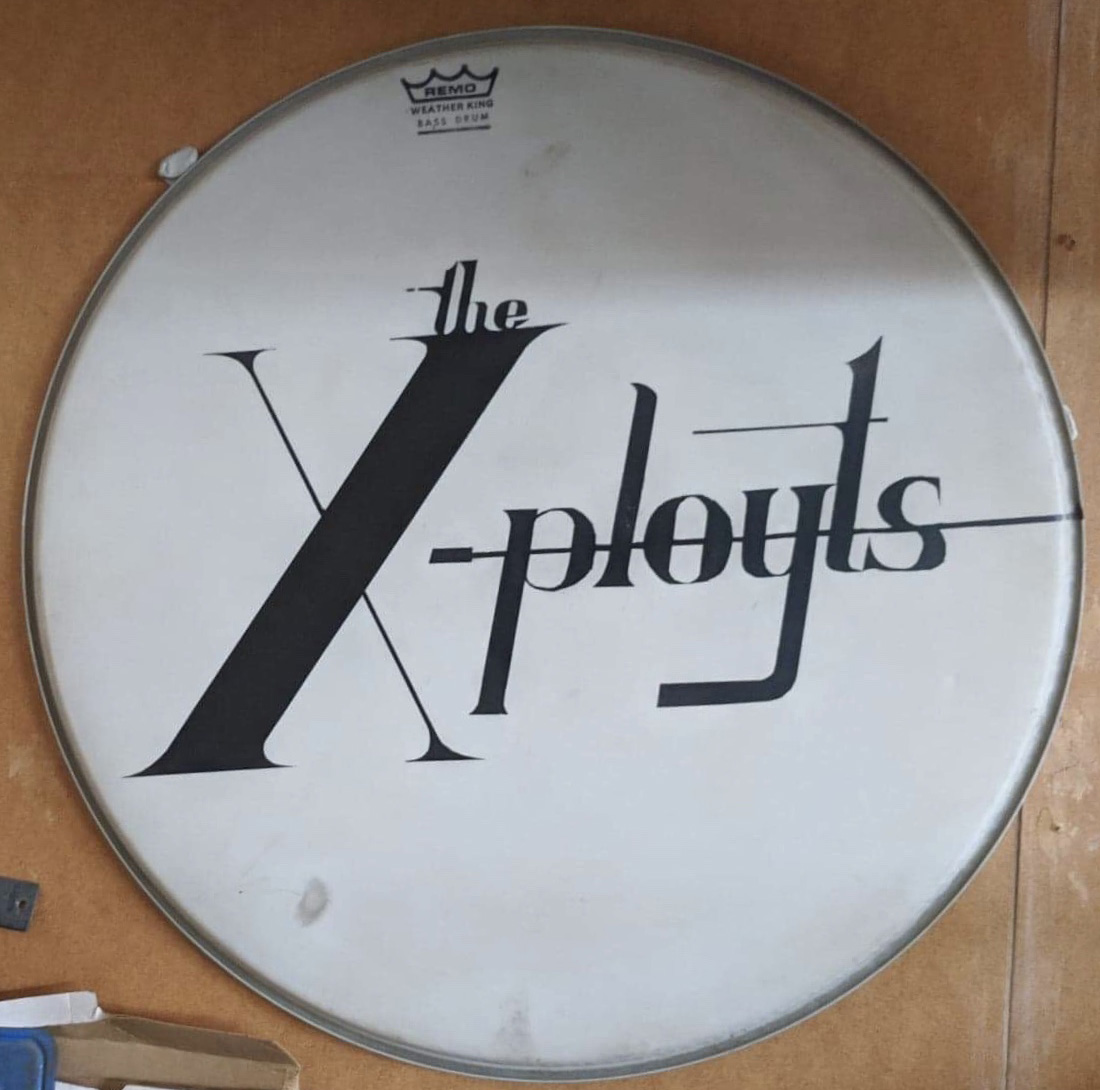
The Xployts drumhead, photo courtesy of Warren MooreI worked at Chauncey Romero’s House of Note in Redlands after graduating from Redlands High School. Chauncey is still a friend.
We broke up in 1969 when three of us were drafted. The draft caught up with us before we could record.
I’m still in touch with our drummer Warren and our bass player Ned. Warren still has the drum head with our band’s name.
Mike Butler
The Xployts at Liers Music in San Bernardino, from left: Berl Bartz, Mark Sherrill, Mike Butler (sitting), Ned Moore, and Warren MooreThe Xployts at a high school Valentine’s Day dance in Riverside, 1965
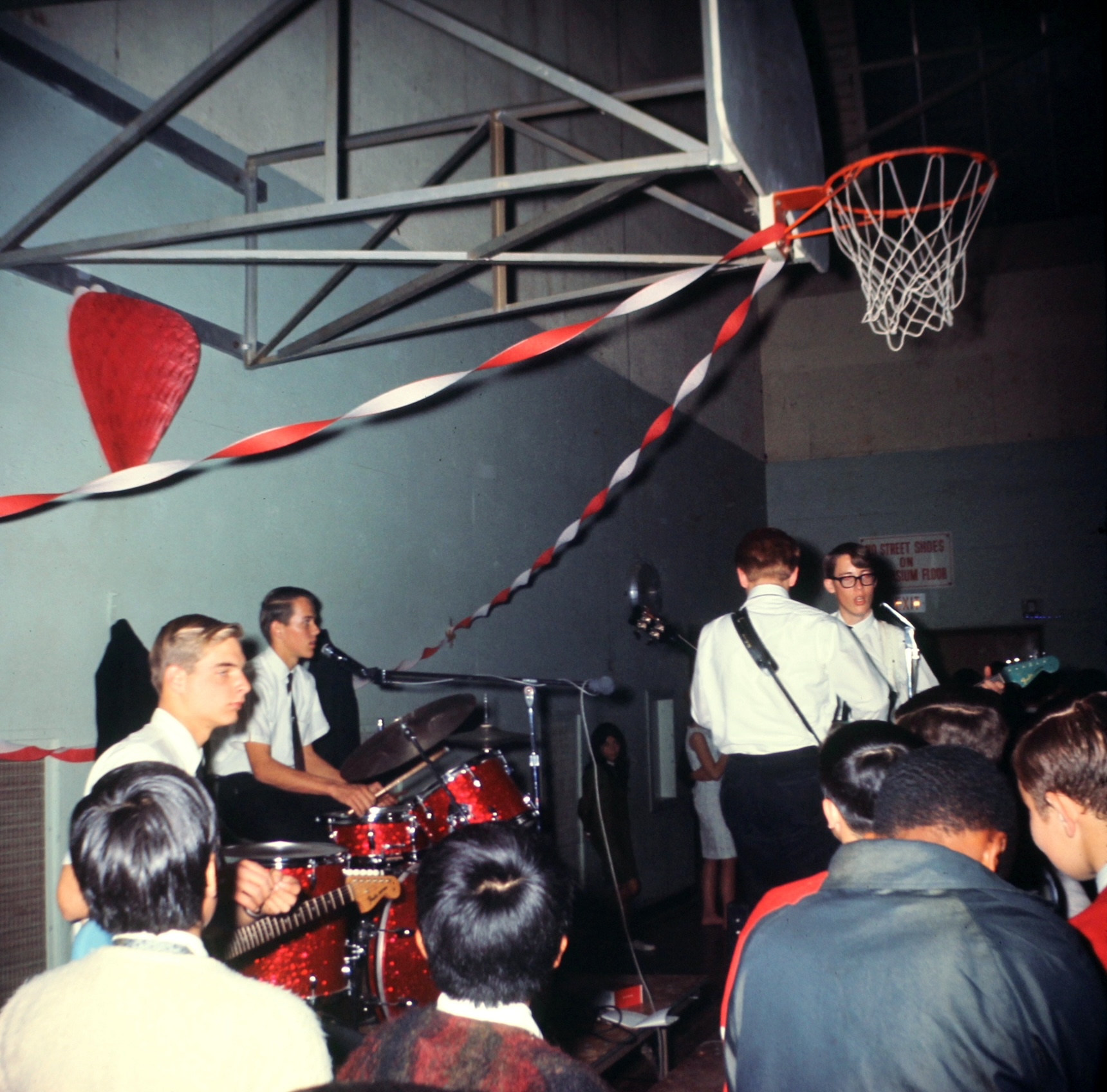
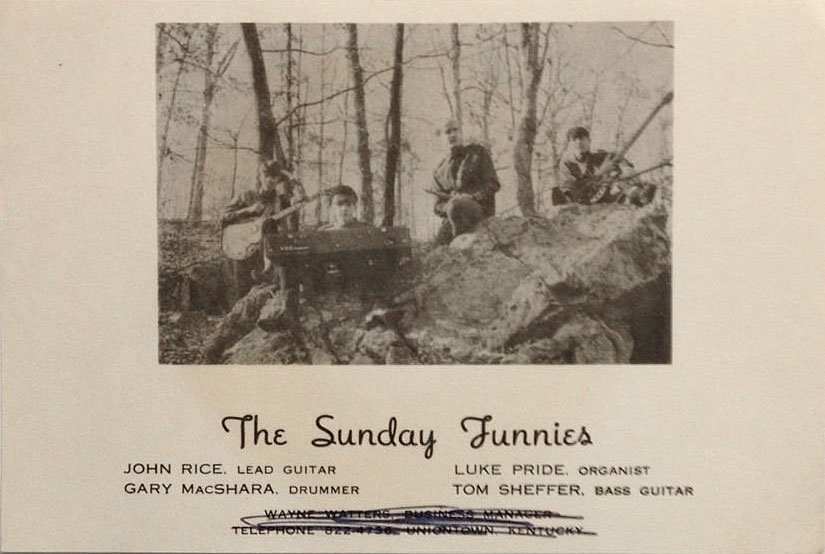
Photo card included with some copies of the Sunday Funnies 45 on Skoop. From left: John Rice, Luke Pride, Gary MacShara and Tom Sheffer.
The Sunday Funnies 45 on Skoop 1070 has two excellent original songs, “Sunny Covington Avenue” an uptempo rocker, and “It Won’t Happen to You”. The labels list Gary McShara (actually Gary MacShara) as the song writer on the labels, with publishing by Buna Music. I don’t own a copy of the 45, unfortunately.
A photo card included with some copies of the record has a photo that predates Pat Berry joining the group, and has the name of manager Wayne Watters crossed out.
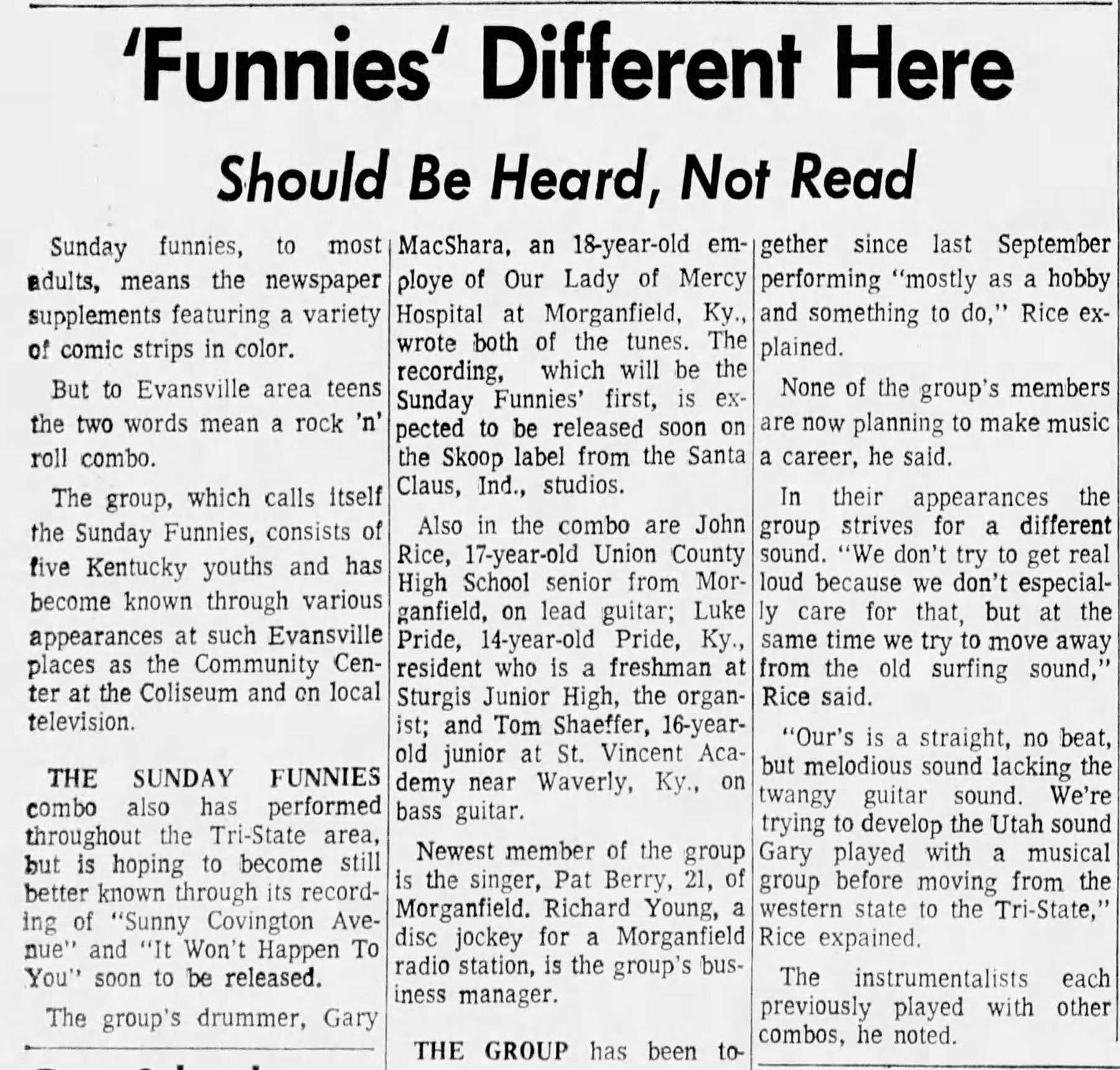
Sunday Funnies profiled in the Evansville Press, March 30, 1967
I came across this profile of the group from March, 30, 1967, which would date the single to about April, 1967:
The group … has become known through various appearances at such Evansville places as the Community Center at the Coliseum and on local television.
The Messenger of Madisonville KY, Friday, Oct. 14, 1966The Sunday Funnies combo also has performed throughout the Tri-State area, but is hoping to become still better known through its recording of ” soon to be released
The group’s drummer, Gary MacShara, an 18-year-old employee of Our Lady of Mercy Hospital at Morganfield, Ky., wrote both of the tunes. The recording, which will be the Sunday Funnies’ first, is expected to be released soon on the Skoop label from the Santa Claus, Ind. studios.
Also in the combo are John Rice, 17-year-old Union County High School senior from Morganfield, on lead guitar; Luke Pride, 14-year-old Pride, Ky., resident who is a freshman at Sturgis Junior High, the organist; and Tom Shaeffler [Tom Sheffer], 16-year-old junior at St. Vincent Academy near Waverly, Ky., on bass guitar.
Newest member of the group is the singer, Pat Berry, 21, of Morganfield. Richard Young, a disc jockey for a Morganfield radio station, is the group’s business manager.
The group has been together since last September performing “mostly as a hobby and something to do,” Rice explained.
None of the group’s members are now planning to make music a career, he said.
In their appearances, the group strives for a different sound. “We don’t try to get real loud because we don’t especially care for that, but at the same time we try to move away from the old surfing sound,” Rice said.
“Our’s is a straight, no beat, but melodious sound lacking the tangy guitar sound. We’re trying to develop the Utah sound Gary played with a musical group before moving from the western state to the Tri-State,” Rice explained.
The instrumentalists each previously played with other combos, he noted.
Dave and the Squires cut this moody original song “The Girl of My Dreams” in late 1965, released on Radex R65121. The flip is a slow version of “Ferry Cross the Merscy” [sic].
I know nothing about the group except one member’s name, Dave Lamoreux who wrote the A-side and sang lead on both sides.
Radex Recording Studio was in business in Freeport, Illinois into the 1980s. Its most notable production may be the Nomadds who cut an album there, Nomads Originals Plus. Owner Dexter Witt passed away in January 2023.
The Cannons came from Madison, Wisconsin, releasing singles in 1966 and 1967. Members were:
Lee Larsen – lead vocals Mike Keilhofer – lead guitar Peter Loeb – sax and rhythm guitar Jim Perkins – bass Mike Turk – drums
Gary E. Myers’ book Do You Hear That Beat has Jerry Cratzenberg on bass.
Their first single was “Sweet Georgia Brown” / “Lonesome” on Fan Jr. 5504, produced by Skip Nelson.
In January 1967 they made their masterpiece, “Day to Day”, backed with “‘Love,’ Little Girl”.
No writing credits are listed for either song on the Night Owl 45, or for “Lonesome” on the earlier Fan, Jr 45, but a Capital Times profile stated “‘Day to Day'” and “‘Love Girl'” … both songs were written by ‘The Cannons.'”
“Day to Day” was reissued on Highs in the Mid Sixties Vol. 15 retitled “Days Go By”, and wrongly listing the band’s origin as Milwaukee.
The Capital Times ran a profile of the group by Gary Rettgen on February 6, 1967:
‘The Cannons,’ Local Rock ‘n’ Roll Group, Discovered by Chicago Agency
A musical group of young Madison men has been “discovered” by Chicago’s Williard Alexander booking agency … but the “discoveries” already are well known to Madison rock ‘n’ roll fans.
The local Upstairs at the Gun Club, Cottage Grove Rd., bills them as “Madison’s Number One Band.” Recently the group were first place winners in the March of Dime benefit band contest at the Capitol Theatre.
Familiar, too, is the face of its long-haired, bearded leader, Peter Loeb, 21, who wields a “wicked” sax and wild second guitar … Peter will enter graduate school in social work after June graduation.
Mike Keilhofer, 20, on lead guitar is a student at the Wisconsin School of Electronics.
The bass player is 20-year-old Jim Perkins, who by day attends Madison Business College.
Mike Turk, 20, the drummer, is a U. of Wisconsin sophomore.
Singing with “The Cannons” is Lee Larsen, 19, a printer’s apprentice by day at Webcrafts. The only married man in the group, he has a daughter…
A young brother, Greg Loeb, 18, a U. of Wisconsin freshman, has formed a group of his own. Their name: “The Grapes of Wrath.”
This site is a work in progress on 1960s garage rock bands. All entries can be updated, corrected and expanded. If you have information on a band featured here, please let me know and I will update the site and credit you accordingly.
I am dedicated to making this site a center for research about '60s music scenes. Please consider donating archival materials such as photos, records, news clippings, scrapbooks or other material from the '60s. Please contact me at rchrisbishop@gmail.com if you can loan or donate original materials

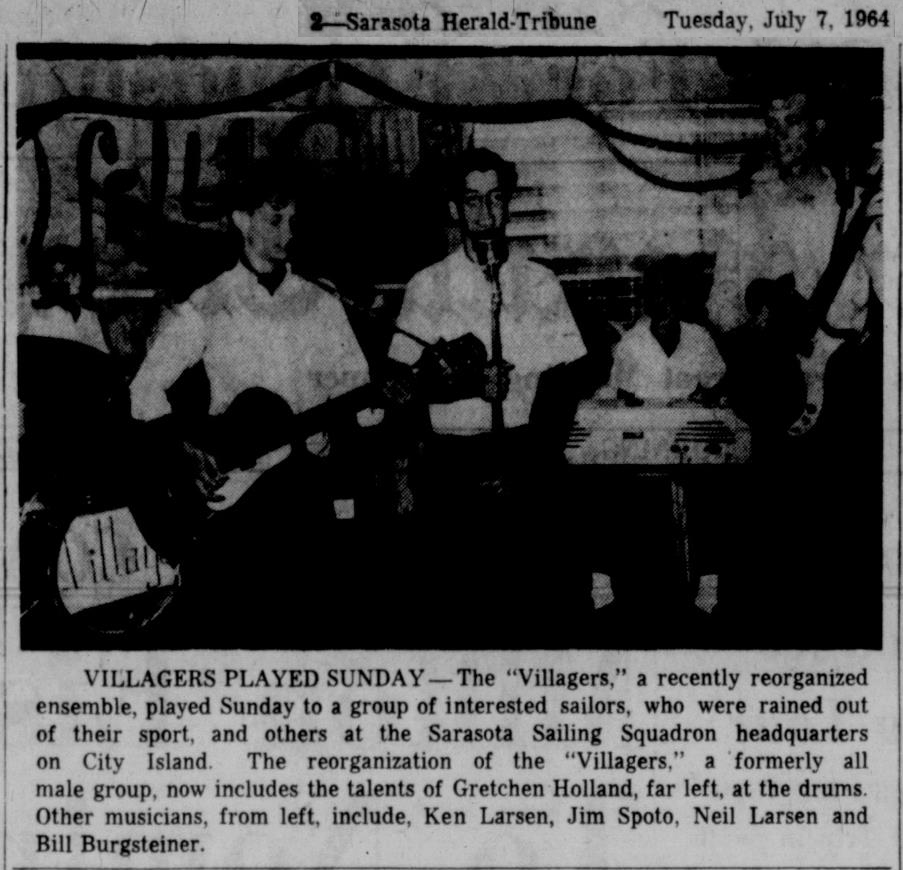 The Villagers came from Sarasota County in Florida, just south of Tampa. Some or all of the members graduated from Riverview High School class of ’65.
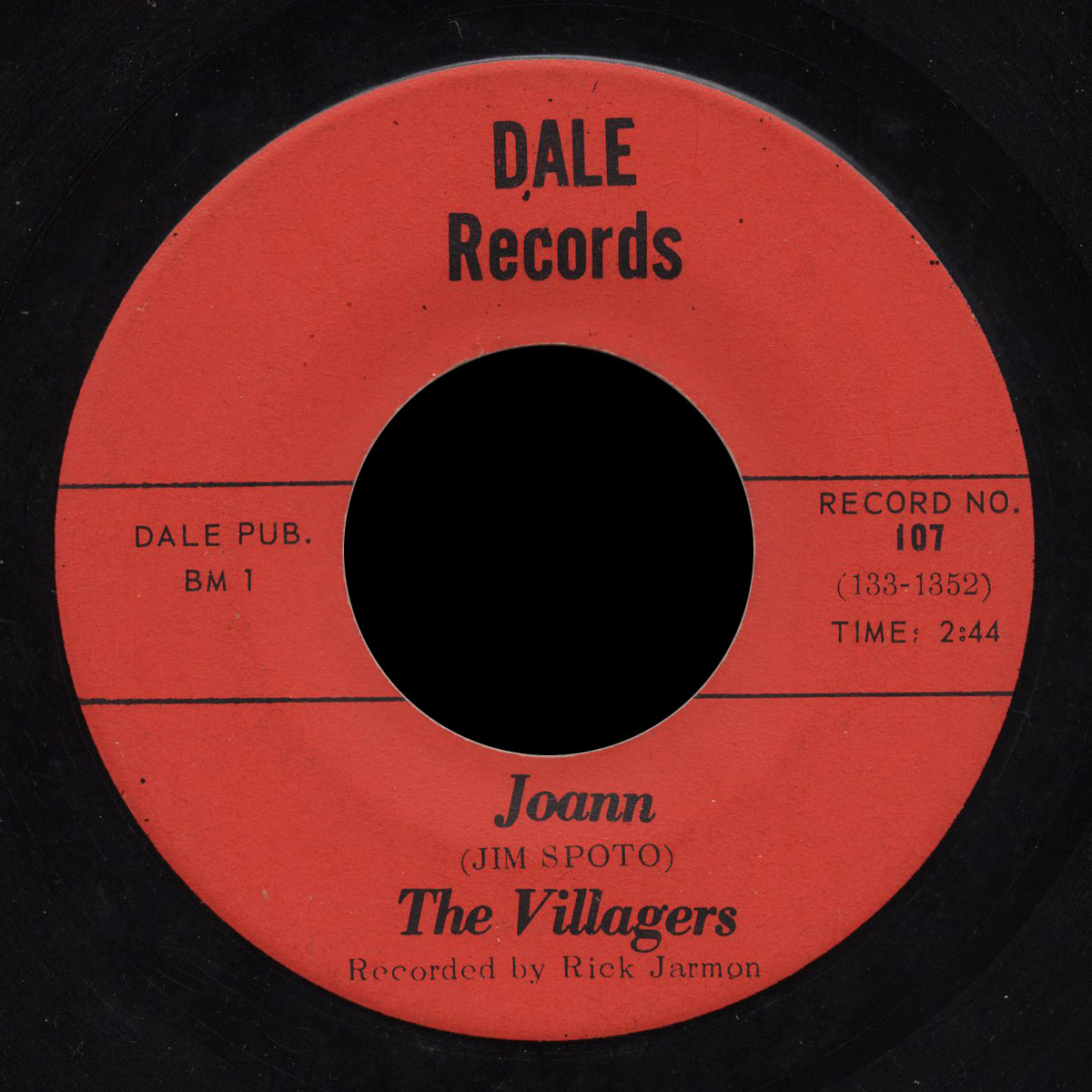 They cut one fine record “Joann” / “Glad You’re Back” on Dale Records 107. “Joann” is a fine teen-type original by Jim Spoto. “Glad You’re Back” is an excellent fast-tempo original by Neal Larson, with neat harmonies and driving drumming.
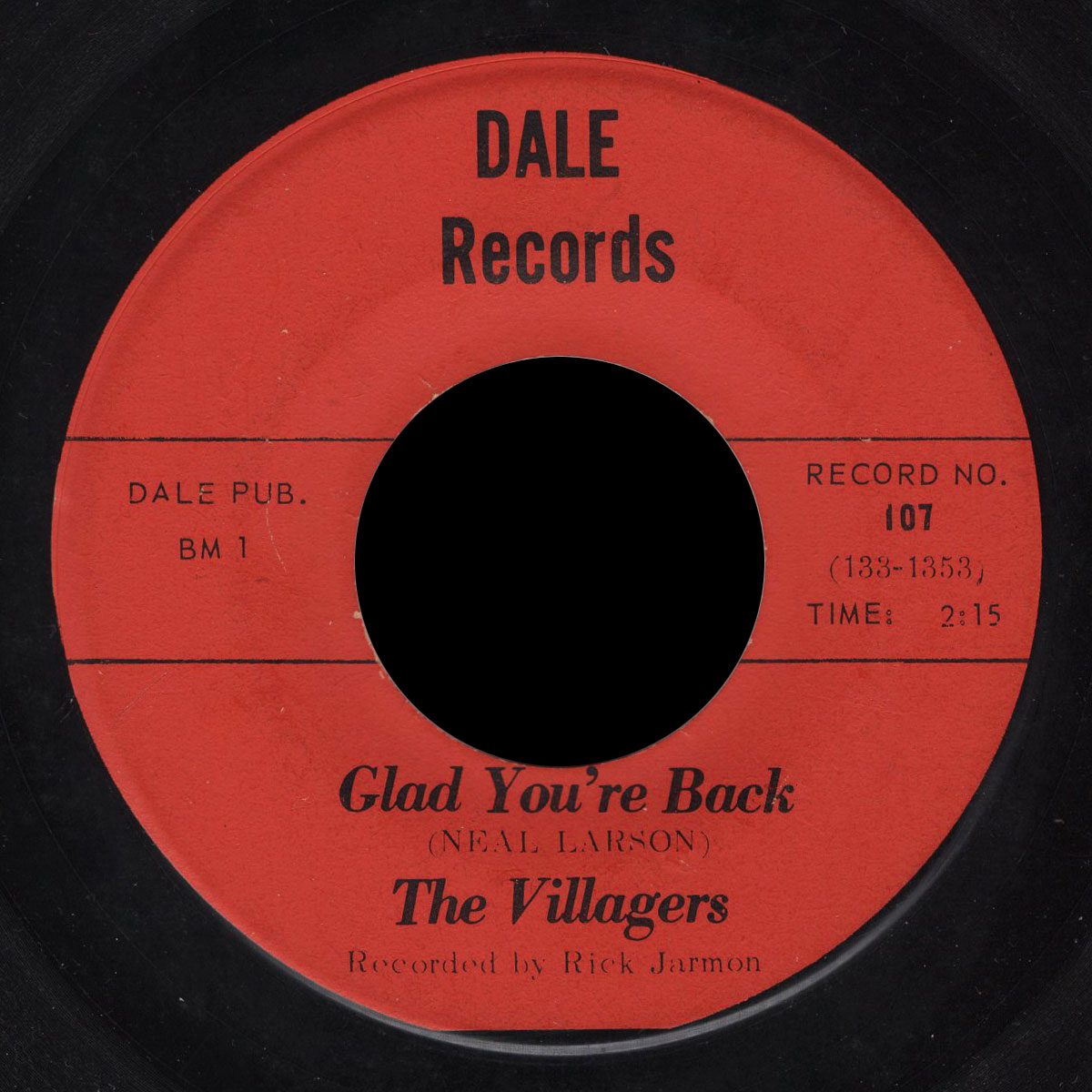 A notice in the Tampa Tribune on September 23, 1965 gives a different lineup: